Choosing Quartz movement watches for global buyers requires more than comparing prices and dial designs. A dependable selection begins with the movement’s accuracy, battery life, case materials, and supplier documentation. Buyers should examine whether the watch uses a recognized movement manufacturer and whether replacement batteries are widely available in target markets. Small details matter. A loose crown, uneven hand alignment, or unclear product labeling can create expensive returns.
Practical sourcing experience shows that specifications must match the intended customer. A slim stainless-steel model may suit office wear, while a reinforced case and luminous hands may better serve outdoor users. Water-resistance claims deserve careful attention. “Water resistant” does not mean suitable for swimming. Buyers should request test standards, warranty terms, and inspection records before placing large orders. Reliable suppliers should explain quality controls clearly, not hide behind attractive catalog photographs.
Global purchasing also involves packaging, customs documents, service support, and regional consumer expectations. Confirm dimensions in millimeters, date formats, strap materials, and included instructions. Check whether the warranty covers the movement, battery leakage, and manufacturing defects. No checklist is perfect. I have seen attractive samples fail during transport because the crown was poorly protected. That lesson remains useful, although every supplier still requires independent verification. A thoughtful article should compare technical evidence with real customer feedback and total ownership cost. The cheapest watch may become costly after returns, repairs, and weak after-sales communication. With careful evaluation, buyers can build a collection that feels credible, performs consistently, and remains practical across different markets.
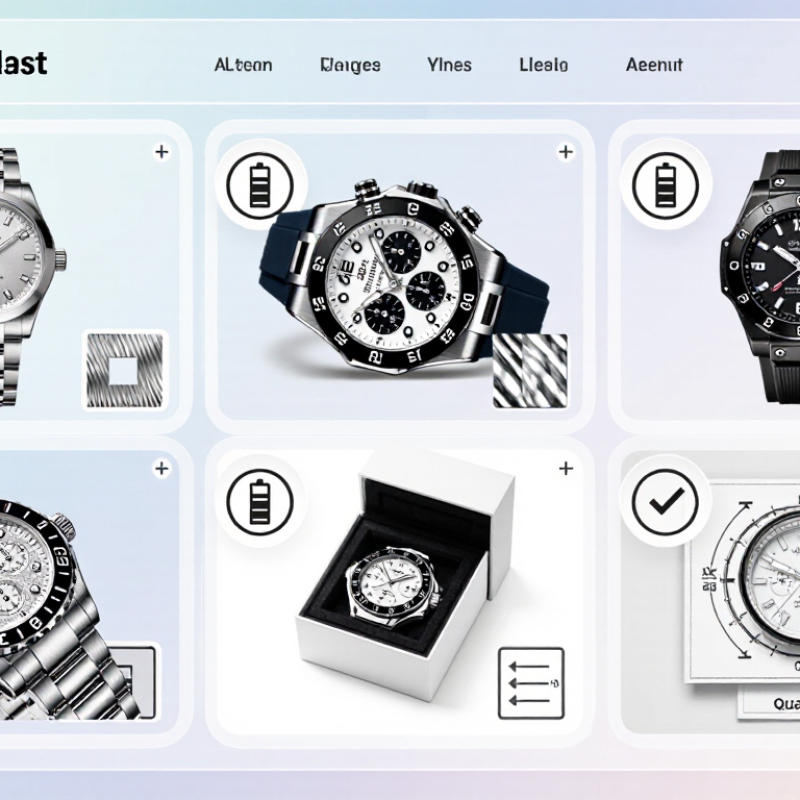
How to Choose Quartz Movement Watches for Global Buyers?
Understanding Quartz Movement Watches and Their Key Features
Quartz movement watches use a battery and a quartz crystal to regulate time. The crystal vibrates at a stable frequency. This process usually delivers reliable daily accuracy with little maintenance. In product inspections, I check whether the second hand moves consistently and whether the crown feels firm. Small details matter. A loose crown may allow moisture inside.
Battery life commonly ranges from one to several years. It depends on the movement, functions, and battery quality. Buyers should review the stated operating period before ordering large quantities. Some models include date displays, chronographs, alarms, or backlighting. More functions can improve usefulness, but they may increase repair difficulty. Simple is often safer.
Case materials also deserve close attention. Stainless steel resists everyday wear, while mineral glass can offer practical impact protection. Sapphire glass is harder to scratch, but it may raise costs. Water resistance needs careful reading. A rating does not always mean safe swimming. Seals can weaken after impact or battery replacement. I have seen attractive specifications hide unclear testing methods. Ask for test records, movement details, battery information, and warranty terms. Export packaging should protect the crown and crystal during long transport. Yet even strong packaging cannot correct a poorly fitted case.
Typical buyer-relevant specifications for common quartz movement categories
Standard quartz movements commonly achieve about ±15 seconds per month and require battery replacement every 2–3 years. Solar quartz watches use rechargeable cells that typically last 10–20 years, while high-accuracy quartz movements can maintain approximately ±1 second per month but may involve higher purchase and service costs. Actual performance depends on movement quality, temperature, shock, and usage.
How to Choose Quartz Movement Watches for Global Buyers?
Global buyers rarely want the same watch for the same reason. Price, reliability, comfort, and local style shape every purchase. The Federation of the Swiss Watch Industry reported exports of CHF 26.0 billion in 2024. However, export value does not reveal quartz demand directly. It still shows strong international interest in watches.
Deloitte’s 2024 Swiss Watch Industry Study surveyed 75 industry executives about market conditions. Its findings highlight changing consumer behavior, digital discovery, and regional differences. Younger buyers often compare specifications online before visiting a store. They may check battery life, water resistance, case weight, and warranty terms. Keep these details visible. A hidden specification can weaken trust.
Target markets need practical adaptation. Buyers in humid regions may prefer stainless steel cases and clear water-resistance information. Office users may choose slim cases and quiet movements. Gift buyers often value readable dials, neutral colors, and simple packaging. In price-sensitive markets, replaceable batteries and accessible service centers matter greatly. ISO 22810 water-resistance testing can support clearer product communication, but it does not make a watch suitable for every activity.
Regional assumptions can mislead. A minimalist dial may seem universal, yet color preferences remain local. I would test small product groups before ordering heavily. Feedback may expose uncomfortable straps or confusing date displays. That is useful evidence. Reliable sellers should also explain battery replacement intervals, warranty coverage, and return procedures in plain language.
| Target Market | Main Buyer Needs | Common Case-Size Preference | Quartz Performance Expectation | Battery Requirement | Practical Water-Resistance Level | Indicative Retail Price | Preferred Purchase Factors |
|---|---|---|---|---|---|---|---|
| North America | Reliable daily wear, easy maintenance, clear warranty terms, and versatile styling. | Men: approximately 40–44 mm Women: approximately 28–38 mm |
Standard analog quartz accuracy of about ±15 seconds per month is generally adequate for everyday use. | Replaceable silver-oxide cell; approximately 2–3 years is a common service interval for standard analog quartz watches. | 50 m for daily use; 100 m for swimming-oriented models. | US$50–250 | Online reviews, return policy, battery accessibility, legibility, and dependable after-sales service. |
| Western Europe | Design quality, long-term durability, repairability, responsible materials, and understated styling. | Men: approximately 38–42 mm Women: approximately 26–36 mm |
Stable timekeeping, low maintenance, and documented resistance to everyday magnetic exposure are valued. | Long-life cell preferred; clear end-of-life replacement guidance and service availability are important. | 30–50 m for office and lifestyle wear; higher ratings for outdoor models. | €60–300 | European conformity requirements, material transparency, recyclable packaging, warranty coverage, and refined finishing. |
| East Asia | Compact proportions, precise finishing, lightweight comfort, and strong visual detail. | Men: approximately 36–41 mm Women: approximately 24–34 mm |
High perceived precision, smooth hand movement, clean dial layouts, and dependable date functions are attractive. | 2–3 years for standard models; solar-assisted quartz is attractive where long-term convenience is emphasized. | 30–50 m for everyday use; sealed construction is important in humid climates. | US$60–350 | Slim profiles, detailed dials, lightweight materials, reliable online delivery, and presentation quality. |
| Southeast Asia | Humidity resistance, affordability, everyday durability, and easy online purchasing. | Men: approximately 38–43 mm Women: approximately 26–36 mm |
Reliable quartz operation in warm, humid conditions with clear operating instructions. | Replaceable battery with accessible service; 2–3 years is a practical expectation for standard analog models. | 50 m is suitable for frequent rain and daily wear; 100 m supports swimming use when properly specified. | US$25–180 | Competitive pricing, sweat-resistant straps, strong packaging, local delivery options, and clear water-resistance instructions. |
| Middle East | Premium appearance, heat tolerance, scratch resistance, gifting appeal, and larger dial visibility. | Men: approximately 40–45 mm Women: approximately 28–38 mm |
Stable operation across hot conditions, high legibility, and strong resistance to everyday dust and impacts are desirable. | Long-life battery preferred; battery replacement and service instructions should be clearly documented. | 50 m for lifestyle wear; 100 m for active or travel-focused products. | US$80–450 | Metal bracelets, sapphire or hardened mineral crystal options, gift packaging, multilingual instructions, and premium finishes. |
| Latin America | Good value, durable construction, versatile design, and accessible local servicing. | Men: approximately 38–43 mm Women: approximately 26–36 mm |
Dependable standard quartz accuracy, readable numerals, and robust crown and case construction are important. | 2–3 years for standard analog quartz; low-cost replacement and service availability support repeat purchase. | 50 m for daily wear; higher ratings for sports and outdoor collections. | US$30–180 | Value-for-money construction, flexible straps, bilingual or Spanish/Portuguese documentation, and dependable distribution. |
| Africa | Affordability, durability, simple operation, long service life, and dependable availability. | Men: approximately 38–43 mm Women: approximately 26–36 mm |
Accurate, easy-to-read analog displays with shock-resistant construction are practical priorities. | Standard replaceable battery and widely available service tools are preferred over complex maintenance requirements. | 30–50 m for everyday protection from splashes and rain; seals should be replaceable. | US$20–150 | Strong straps, scratch-resistant crystals, clear warranty terms, offline availability, and low-cost maintenance. |
How to Choose Quartz Movement Watches for Global Buyers?
Accuracy is the practical starting point for international buyers. A dependable quartz movement may vary by about 15 seconds monthly, depending on its design and conditions. Ask for the tested tolerance, not only the word “accurate.” Temperature changes can affect performance during shipping, travel, or outdoor work. I once compared two watches with similar claims; one gained noticeably more time after several weeks. That assumption failed.
Materials shape durability, comfort, and long-term value. Stainless steel cases resist daily knocks and suit humid environments when properly finished. Ceramic can reduce scratches, but it may crack after a sharp impact. Mineral crystal costs less and handles moderate use, while sapphire crystal usually offers better scratch resistance. Check the seal. Water resistance is useful only when gaskets remain correctly fitted and maintained.
Functions should match real habits, not inflate the specification sheet. A date display is simple to use, while a chronograph adds components and may increase service needs. A strong backlight helps during night travel, but it can shorten battery life. Buyers should compare battery replacement access, warranty terms, and local servicing options. Price points often reflect crystal quality, case finishing, movement tolerances, and after-sales support. The cheapest option may become expensive after repeated repairs. The most costly model is not automatically the most reliable. Small details matter.
Choosing quartz movement watches for international markets requires more than comparing prices. Start with the movement’s documented accuracy, power consumption, and service life. Ask for sample units, not only catalog photographs. Check whether the second hand advances consistently, the crown feels firm, and the case resists moisture during controlled testing. For water resistance, request test records linked to recognized watch standards, such as ISO 22810 where applicable. A cheap sample can become an expensive complaint.
Supplier reliability appears in small details. Does the factory provide movement batch numbers, inspection records, and clear tolerance limits? Request records for timekeeping, battery leakage, crown sealing, and final visual inspection. A useful supplier should explain rejected-unit rates without hiding behind general promises. I once treated a polished certificate scan as strong evidence. That was a weak assumption. Certificates need issuing bodies, valid dates, product scope, and matching company information. Independent verification is safer.
Certifications also depend on the destination market. ISO 9001 may indicate a controlled quality system, but it does not guarantee every watch is excellent. CE marking may involve a conformity declaration, not an independent quality award. For electronic or metal components, check whether applicable RoHS or REACH requirements are supported by current test reports. Ask for laboratory accreditation and report numbers. Keep one approved sample as a reference, then inspect production against it. Small differences matter. A slightly loose case back or uneven hand alignment can damage buyer confidence. Supplier promises are useful, but traceable evidence is better.
International distribution starts with market conditions, not dial appearance. A quartz watch must match local climate, retail habits, and customer expectations. In humid regions, request case-sealing tests and inspect condensation risks. In colder markets, verify battery performance below normal room temperature. These checks matter more than polished product photographs. Keep records for every production lot. Small details build trust.
For overseas buyers, movement accuracy is only one purchasing factor. Ask for documented testing, clear battery specifications, and an estimated service interval. Confirm whether replacement cells are readily available in destination markets. Packaging should protect crowns, crystals, and straps during long transport. Include multilingual care instructions and consistent product references. It sounds basic. It is often missed.
A small pilot shipment can expose weaknesses faster than a large order. Track returns, stopped watches, damaged boxes, and retailer questions. Then adjust quantities or specifications before wider distribution. No checklist is perfect, and water-resistance claims deserve careful review after assembly. Choose suppliers who explain failures openly and share corrective records. Their honesty is more useful than impressive promises. Review import documents with qualified local professionals, because requirements can differ by country and change over time.
A battery powers a quartz crystal. The crystal vibrates at a stable frequency. This usually supports reliable daily accuracy.
Some movements may vary by about 15 seconds monthly. Ask for tested tolerance, not only “accurate.” Conditions can change results.
Battery life often lasts from one year to several years. Extra functions may shorten it. Check the stated operating period before bulk orders.
Check for a firm crown and a properly fitted case. A loose crown may allow moisture inside. The second hand should move consistently.
Mineral crystal offers practical protection and lower cost. Sapphire resists scratches better but may cost more. Ceramic can scratch less, yet sharp impacts may crack it.
Not always. Seals can weaken after impacts or battery replacement. Request test records and inspect gasket maintenance details.
No. Date displays are usually simple and useful. Chronographs, alarms, and backlighting add parts and may increase repairs. Simple can be safer.
Price reflects movement tolerance, materials, finishing, functions, and service support. The cheapest model may cost more after repeated repairs. The highest price is not automatically the best choice.
Packaging should protect the crown and crystal during long transport. Ask about battery access, warranty terms, and local servicing. I may still overlook small fitting issues, so physical inspection remains important.
Choosing the right Quartz movement watches for global buyers requires a clear understanding of their core advantages, including dependable accuracy, low maintenance, long battery life, and diverse design options. Buyers should first identify the preferences of their target markets, such as case materials, strap styles, dial readability, water resistance, functions, and acceptable price ranges. Comparing these factors helps distributors select products that balance performance, appearance, durability, and commercial value.
Before placing an international order, buyers should also assess manufacturing consistency, quality-control procedures, packaging, after-sales support, and supplier reliability. Relevant testing documentation and certifications should be reviewed according to the destination market’s requirements. A successful distribution choice combines suitable specifications with stable production capacity, transparent communication, competitive pricing, and responsible compliance practices. By evaluating both consumer demand and supply-chain quality, global buyers can build a practical Quartz movement watches selection that meets market expectations and supports long-term business growth.