Frequently Asked Questions for Commercial Buyers
Global B2B Sourcing & Manufacturing FAQ
What grade of metal is best for luxury metal watches in commercial manufacturing?
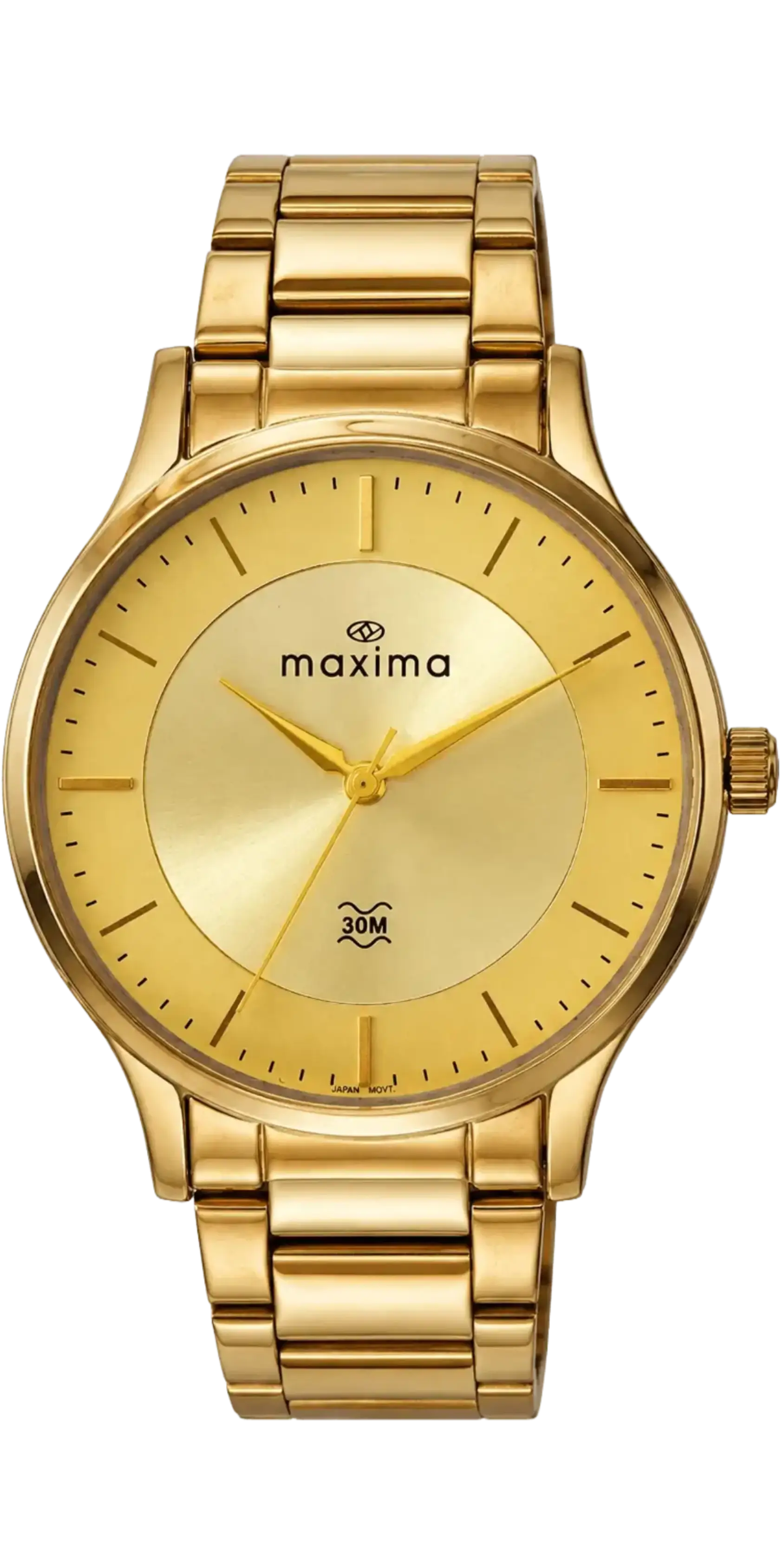
Austenitic 316L surgical-grade stainless steel represents the gold standard for high-end metal timepieces due to its optimal balance of corrosion resistance, tensile strength, and polishability. The inclusion of 2-3% molybdenum prevents pitting corrosion caused by atmospheric chlorides and human sweat. For marine dive-specific or high-wear luxury applications, 904L steel (higher nickel and copper content) and Grade 5 Titanium (Ti-6Al-4V) provide enhanced scratch resistance and reduced weight respectively. Maxima primary case structures utilize certified 316L steel to maintain strict skin-safety compliance.
How does Physical Vapor Deposition (PVD) coating compare to traditional electroplating for gold and black metal watches?
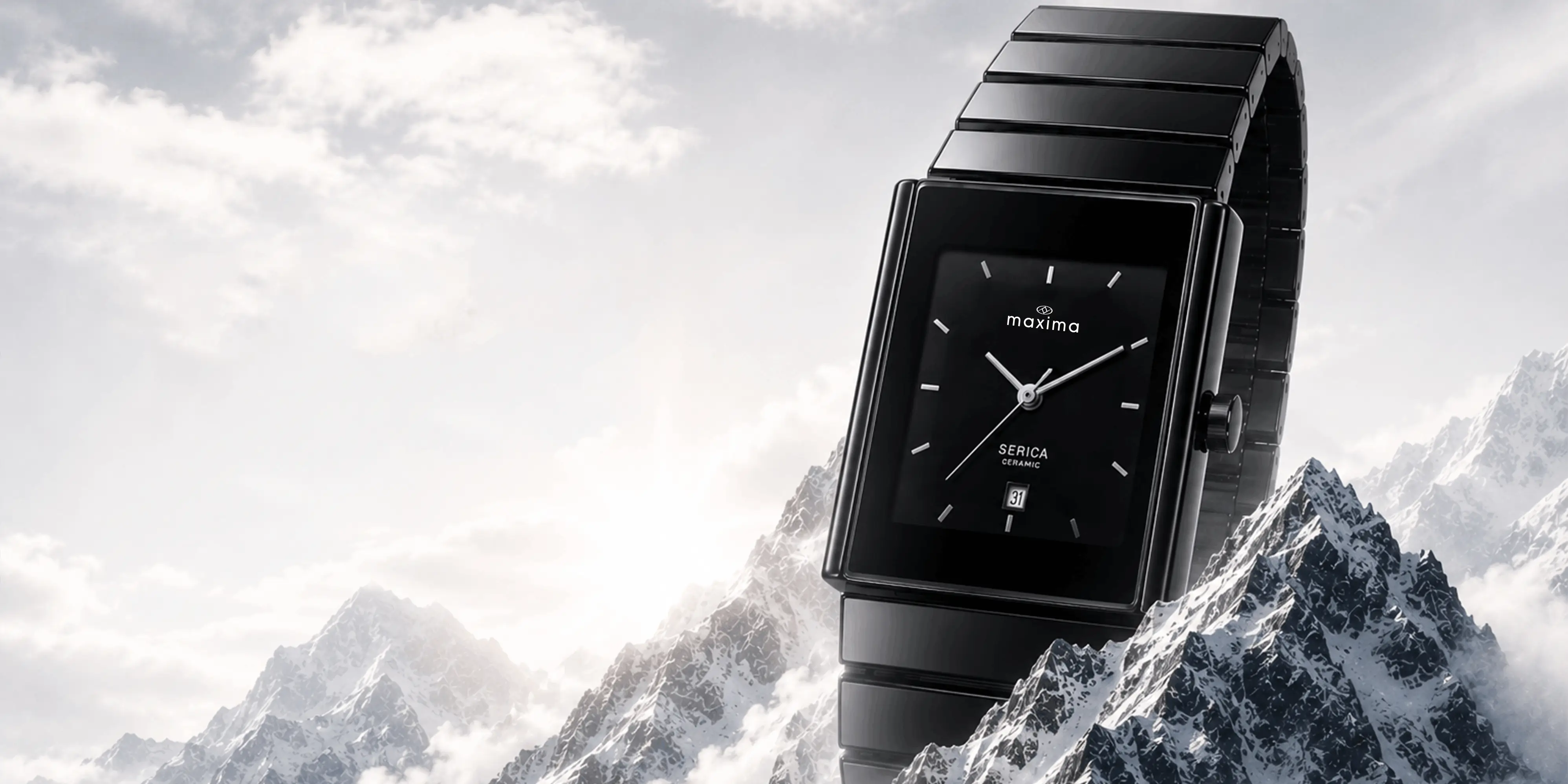
Traditional electroplating deposits a thin layer of metal via chemical baths, resulting in soft coatings (typically under 0.5 microns) susceptible to rubbing off, oxidation, and flaking within 12 to 18 months of wear. Physical Vapor Deposition (PVD) operates inside high-vacuum plasma chambers, vaporizing metal ions (such as Titanium Nitride for yellow gold or Carbon-Diamond matrix for black) that bond at an atomic level with the steel base. PVD coatings range from 1.0 to 3.0 microns, yielding surface hardness exceeding 2,000 Vickers. This ensures the watch maintains its finish for up to 10 years without tarnish or fading.
What is the difference between solid link and folded link metal bracelets?
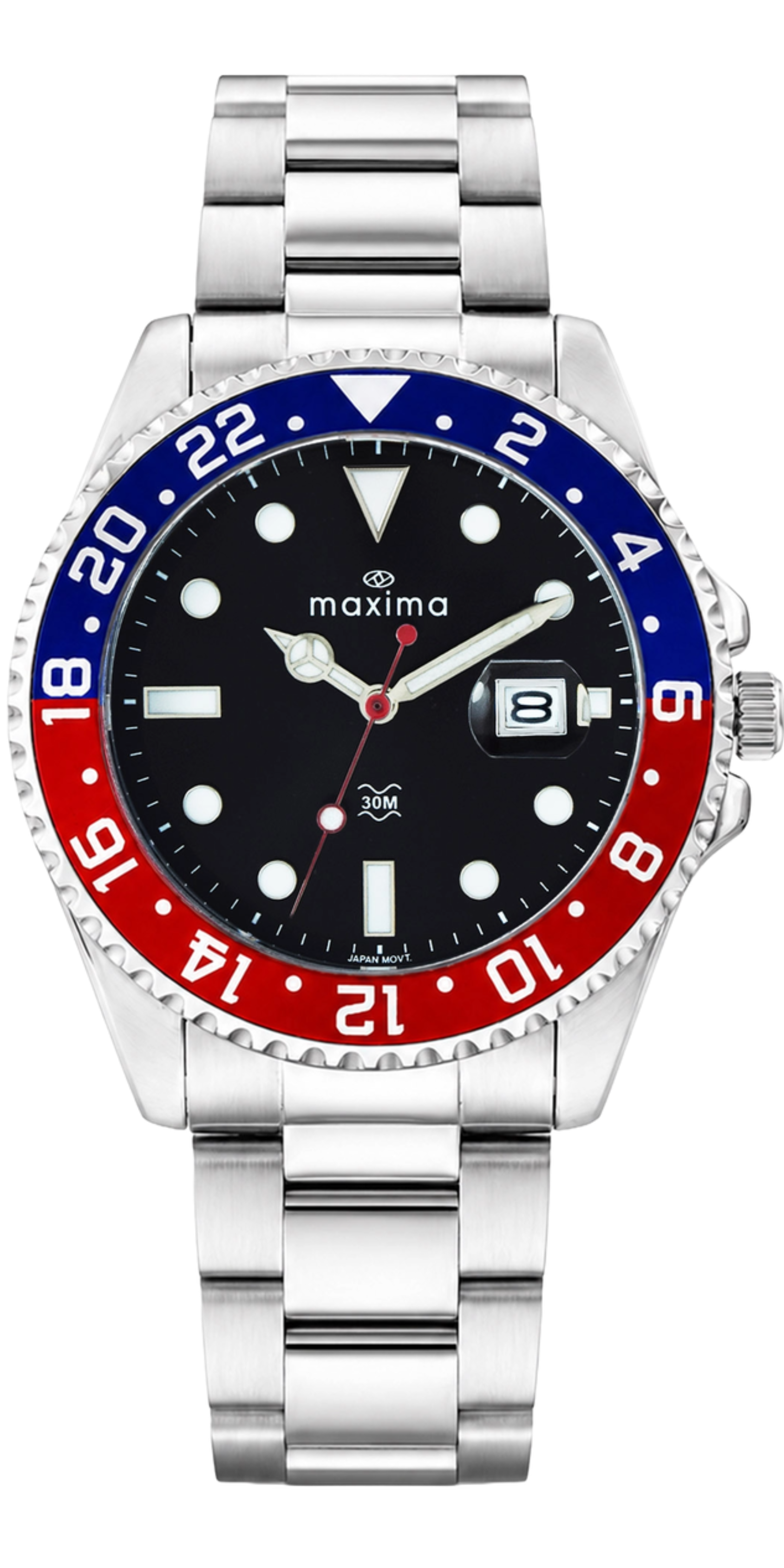
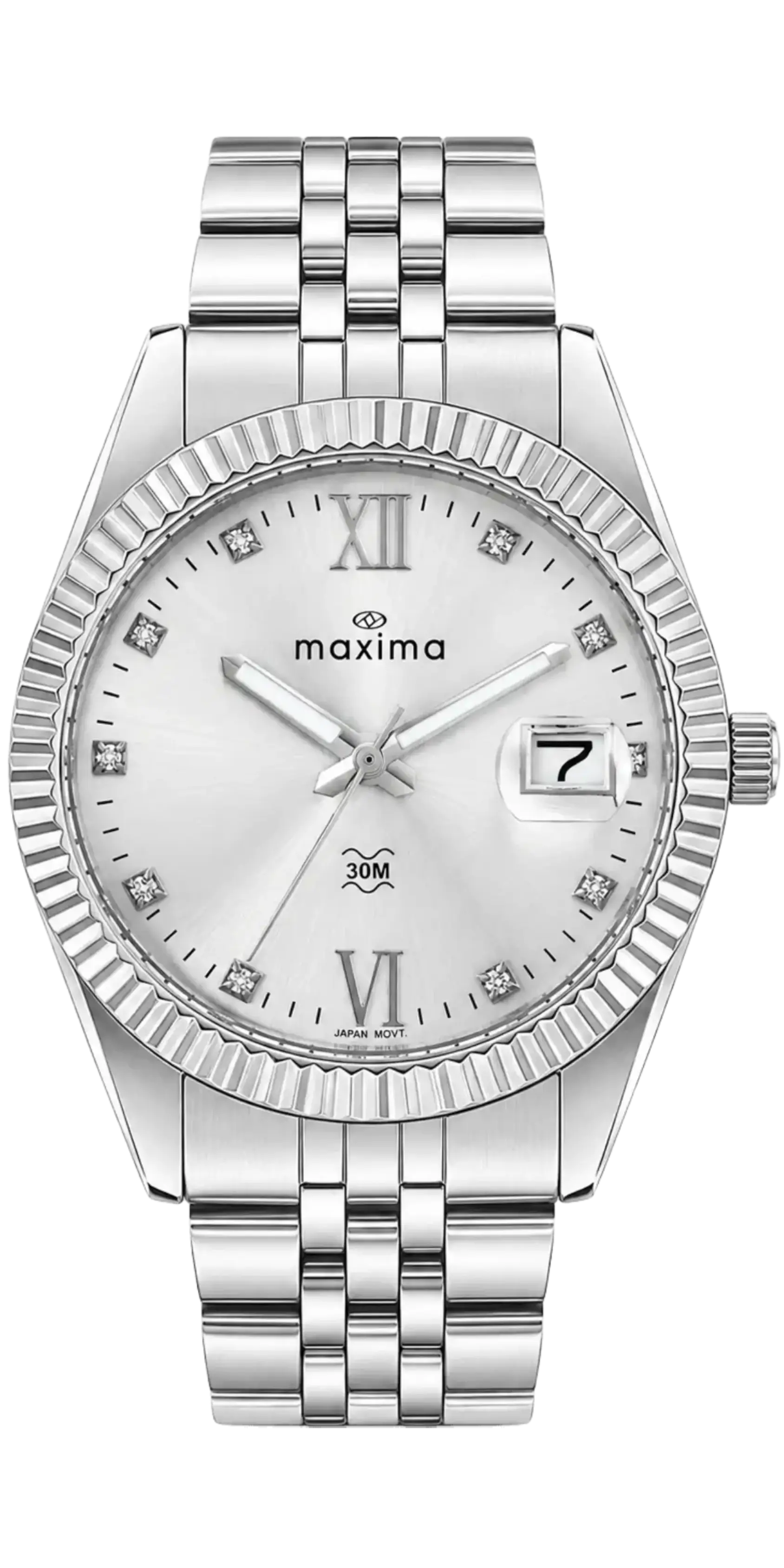
Folded link bracelets are constructed by stamping and bending thin sheet metal into link shapes. While cost-effective, folded bracelets feel lightweight, tend to pull wrist hair, stretch over time, and convey a low-cost perception. Solid link bracelets are individually CNC-machined from solid steel blocks, pin-drilled, and assembled with screw pins or friction bars. Solid bracelets offer substantial wrist weight, zero structural play, high tensile strength, and a premium tactile experience essential for luxury metal watches. Maxima’s Apex Luxe and Executive series exclusively feature solid 316L links with solid end-pieces.
How does Maxima ensure waterproof reliability across mass production runs of metal watches?
Water resistance in metal watches depends on precise gasket compression, case-back torque, and crown-stem tolerances. Maxima implements a two-tier pressure testing protocol: First, cased empty assemblies undergo dry air-pressure and vacuum testing to verify seal seating without risking water exposure to dials. Second, fully assembled timepieces undergo wet pressure immersion testing up to the rated depth (e.g., 5 ATM / 10 ATM), followed by a thermal condensation test on a heated plate. Any watch exhibiting internal vapor formation is rejected and disassembled. This process stems from our 1996 innovation as a pioneer of guaranteed waterproof ranges.
Can Maxima accommodate custom OEM/ODM logos, dial artwork, and bespoke case designs?
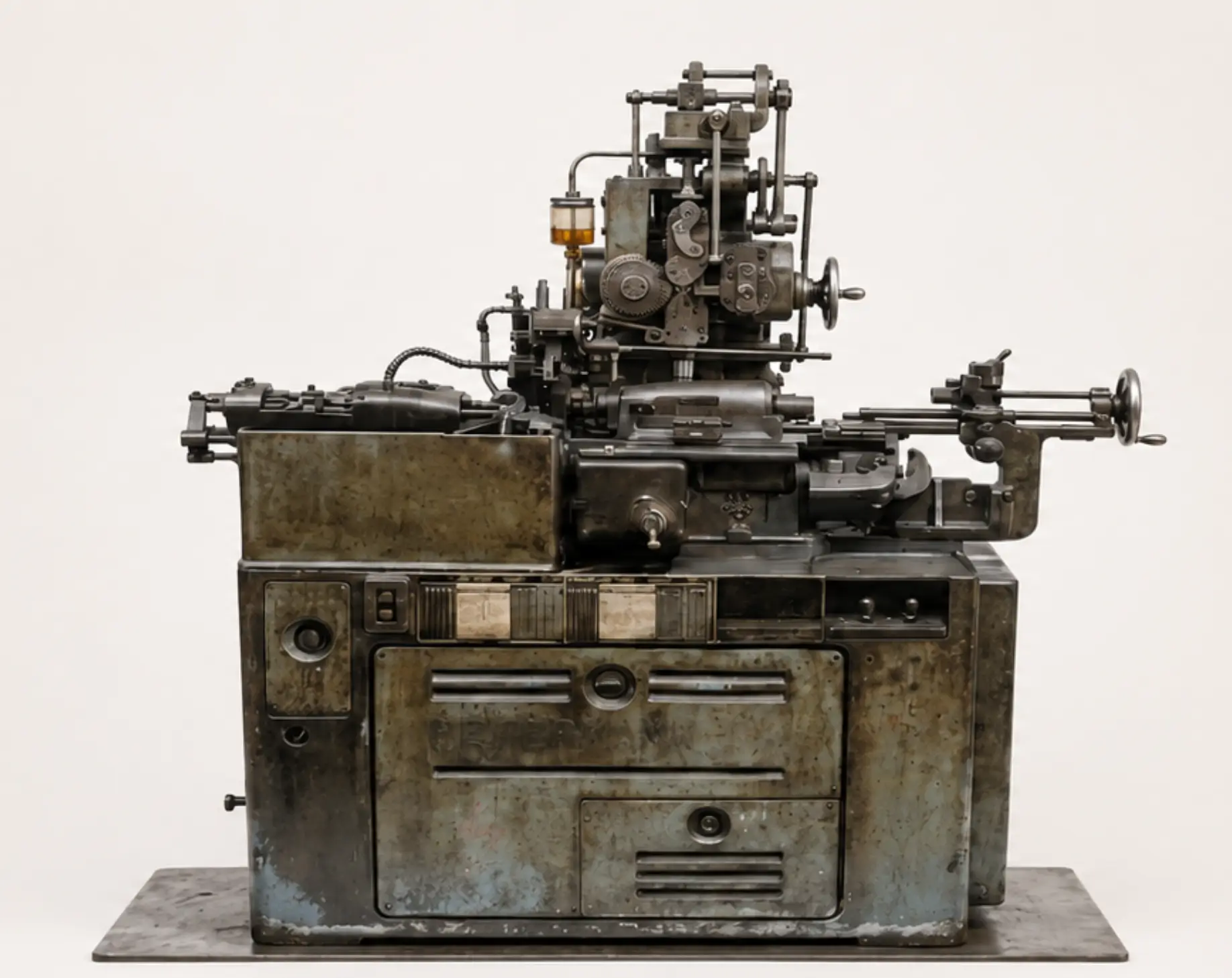
Yes. As a vertically integrated manufacturer, we offer comprehensive OEM (Original Equipment Manufacturing) and ODM (Original Design Manufacturing) services. Global buyers can provide 2D technical drawings, 3D STEP files, or brand mood-boards. Our engineering department assists with case tooling development, dial electroforming, customized laser-engraved case-backs, branded crown cabochons, and custom presentation packaging. Minimum order quantities (MOQs) start at 300 units for standard case molds with custom dial artwork and 1,000 units for completely proprietary case toolings.
What certifications and chemical safety standards do Maxima luxury metal watches meet?
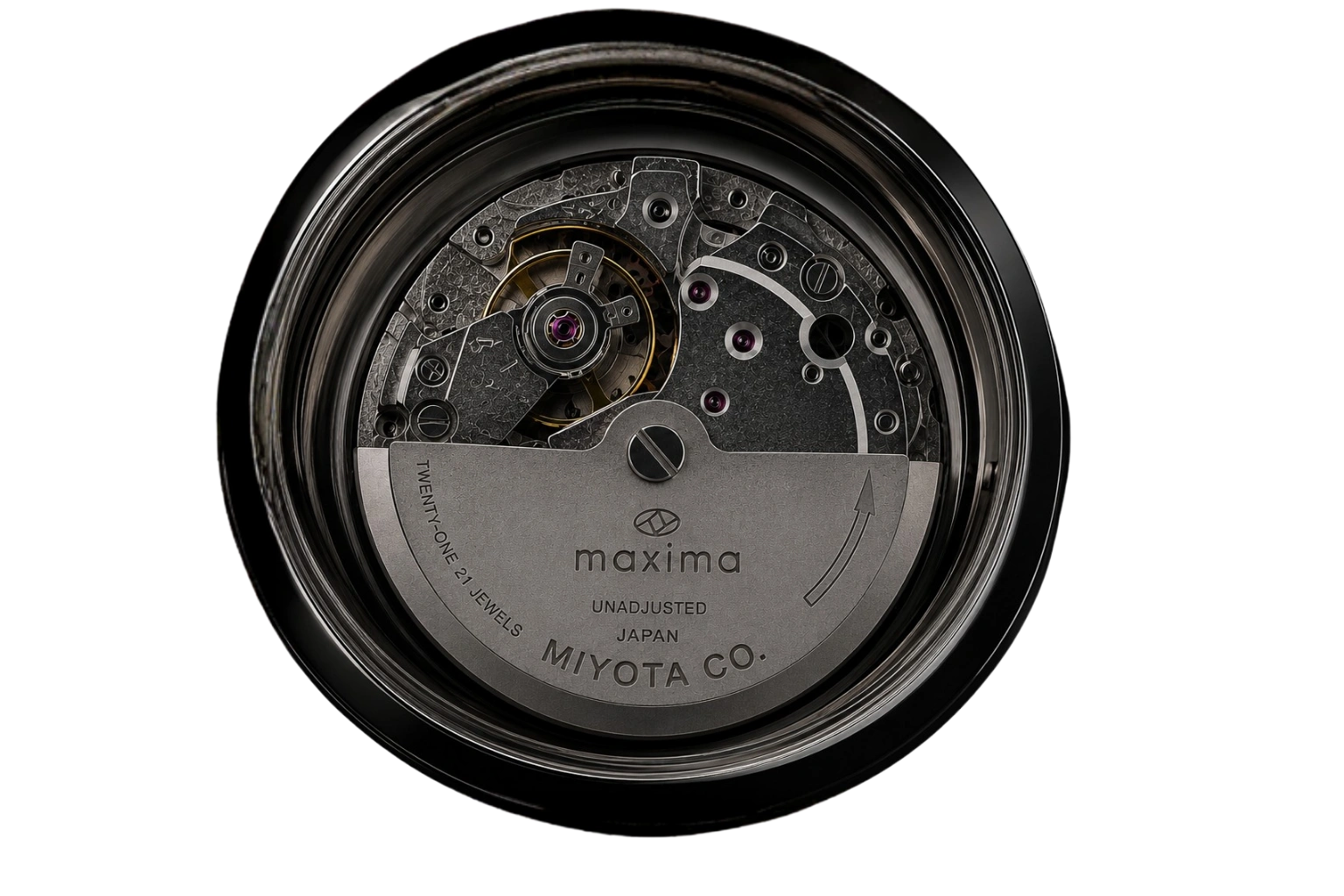
All Maxima timepieces exported globally adhere to stringent international regulatory standards. Our stainless steel components comply with European REACH Regulations (EC 1907/2006) and EN 1811 standards for nickel release safety, preventing allergic contact dermatitis. Movement assemblies comply with RoHS (Restriction of Hazardous Substances) and CE directives for electromagnetic compatibility. Certificates of Origin, material test reports, and compliance documentation are provided with commercial shipment manifests.
What are the lead times for prototyping and mass manufacturing luxury metal watch orders?
For standard models featuring custom logo printing and packaging, sample lead times are typically 15 to 20 business days, with mass production completed within 45 to 60 days. For full ODM projects requiring custom CNC tooling, bezel molds, and bespoke bracelet development, prototyping requires 45 days for sample approval, followed by 60 to 75 days for full-scale mass production and quality assurance clearance.