0%

Choosing Water-resistant activewear timepieces in 2026 starts with a simple question: where will you wear the watch? On a damp morning run, sweat and rain are routine. In a pool, water pressure and repeated strokes matter more. A rating printed on the case is useful, but it is not a promise that every watch suits every sport.

The American College of Sports Medicine’s 2024 Worldwide Survey of Fitness Trends ranked wearable technology No. 1. The survey, led by ACSM past president Walter R. Thompson, reflects how closely fitness and tracking now overlap. That finding is a useful signal, not a buying instruction: a popular feature can still be wrong for your routine. For water-resistance guidance, ISO 22810:2010 sets requirements and test methods for watches labeled water-resistant. Check the manufacturer’s stated limits too, especially before swimming or using buttons underwater.

Look closely at the practical details. A snug silicone strap should stay put when your wrist is slick with sweat. A bright display should remain readable under harsh midday sun. GPS, heart-rate tracking, and battery life matter only if you will use them. Small things count.

There is no single best watch for every athlete. Even a high water-resistance rating cannot replace the maker’s instructions or careful maintenance. In 2026, the smarter choice is the one whose tested limits match your actual training—not the one with the boldest number on its box.
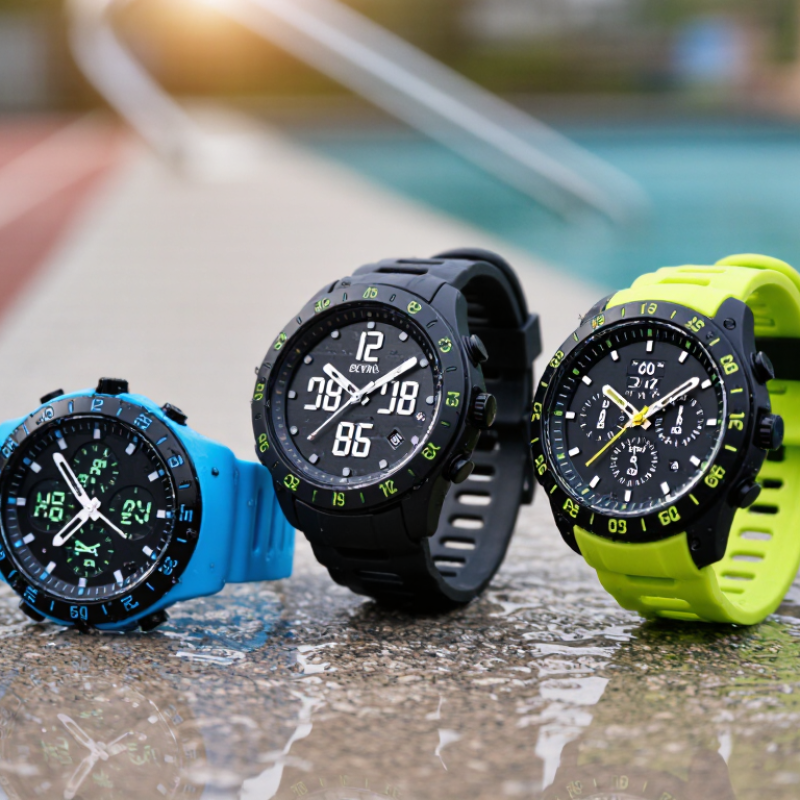
How to Choose Water Resistant Activewear Watches in 2026

Define Your Water-Resistance Needs for Each Activity

Choose a watch for the water you actually meet, not the deepest number on its case. A rainy run, pool workout, and open-water swim place different demands on seals, buttons, and straps. For rain and sweaty training, basic water resistance may be enough. Check the maker’s care instructions, especially if you often rinse the watch or wear it in the shower.

Pool laps need a higher rating. A 5 ATM marking is commonly intended for swimming, but confirm that the watch maker specifically approves pool use. Chlorine can wear materials over time, so rinse the watch with fresh water afterward and dry it gently. Small detail. Wet touchscreens can also misread taps, making simple physical controls useful mid-workout.

For snorkeling or fast surface sports, look for a rating and activity guidance that cover repeated water pressure and movement. Static pressure tests do not reproduce every real-world impact. Scuba diving calls for equipment specifically rated and certified for diving, not just a fitness watch with a large ATM number. The number can look reassuring; it is not a promise for every activity. I would be cautious about assuming that “water resistant” means worry-free. Check the manual before pressing buttons underwater, too. A little inconvenient, yes. Still, matching the rating to your routine is better than guessing.

Understand Water-Resistance Ratings and Their Limits

In 2026, a water-resistance rating can help you choose an activewear watch, but it is not a promise of safety in every wet situation. The number usually reflects controlled laboratory testing, not a guarantee that you can reach that depth outdoors. That matters. Arm movement, water temperature, and repeated impacts can change the pressure on a watch during swimming.

Check the maker’s stated use, not just a number printed on the case. A rating suitable for rain or handwashing may not be suitable for pool laps. Even a rating marked for swimming may exclude diving, hot showers, or pressing buttons underwater. “Water resistant” does not mean waterproof. I used to treat ratings like simple depth labels; that reading was too neat. Real use is messier.

Seals can wear down with age, sweat, sunscreen, and knocks against gym equipment. After swimming, rinse the watch with fresh water and dry it with a soft cloth, especially after saltwater or chlorinated pools. Avoid charging it while wet, and check the instructions before operating buttons in water. If the case has been dropped or opened for repair, have its seals checked before relying on its rating.

How to Choose Water-Resistant Activewear Watches in 2026

Understand water-resistance ratings—and their limits.

The meter values are approximate static-pressure equivalents (about 10 meters of water column per bar), not recommended swimming or diving depths. Movement, temperature changes, aging seals, and operating buttons underwater can affect water resistance. Check the watch’s instructions for activity-specific guidance.

Compare Watch Materials, Seals, and Activity Features

For activewear in 2026, compare the case material, seals, and activity tools together. Resin is light and comfortable during long runs, while stainless steel can feel sturdier but heavier. Titanium offers a lighter metal option, though the final choice depends on fit and budget. Check how the watch feels against your wrist when it is damp; a sliding strap can distract during exercise. Water resistance also depends on intact gaskets and a properly closed crown. A rating comes from controlled testing, not a promise that seals will last forever. Avoid relying on a vague “water-resistant” label alone.

Tips: Match the stated rating to your activity. Rinse off sweat and salt, then dry the case and strap. Have seals checked if the watch takes a hard impact.

For swimming, look for clear guidance on pool use and buttons, since some watches should not be operated underwater. For cycling or training, useful features may include a readable display, secure strap, lap timing, or heart-rate tracking. These features matter only if they are easy to use mid-workout. One detail worth reconsidering is whether a rugged, bulky case is actually helpful for your routine. More protection can mean less comfort, and that trade-off is easy to miss in a product listing.

Assess Fit, Readability, Battery Life, and Comfort

An activewear watch should feel secure without pinching when your wrist swells during exercise. Try it with the strap snug, then move your arm through a full swing. It should not slide toward your hand. A bulky case can catch on sleeves, while a stiff strap may rub after several miles. Small details matter. Check the stated water-resistance rating and care instructions before swimming or rinsing the watch. Resistance can change with wear, and it does not mean every model suits every water activity.

Readability is easy to overlook in a shop. Step outdoors and check whether you can read the time quickly in direct sun. Large digits, clear contrast, and simple controls help when your hands are damp or moving. Battery life needs the same practical check: GPS use, notifications, and screen brightness can shorten the maker’s estimate. Compare expected use with your usual workout week, not an ideal one. Comfort is personal, and I would not pretend one fit works for everyone. Wear the watch for an ordinary day before relying on it for a long session. A little strap adjustment may help; persistent rubbing probably will not.

How to Choose Water Resistant Activewear Watches in 2026 — Assess Fit, Readability, Battery Life, and Comfort
Factor What to Check Useful Guidance Why It Matters
Water resistance Look for the stated water-resistance rating and the manufacturer’s permitted-use guidance. For swimming, choose a watch explicitly approved for swimming. A 5 ATM rating is commonly associated with surface swimming, but it is not a guarantee for every activity or condition. Do not interpret a rating in metres as a safe diving depth. Ratings are based on controlled tests; water pressure, movement, temperature changes, and wear can affect real-world performance.
Fit and stability Check the case size, strap adjustment range, and whether the watch stays in place during movement. Try the watch on your wrist and adjust the strap so the sensor sits steadily against the skin without pinching or restricting circulation. Confirm the strap length fits your wrist measurement. A stable fit helps reduce bouncing during exercise and supports consistent wrist-based heart-rate readings.
Readability Assess screen contrast, font size, backlight, and how quickly key workout data can be read. Prefer clear, high-contrast digits and a display that can be read at a glance. Check visibility in bright daylight and whether the backlight is usable in low light. Readable time, pace, and heart-rate data are easier to check while exercising without stopping or losing focus.
Battery life Compare the stated battery life in everyday use and with GPS or other workout features enabled. Battery life varies substantially by model and settings. GPS tracking, always-on displays, frequent notifications, and high screen brightness commonly shorten runtime; compare estimates for the modes you plan to use. A watch that meets your typical workout schedule with charging time to spare is less likely to run out during a session.
Comfort and materials Consider weight, case edges, strap material, breathability, and how the watch feels when wet. Look for a smooth, secure strap and a case that does not catch on clothing. If possible, try it during movement and check whether the strap remains comfortable after sweating or rinsing. Comfort affects whether you will wear the watch consistently for training and daily activity.
Controls during exercise Test buttons or touchscreen controls with damp fingers and while moving. Check whether the display can be locked during workouts and whether essential functions can be reached without navigating several menus. Simple, dependable controls are useful when hands are wet, sweaty, or occupied.
Care after water exposure Read the care instructions for swimming, salt water, pool water, and charging. Follow the manufacturer’s rinse-and-dry instructions after exposure to salt water or chlorinated water. Make sure the charging contacts and watch are dry before charging if the instructions require it. Residue and moisture can affect materials or charging contacts; correct care helps preserve the watch over time.

Review Care Requirements, Warranty, and Overall Value

Water resistance is useful only when the watch’s care needs fit your routine. Before buying, read the care guide and note limits for swimming, hot water, and cleaning. Sweat, sunscreen, and pool chemicals can leave residue around buttons and seals. A quick rinse with fresh water may help, but follow the maker’s instructions and dry the watch with a soft cloth. Water resistance can change as seals age, so a rating is not a permanent guarantee. I would not treat a high rating as permission to ignore care; that assumption is easy to make.

Tips: Check the warranty’s water-damage terms before purchase. Look for the coverage period, required proof of purchase, and any inspection or service fees. Some warranties exclude damage linked to worn seals or use outside stated limits. Keep the care guide and purchase record somewhere easy to find.

Overall value means more than the price on the shelf. Consider replacement straps, battery or charging needs, and the cost of servicing seals. A less expensive watch may cost more over time if repairs are difficult or parts are scarce. Compare those details with your actual workouts, not an ideal routine. Honestly, care instructions can feel fussy, and it is easy to forget a rinse after a muddy run; choose a watch whose upkeep you can realistically manage.

FAQS

What water-resistance level do I need for rainy runs?

Basic water resistance may suit rain and sweaty training. Check the care instructions before rinsing the watch or wearing it in the shower.

Can I use a 5 ATM watch for pool laps?

A 5 ATM rating is commonly intended for swimming, but confirm that pool use is approved. Rinse off chlorine with fresh water, then dry the watch gently. Small detail.

Does a water-resistance rating guarantee safe swimming at its listed depth?

No. Ratings come from controlled tests, not every real-world movement or impact. Arm strokes, temperature changes, and knocks can affect pressure on the watch.

Can I wear a fitness watch while scuba diving?

Use equipment specifically rated and certified for diving. A large ATM number on a fitness watch is not enough. Not a guarantee.

Should I press watch buttons underwater?

Check the instructions first, since some watches should not be operated underwater. Wet touchscreens can also misread taps, so physical controls may be easier during a swim.

How should I care for a watch after swimming?

Rinse it with fresh water after pool or saltwater use. Dry the case and strap with a soft cloth, and avoid charging it while wet.

What should I check if my watch has been dropped or repaired?

Have its seals checked before relying on its water resistance. Gaskets can wear down with age, sweat, sunscreen, or hard knocks.

Which materials and features matter for activewear?

Resin feels light during long runs, while stainless steel may feel sturdier but heavier. Titanium offers a lighter metal option. Check the fit with a damp wrist, and consider whether a bulky case will bother you mid-workout. I used to assume rugged meant better; that was too simple.

Conclusion

Choosing the right watch for active use in 2026 starts with matching its water resistance to your activities. Casual splashes, swimming, and sustained water exposure place different demands on a watch, and a rating should not be treated as a guarantee for every situation. Check what the rating means, along with the condition of the seals and the manufacturer’s care guidance.

Compare case and strap materials, secure fit, easy-to-read displays, and useful activity features. Battery life and comfort matter too, especially during long workouts or all-day wear. Water-resistant activewear timepieces can offer reliable everyday performance when selected thoughtfully and cared for properly. Before buying, review maintenance needs, warranty coverage, and overall value so your choice suits both your routine and your budget.


Ethan

Ethan

Ethan is a highly skilled marketing professional with a deep understanding of the company’s products, customers, and industry landscape. Through clear communication, thoughtful analysis, and a strong commitment to accuracy, he regularly contributes expert articles to the company’s website, helping......