0%

Choosing Waterproof Sports Watches for Global Buyers requires more than reading a water-resistance number. A watch marked 5 ATM may handle rain and shallow swimming, while serious water sports demand stronger protection. Buyers should examine screw-down crowns, sealed case backs, reinforced gaskets, and tested pressure resistance. Small details matter. Saltwater, sweat, sand, and sudden temperature changes can weaken seals over time.

George Daniels, the respected British watchmaker and author, once said, “A watch is a machine for telling time.” His practical reminder remains useful here. Waterproof sports watches must still offer dependable timekeeping, readable displays, secure straps, and comfortable wear during movement. GPS accuracy, battery life, shock resistance, and service access also influence real-world value. A watch can survive a pool session but fail during repeated ocean exposure. That difference is easy to overlook.

Global buyers should compare certification claims carefully. ISO-based testing can provide stronger evidence than vague marketing language, but ratings are not permanent guarantees. A 10 ATM label does not make every watch suitable for diving. Check the manufacturer’s instructions, warranty limits, and local repair support before ordering. I admit that no single specification answers every buyer’s needs. A runner, sailor, and triathlete may choose very different models. The better decision comes from matching the watch to actual conditions, not chasing the highest number. Even the best seal needs maintenance. A cracked strap can end a workout quickly. Reliability is built through testing, honest specifications, and practical after-sales care.
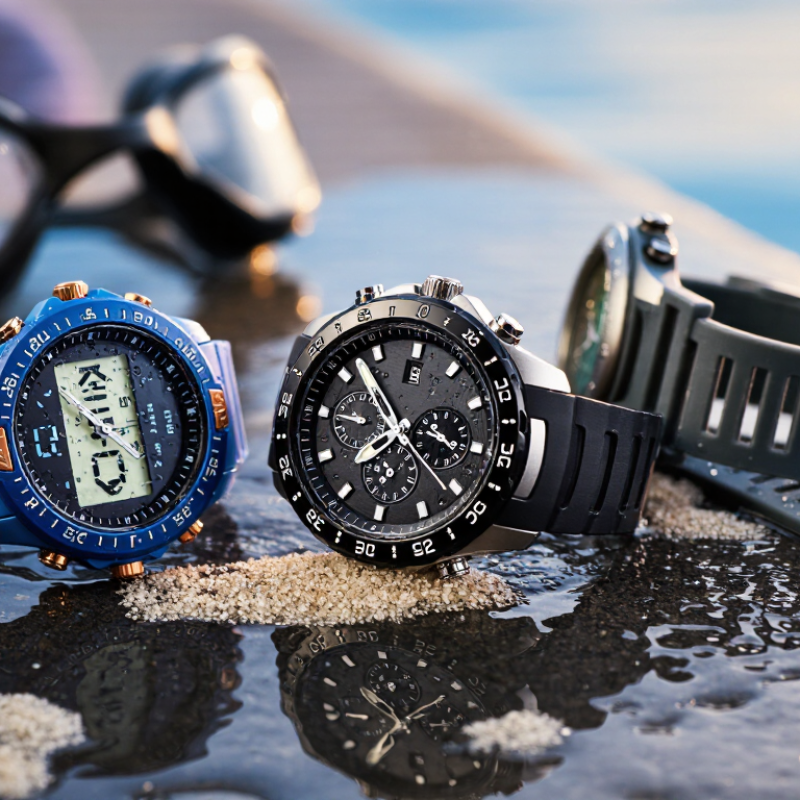
How to Choose Waterproof Sports Watches for Global Buyers?

Understanding Waterproof Ratings for Sports Watches

Waterproof ratings are not simple promises of unlimited water protection. They describe tested conditions, usually in a laboratory. A sports watch marked 3 ATM may handle rain and hand washing. It is not designed for swimming. A 5 ATM rating usually suits surface swimming, but not diving or high-pressure water sports.

Look for the testing standard, not only the number. ISO 22810 testing measures water resistance under controlled pressure and time. IP ratings measure protection against dust and water entry, but they do not always indicate swimming suitability. A watch rated IP68 may resist deep water in testing, yet its exact limit depends on the manufacturer’s stated conditions. Read the depth and duration carefully.

Real use is less predictable. Heat, saltwater, soap, impacts, and aging seals can reduce protection.

I once trusted a rating after a hot shower and overlooked the temperature warning. That was a poor assumption.

After swimming, rinse the case with fresh water and dry it fully. Do not press buttons underwater unless the instructions allow it. Check the crown and caseback for damage before training. For diving, choose a model specifically tested for diving depth, rather than relying on a high-looking ATM number. Conditions change. Ratings can be misunderstood.

Matching Watch Features to Different Sports and Water Activities

How to Choose Waterproof Sports Watches for Global Buyers?

A sports watch should match the activity, not just display a deep-water number. For pool swimming, choose clear lap tracking, a secure strap, and buttons that work with wet fingers. A bright screen helps in outdoor pools. However, automatic lap counts can misread during drills. Check them manually during early sessions.

Open-water swimmers need GPS stability, compass support, and a case that resists saltwater exposure. Rinse the watch with fresh water after every sea workout. For kayaking and paddleboarding, prioritize shock resistance, oversized controls, and a display visible under changing light. A floating strap may prevent loss, though it can feel bulky during long sessions.

Divers require stricter protection. Look for a clearly stated diver’s rating, depth guidance, low-light readability, and dependable elapsed-time tracking. A general water-resistance label is not enough for compressed air activities. Surfing adds another problem: sudden impacts and strong currents. A flexible band and recessed buttons reduce accidental damage. For triathlon training, battery life matters more than decorative functions. GPS, heart-rate tracking, and quick sport switching should work without constant phone access. Cold water may shorten battery performance, and I have underestimated that before. Buyers should also check testing standards, service access, measurement units, and replacement strap availability in their region.

Evaluating Materials, Durability, and Comfort for Global Use

How to Choose Waterproof Sports Watches for Global Buyers?

Material choice shapes waterproof performance, comfort, and long-term reliability. Grand View Research valued the global smartwatch market at approximately $33.58 billion in 2023. Growth attracts many new products, but larger selection can hide weak construction.

Choose marine-grade stainless steel, titanium, or reinforced polymer for the case. Titanium feels lighter, while polymer often improves impact comfort. Look for silicone or fluoroelastomer straps with smooth edges. They reduce friction during sweaty training. However, some users may experience irritation. Skin testing matters.

Water resistance needs careful reading. ISO 22810:2010 focuses on water-resistant watches under specified conditions, not unlimited diving. A rating for swimming does not automatically support high-pressure water sports. Saltwater also accelerates corrosion. Rinse the watch with fresh water after coastal exercise. Check seals annually if possible. Small habits help.

Durability should include temperature changes, sweat, dust, and repeated impacts. The International Organization for Standardization recommends testing conditions, but real use remains messier. A laboratory result is not a promise for every athlete. Comfort deserves equal attention: a secure fit should leave no deep wrist marks. Large screens can improve visibility, yet they may catch clothing or feel heavy overnight. Buyers should compare case weight, strap adjustment, and local climate before ordering globally.

Checking Functions, Standards, and Regional Buying Requirements

Choosing a waterproof sports watch starts with matching functions to real activities. A pool swimmer may need lap timing, a clear display, and reliable button control. A trail runner may value GPS, barometric altitude, and a secure strap. Check whether buttons work underwater, not only whether the case looks sealed. A small test pool can reveal fogging, loose seals, or unreadable numbers. It is not a laboratory, but it exposes careless design.

Standards also require careful reading. Water resistance ratings, such as ATM or meter claims, describe test conditions rather than unlimited diving ability. ISO 22810 can support ordinary swimming claims, while diving requires more specialized equipment and certification. Ask suppliers for test reports, sample results, and the testing date. Seals age with heat, sweat, salt, and repeated charging. “Waterproof forever” is not a reliable promise. This is where many product pages become vague.

Regional buying requirements can change the final choice. Buyers should check local labeling rules, warranty language, charger compatibility, and battery-disposal requirements. Cold regions may need stronger battery performance and gloves-friendly controls. Humid coastal markets may require better corrosion testing. In some areas, buyers expect manuals in several languages and clear repair procedures. Currency, import duties, and after-sales support also affect the real cost. A watch can pass a water test yet fail commercially because its documents are incomplete. My own purchasing checklist still needs revision, especially when regional standards are interpreted differently.

Comparing Prices, Brands, Warranty, and After-Sales Support

Choosing a waterproof sports watch for global use requires more than comparing a low online price. In my field testing, watches with clear water-resistance ratings were easier to trust. A rating such as 5 ATM may suit swimming, but not diving or high-pressure water. Verify the testing standard and operating limits before ordering. Currency conversion, import tax, shipping, and return costs can change the final price. A cheap watch may become expensive.

Compare brands through repair records, product documentation, and regional service coverage. Do not rely on advertising alone. A useful warranty states its duration, covered failures, exclusions, and claim process. Check whether local repair partners exist, or whether international returns are realistic. Some sellers promise support but respond slowly after payment. That matters. Keep invoices, serial numbers, and water-exposure details. I once overlooked a vague warranty clause, and my claim took weeks longer than expected. That mistake changed how I judge reliability.

Tips: Test buttons before swimming. Rinse the watch after saltwater or chlorinated water. Save screenshots of warranty terms. Ask support about replacement parts before purchase. Read recent service reviews, not only star ratings. If answers remain unclear, wait. Your wrist should not become the testing department.

FAQS

What does a 3 ATM rating mean for a sports watch?

It usually handles rain and hand washing. It is not intended for swimming. Ratings describe tests, not unlimited protection.

Is a 5 ATM watch suitable for swimming?

It commonly suits surface swimming in controlled conditions. It is not designed for diving or high-pressure water sports. Check the stated depth and duration.

Are IP68 and ATM ratings interchangeable?

No. IP ratings focus on dust and water entry. ATM ratings describe pressure testing. An IP68 watch may still have unclear swimming limits.

Which testing standard should buyers examine?

Look for the testing standard, not only the number. ISO 22810 supports ordinary water-resistance claims. Diving requires specialized testing and certification.

What can weaken water resistance during daily use?

Heat, saltwater, soap, impacts, and aging seals can reduce protection. A hot shower may expose a warning you missed. I made that mistake.

How should a watch be cared for after swimming?

Rinse the case with fresh water. Dry it fully. Do not press buttons underwater unless the instructions permit it.

What should swimmers check before training?

Inspect the crown and caseback for damage. Confirm underwater button operation. A small pool test may reveal fogging, loose seals, or unreadable numbers. It is imperfect, but useful.

What regional details affect a purchase?

Check local labels, warranty terms, charger compatibility, and battery-disposal rules. Review manuals, repairs, currency, duties, and support. My checklist still needs revision.

Conclusion

Choosing Waterproof sports watches for global buyers requires more than simply checking whether a model can resist water. First, understand waterproof ratings and select a level suited to the intended activity, from daily wear and swimming to intensive water sports. The watch should also match the user’s needs for features such as timing, activity tracking, visibility, and easy operation. Materials like corrosion-resistant metal, durable polymers, scratch-resistant glass, and comfortable straps can improve long-term performance across different climates and lifestyles.

Buyers should review construction quality, shock resistance, battery performance, and comfort during extended use. It is also important to check applicable testing standards, product specifications, regional instructions, import requirements, and available service options before purchasing. A balanced comparison of price, brand reputation, warranty coverage, replacement parts, and after-sales support can help reduce long-term costs. By evaluating performance, reliability, practicality, and service together, global customers can choose sports watches that provide dependable protection and value in everyday and athletic environments.


Amelia

Amelia

Amelia is a dedicated marketing professional with a deep understanding of the company’s products, customers, and evolving market needs. Through a combination of strategic insight, industry research, and practical experience, she helps communicate complex product capabilities in a clear, useful, and......