Luxury metal watches occupy a distinctive place in China’s watch market. They pair visible craftsmanship with materials such as stainless steel, titanium, and precious metals. For global buyers, the challenge is not simply choosing a polished case. It is understanding what sits behind the finish: movement quality, bracelet construction, service access, and clear product documentation.
Jean-Claude Biver, a longtime luxury-watch executive, is often associated with the observation: “You don’t buy a watch to tell the time. You buy a watch to tell the world who you are.” The line captures part of their appeal, though identity is only one consideration. A heavy steel bracelet may feel reassuring in a showroom, yet uncomfortable after a full day of wear. Small details matter.
This guide explores how to assess Luxury metal watches from Chinese brands and suppliers, including design, materials, manufacturing evidence, and buyer due diligence. It also considers how to compare specifications without treating a low price as proof of value. Ask for precise alloy details, movement information, warranty terms, and consistent product photographs. Verify claims independently where possible. That takes effort. It is worth it.
No checklist removes every uncertainty, and a polished catalog is not the same as a reliable product. Some buyers may still prefer established international names; others may find strong craftsmanship among Chinese makers. The aim here is not to promise a perfect purchase, but to help readers ask sharper questions before placing an order.
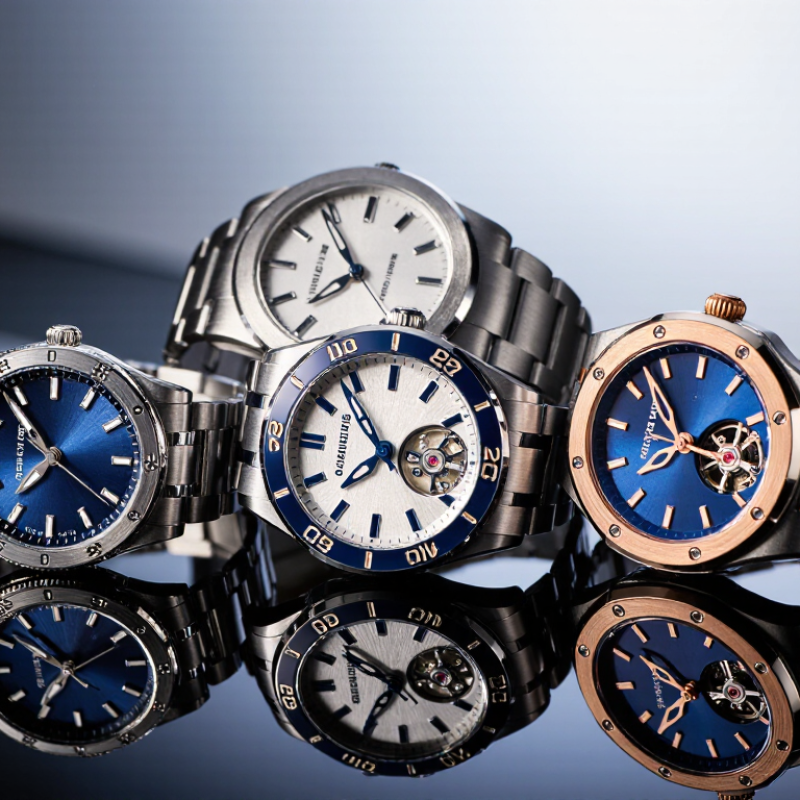
A luxury metal watch is defined by more than weight or a polished surface. The case and bracelet should feel carefully finished, with even edges, consistent brushing, and links that move smoothly without rattling. Steel, titanium, and precious metals each offer different trade-offs in durability, weight, and upkeep. A substantial case can feel impressive, but heft alone proves little.
Movement performance, quality control, repair access, and clear material specifications also matter. The Swiss Watch Industry Federation reported that Swiss watch exports reached CHF 25.9 billion in 2024, down 2.8% from 2023. That figure reflects export value across the industry, not a luxury-quality rating. Buyers should inspect the details themselves: clasp alignment, bracelet fit, readable markings, and service documentation. Small flaws show.
For global buyers, ask how the case metal is identified and whether replacement parts and servicing are available in your market. Water resistance should be supported by stated specifications, not assumed from appearance; ISO 22810 sets requirements for water-resistant watches.
A refined finish can still scratch, and a costly material does not guarantee comfort. Those distinctions are easy to overlook.
In Chinese watchmaking, metal choice shapes both appearance and daily wear. Stainless steel offers a familiar balance of strength, weight, and manageable upkeep. Titanium feels lighter on the wrist, though its muted tone may not suit every buyer. Small details matter. Case makers use machining, hand polishing, and brushing to create crisp transitions between bright edges and satin surfaces. A well-finished lug should catch light cleanly, without sharp corners against the skin. Precious-metal cases require careful control of alloy composition and surface work. Craft skill is visible at close range.
For global buyers, ask what the case and bracelet are made from, rather than relying on a broad label like “metal.” Check that the clasp closes evenly and that bracelet links move without gritty resistance. The finish should remain consistent around the crown, case back, and narrow spaces between links. Ask about material specifications and quality checks, including corrosion and wear testing. These details help establish trust. Still, flawless appearance is not proof of lasting performance; real wear can reveal weaknesses that a showroom light hides. That is worth remembering. A clear specification, careful inspection, and responsive after-sales support make comparison more reliable.
For global buyers, China’s luxury metal-watch market is more than a place to compare prices. It is a production ecosystem where case machining, bracelet finishing, assembly, and packaging can fit into one sourcing route. Buyers can discuss steel grades, titanium weight, clasp tension, and surface finish before approving a sample. Small details matter. A bracelet that looks polished under showroom lights may reveal uneven brushing outdoors.
Market signals still require caution. The Federation of the Swiss Watch Industry reported that Swiss watch exports to mainland China fell 25.8% in 2024, while total exports declined 2.8%. These figures track Swiss exports, not China-made watch sales, but they show how quickly luxury demand can shift. They are not the full picture.
Global buyers should request material certificates, dimensional inspection records, water-resistance test results, and batch samples. Independent checks help verify claims; a polished sample alone proves little. China’s manufacturing scale can support flexible runs and coordinated sourcing, yet supplier capability varies. One weakness in this view is that supplier directories can make quality sound uniform. It is not. Visit, test, document, then negotiate.
How material properties shape the feel of a luxury watch
Case-material density affects a watch’s weight: titanium is notably lighter than stainless steel, while gold and platinum are denser. Values are approximate; gold-alloy density varies with its composition. Density alone does not determine a watch’s quality or price.
Compare the metal before the shine. For steel cases, request the stated alloy grade and confirmation that the case, back, and bracelet use it. Titanium can reduce weight, but its surface may show scratches differently. Check edges under side lighting; uneven brushing or sharp lugs can reveal rushed finishing. Ask suppliers for water-resistance test records, not just a number printed on the dial. A screw-down crown alone proves little. Compare documented movement accuracy, power reserve, and the availability of replacement parts through your service network. This is where quotes often get vague.
For the crystal, confirm whether it is sapphire and ask about anti-reflective coating, which can affect legibility in bright sunlight. Check that luminous markers glow evenly, and inspect the clasp for a secure, smooth closure. Request clear specifications, inspection records, warranty terms, and sample photos taken in natural light. A physical sample is better. Even careful checks miss things; lighting can hide small finish flaws, and a sample may not represent every production batch. I would treat that uncertainty as part of the comparison, not ignore it. Ask how the maker handles batch inspections and quality complaints before placing a large order.
For global buyers sourcing luxury metal watches in China, compare more than the quoted unit price. Request a written specification covering case material, steel grade, coating thickness, movement origin, water-resistance testing, and bracelet finishing. Ask suppliers to separate sample, tooling, packaging, and production costs. A polished sample can hide uneven links or sharp clasp edges, so inspect production units before approving shipment. Small details matter.
Pricing also reflects order volume, metal prices, quality-control requirements, and payment terms. The Federation of the Swiss Watch Industry reported CHF 26.7 billion in Swiss watch exports in 2023, up 7.6% year over year. This is not a China-market price guide, but it shows the scale and movement of global watch demand. Treat supplier quotations as comparable only when specifications and inspection standards match. I would still leave room for uncertainty: exchange rates and material costs can change between quotation and production.
Tips: Confirm the destination market’s tariff classification, duties, taxes, and documentation with a licensed customs broker; requirements differ by country. Include agreed tolerances for finish and function in the purchase contract, and retain inspection records. Before paying a balance, verify carton counts, serial-number records where applicable, and shipping insurance. Check whether the importer or seller bears each transport cost under the chosen delivery terms.
| Watch configuration | Typical case and bracelet materials | Indicative factory FOB range (USD/unit) | Typical first-order MOQ | Indicative production lead time | Buyer sourcing and import checks |
|---|---|---|---|---|---|
| Premium quartz, three-hand or date | 316L stainless-steel case and bracelet; mineral or sapphire crystal, depending on specification | About $35–$120 | Usually 100–500 units per design | About 30–60 days after sample approval | Confirm crystal material, water-resistance test conditions, bracelet finish, and whether the quoted price includes battery and packaging. |
| Automatic mechanical, three-hand or date | 316L stainless steel; solid-link or mixed-link bracelet; sapphire crystal commonly specified for premium positioning | About $90–$350 | Usually 100–500 units per design | About 45–90 days after sample approval | Document movement origin and specification; request timekeeping, power-reserve, and water-resistance test results for the actual production configuration. |
| Titanium automatic or quartz | Titanium case and bracelet; verify alloy and surface treatment in the specification | About $120–$450 | Usually 100–500 units; custom finishes may require more | About 45–90 days after sample approval | Check material grade, coating durability, color consistency, and scratch or abrasion testing. Confirm whether the bracelet and clasp are also titanium. |
| Ceramic-and-steel hybrid | Stainless-steel case with ceramic bezel or bracelet links; sapphire crystal is a common upgrade | About $100–$400 | Usually 200–500 units per design | About 45–90 days after sample approval | Inspect ceramic color, edge finishing, and link assembly. Include impact and fit checks in the pre-shipment inspection plan. |
| Gold-tone plated steel | Stainless-steel base with a gold-tone plated or coated surface; not solid gold | About $50–$200 | Usually 100–500 units per design | About 30–75 days after sample approval | Specify the plating or coating process and thickness where applicable. Verify wear, color, and skin-contact material requirements in the destination market; describe the material accurately in product documents. |
| Solid precious-metal case | Case made from a stated precious-metal alloy; bracelet material and precious-metal content must be specified separately | Quote individually; metal weight, alloy, and current precious-metal prices strongly affect cost | Often project-specific; confirm with the supplier | Often 60–120 days or more after specifications and materials are confirmed | Obtain alloy and fineness documentation, gross and net metal weights, and destination-market hallmarking or disclosure guidance. Arrange secure transport and insurance. |
Pricing and lead times are indicative planning ranges for custom or private-label sourcing, not supplier quotations. FOB prices generally exclude tooling, special packaging, freight, insurance, import duties, taxes, and destination-country compliance costs; confirm inclusions in the purchase contract. Minimum order quantities and schedules vary by specification, season, component availability, and factory capacity.
Import classification and charges depend on the watch’s construction, materials, movement, and destination. Wristwatches may fall under different tariff headings, including HS 9101 or HS 9102; confirm the correct classification, duty, tax, marking, and documentation requirements with the destination customs authority or a licensed customs broker before shipment.
Ask for the stated alloy grade and confirmation that the case, back, and bracelet use it. Inspect the edges under side lighting. Uneven brushing or sharp lugs can reveal rushed finishing.
Titanium can reduce weight, but its surface may show scratches differently. Compare the material against your needs. There is no perfect finish.
Request water-resistance test records, not only a number printed on the dial. A screw-down crown alone proves little.
Confirm whether the crystal is sapphire and ask about anti-reflective coating. Check that luminous markers glow evenly and the clasp closes securely. A physical sample helps.
Ask for documented accuracy, power reserve, movement origin, and replacement-part availability through your service network. Quotes can be vague here.
List case material, steel grade, coating thickness, movement origin, water-resistance testing, and bracelet finishing. Request separate costs for samples, tooling, packaging, and production.
Order volume, metal prices, quality-control requirements, and payment terms can affect pricing. Exchange rates and material costs may shift before production. That uncertainty is easy to underestimate.
Inspect production units for uneven bracelet links and sharp clasp edges. Confirm carton counts, applicable serial-number records, shipping insurance, and transport-cost responsibilities. Keep inspection records.
Ask a licensed customs broker about the destination market’s tariff classification, duties, taxes, and documentation. Requirements differ by country. Don’t guess.
Luxury metal watches combine refined design, durable materials, precise movement, and careful finishing. In Chinese watchmaking, options may feature stainless steel, titanium, or precious-metal components, shaped and polished through skilled processes. Buyers can compare case construction, movement performance, water resistance, bracelet comfort, surface finish, and quality-control practices to understand how each watch balances style and everyday reliability.
China’s luxury watch market serves global buyers through a range of production capabilities and sourcing options. Before placing an order, buyers should clarify specifications, minimum quantities, customization needs, production timelines, packaging, and after-sales support. They should also review quotations carefully, account for shipping and applicable import costs, and confirm that product descriptions and documentation are complete. By weighing craftsmanship, measurable quality, supplier communication, and total landed cost, buyers can make informed choices when sourcing Luxury metal watches for different markets and customer preferences.