Why Choose Automatic Mechanical Watches for Your Business?
Automatic mechanical watches offer more than timekeeping. They can give a business a physical story customers can touch, inspect, and remember. Each movement stores energy through wrist motion, while visible gears and a sweeping seconds hand create a quieter form of engagement. That detail matters in a showroom, during a client meeting, or inside a carefully prepared gift box.
The Federation of the Swiss Watch Industry reported Swiss watch exports of CHF 26.7 billion in 2023. This figure reflects strong global demand for precision, heritage, and perceived value. Deloitte’s 2024 Swiss Watch Industry Study also highlights brand identity, product innovation, and customer experience as important industry priorities. Automatic mechanical watches can support all three, especially when businesses select reliable calibres, transparent warranties, and designs that fit their customers’ daily lives. The choice is not automatically right. Service intervals, purchase costs, and limited water resistance require honest planning.
Jean-Claude Biver, a respected watch-industry veteran, famously said, “The watch industry is not selling time. It is selling emotion.” That idea remains commercially useful, though emotion alone cannot replace quality control. A scratched case, unclear warranty, or inaccurate product claim can damage trust quickly. Businesses should therefore assess movement reliability, supplier history, after-sales support, and documented authenticity before ordering. The result may be less dramatic than a trend-driven purchase. It may also be more durable: a watch that earns repeat attention, starts conversations, and gives customers a reason to remember the brand.
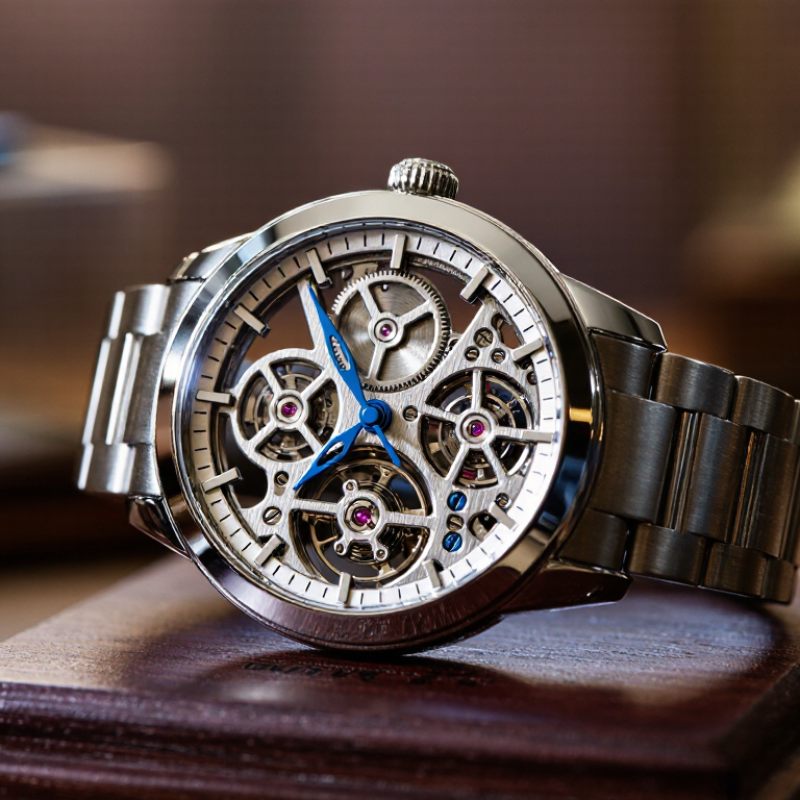
Automatic mechanical watches measure time through a spring-powered movement, not a battery. Inside, a rotor turns as the wearer moves their wrist. That motion gradually winds the mainspring. The stored energy then drives the gears, hands, and display.
No battery is required.
In practical use, I have found that daily movement keeps many automatic watches running reliably. If the watch rests for a day or two, it may stop and need manual winding. Accuracy also varies with position, temperature, and wearing habits. This detail matters when selecting watches for business clients or staff gifts. A professional buyer should review the movement type, power reserve, materials, service access, and warranty terms.
The visible sweep of the seconds hand can create a strong mechanical impression. A transparent case back may also show the rotor and finely arranged gears. These details give recipients something tangible to discuss during meetings. However, automatic watches are not maintenance-free. Periodic servicing helps protect lubrication and moving parts, although the ideal interval depends on construction and use.
Some buyers expect perfect precision and become disappointed. That expectation needs adjustment. An automatic watch represents engineering, craftsmanship, and personal interaction more than laboratory timing. For a business, that character can support a thoughtful gift strategy, but only when the recipient appreciates traditional mechanisms. Preferences differ, and that weakness is easy to overlook.
Automatic mechanical watches run without a battery. A weighted rotor moves as the wearer’s wrist changes position. That motion winds the mainspring through a small set of gears. The spring stores energy and releases it gradually. Simple, but finely controlled.
Inside, the escapement regulates this release. It sends measured impulses to the balance wheel, which swings back and forth. The balance controls the watch’s timing. Gears then transfer that regulated energy to the hour, minute, and second hands. In many models, a transparent case back reveals this motion. It gives customers a useful, tangible sense of craftsmanship.
The system suits businesses that value long-term presentation and mechanical detail. A well-maintained watch can become a lasting part of professional clothing or a thoughtful corporate gift. However, automatic watches are not perfectly precise. Temperature, position, and daily activity can affect accuracy. That limitation deserves honest explanation, especially when customers expect electronic precision. In servicing work, I have seen a watch perform well after cleaning, yet lose time months later because lubrication aged. Regular inspection matters. So does proper storage. Short periods of inactivity are usually harmless, but a stopped watch may need manual winding before use. Mechanical beauty has boundaries. That is worth remembering.
Automatic mechanical watches can give a business a stronger product story. They use wrist movement instead of disposable batteries. This detail creates a clear, tangible selling point. Customers can feel the rotor move when they handle the watch. They also see craftsmanship through the case back.
According to the Federation of the Swiss Watch Industry, Swiss watch exports reached CHF 26.7 billion in 2023, rising 7.2% year on year. This shows continuing global interest in traditional watchmaking.
For retailers, automatic watches may support higher perceived value and better customer engagement. Their long service life can also reduce battery-related after-sales work. However, they still need periodic servicing. That cost should enter your pricing model. Automatic products can remain relevant for years, which may reduce dependence on fast seasonal turnover. Deloitte’s Swiss Watch Industry Study identifies changing consumer expectations and digital competition as major industry pressures. A distinctive mechanical product can help physical stores offer an experience online shops cannot fully reproduce.
Tips: Explain accuracy, servicing, and power reserve honestly. Train staff to demonstrate the movement in under one minute. Use clear maintenance cards. Avoid promising “maintenance-free” ownership.
The business case is not perfect. Automatic watches may cost more to stock, and some customers prefer quartz accuracy. That hesitation matters. Track returns, service requests, and repeat purchases before expanding the range. Small tests often reveal more than attractive sales forecasts.
For a business, an automatic mechanical watch must do more than look expensive. The useful question is whether its features support daily wear, clear presentation, and dependable purchasing. Movement quality matters. Look for stable timekeeping, a practical power reserve, and documented testing rather than decorative language. Accuracy can vary, so suppliers should explain expected performance and adjustment procedures. A transparent specification builds more trust than a vague claim of precision.
Case material affects comfort, durability, and perceived value. Stainless steel handles frequent handling well, while sapphire crystal usually resists visible scratches better than mineral glass. Check the clasp, crown, and caseback. These small parts often reveal manufacturing consistency.
For staff gifts or client programs, dial readability is also important. Strong contrast and restrained markers remain useful in meeting rooms, warehouses, and evening events. Water resistance should match real use, not imagined adventure. A heavier watch may feel premium, but it can become tiring after several hours.
After-sales support deserves equal attention. Ask about warranty coverage, servicing access, replacement parts, and quality control for repeated orders. Consistent finishing matters when dozens of watches are presented together. Custom details should remain legible without making the dial crowded. There is no perfect specification. A transparent caseback may impress clients, yet it can increase cost and reduce protection. Suppliers should explain that trade-off clearly. Even a beautiful watch can disappoint if delivery records, inspection procedures, or communication are weak. Reliable documentation is a feature too.
Automatic mechanical watches can serve businesses beyond simple gift giving. Their rotor-powered movement needs no battery, giving each piece a visible sense of craftsmanship. Businesses can use them for client anniversaries, employee milestones, executive recognition, and premium event packages. Add a discreet case engraving, a dated card, or a service certificate. The gift becomes part of a measurable relationship strategy, not an expensive afterthought.
Use sales data before ordering. The Federation of the Swiss Watch Industry reported watch exports of approximately CHF 26.0 billion in 2024, despite a year-on-year decline. Grand View Research valued the global luxury watch market at about USD 42.21 billion in 2023. These figures cover wider watch categories, not automatic models alone. Still, they show a substantial premium market with strong commercial attention. A business should test a small batch first, track acceptance rates, and compare repeat orders with customer retention. Keep records. Not every recipient appreciates mechanical winding or daily accuracy differences. A short instruction card can prevent confusion, especially because many automatic watches require regular wear or manual winding after stopping.
For retail teams, place the watch near tactile materials, service information, and gift packaging. Train staff to explain power reserves, water resistance, and maintenance without exaggerated claims. For corporate programs, set a clear budget, approval process, and recipient profile. A beautiful watch can miss its purpose if delivery is late or sizing is ignored. The strategy is not flawless. Preferences change, and inventory can age. Review results quarterly, then adjust quantities, specifications, and communication.
Automatic mechanical watches can support premium gifting, executive accessories, client relationship programs, and product collections. Movement frequency is one practical factor when comparing smoothness, energy use, and positioning.
How businesses can use this effectively: Choose lower-frequency movements when longer power efficiency and traditional positioning matter; choose higher-frequency movements when a smoother seconds-hand motion and performance-focused presentation are priorities. The figures show common movement frequencies measured in vibrations per hour and are not company or brand data.
A wrist-powered rotor winds the mainspring as you move. Stored energy drives the gears and hands. No battery is required.
It may stop after resting for one or two days. Manual winding can restart it. The power reserve varies by movement.
No, they are not laboratory instruments. Position, temperature, and wearing habits can affect timekeeping. Expectations need adjustment.
Stainless steel usually handles frequent handling well. Sapphire crystal often resists visible scratches better than mineral glass. Comfort still matters.
Strong dial contrast and restrained markers help in meeting rooms. Clear hands remain useful under dim evening lighting. Appearance is not everything.
Yes, but match it to realistic use. Water resistance should support daily routines, not imaginary adventures. Check the stated rating carefully.
It is not maintenance-free. Periodic servicing protects lubrication and moving parts. The suitable interval depends on construction and use.
Review movement specifications, power reserve, warranty terms, inspection procedures, and delivery records. Consistent finishing matters when gifts are presented together.
It can reveal the rotor and arranged gears, creating a memorable mechanical detail. However, it may increase cost or reduce protection. The trade-off deserves honest discussion.
It can express engineering, craftsmanship, and personal attention. Some recipients may value traditional mechanisms. Others may prefer simpler devices, and that difference is easy to overlook.
Automatic mechanical watches are timepieces powered by the natural movement of the wearer’s wrist rather than batteries. Through an internal rotor and carefully arranged gears, they store and release energy to keep the watch running. This combination of craftsmanship, visible mechanics, and long-term usability makes them an appealing choice for businesses seeking products with a distinctive story and lasting value.
For companies, Automatic mechanical watches can support premium positioning, strengthen customer relationships, and serve as thoughtful gifts for employees, partners, or clients. When selecting them, businesses should consider movement reliability, material quality, accuracy, comfort, design, maintenance needs, and suitability for the intended audience. They can be used effectively in corporate recognition programs, milestone celebrations, promotional campaigns, or curated retail collections. By matching the watch’s features with business goals and communicating its mechanical character clearly, companies can create a practical and memorable experience without relying on short-lived trends.