Explore our CE and ISO-compliant horological assemblies featuring scratch-resistant synthetic sapphire crystals, precision automatic calibers, and marine-grade casing.
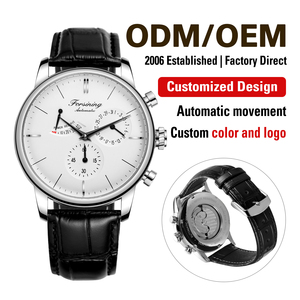
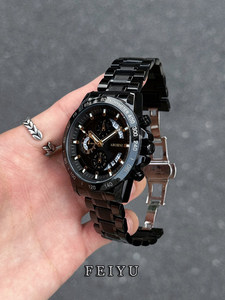
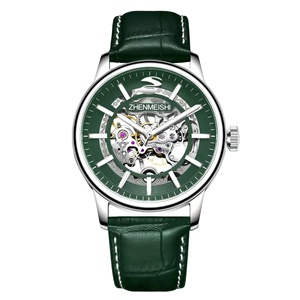
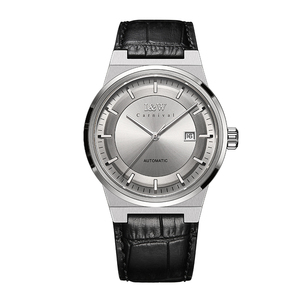
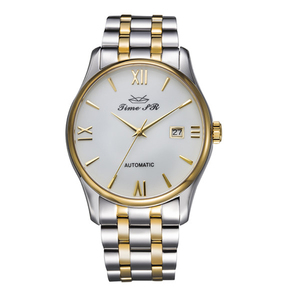
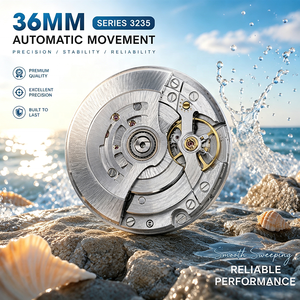
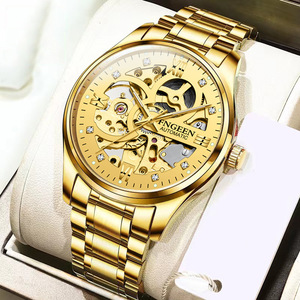
In modern industrial horology, the crystal window serves as the primary barrier protecting delicate mechanical movements, high-frequency quartz resonators, and sensitive optoelectronic displays from external pressure, thermal shock, and environmental degradation. As a premier CE certified sapphire crystal supplier and watch manufacturing group, our industrial lineage dates back to 1966, originating with precision tool machining on Swiss Petermann lathes under the PA Group enterprise umbrella.
Over six decades of vertical integration, our manufacturing facilities have evolved from machining high-tolerance movement components to pioneering full-scale crystal synthesis, ceramic sintering, and complete watch casing engineering. Synthetic sapphire crystal (α-Al2O3 single-crystal corundum) represents the gold standard of optical transparency and physical resilience in high-end horology, industrial instrumentation, and luxury consumer goods.
Information Gain Metric: Standard mineral glass registers 5 to 6 on the Mohs mineral hardness scale, leaving timepieces vulnerable to micro-abrasions from silica and everyday dust. Our engineered single-crystal sapphire achieves a Mohs hardness rating of 9 (Vickers hardness ~2300 HV), making it virtually unscratchable by any material short of natural diamond.
Compliance with European Conformity (CE) directives, alongside ISO 22810 (horological water resistance) and ISO 1413 (shock resistance), requires rigorous material purity, zero internal micro-voids, and anti-reflective optical coatings optimized for high luminous transmittance. This B2B technical whitepaper details the raw material physics, manufacturing trends, procurement risk mitigations, and quality verification standards required by brand procurement managers and horological engineers worldwide.
Synthetic sapphire crystal used in watch face manufacture is produced through the Kyropoulos (KY) or Czochralski (CZ) crystal growth methods, yielding ultra-pure aluminum oxide boules. The table below illustrates the material performance metrics comparing Sapphire Crystal against alternative watch glass materials utilized across OEM product lines:
| Performance Property | Synthetic Sapphire (α-Al₂O₃) | Mineral Crystal (Hardlex) | Acrylic / Hardened Polycarbonate |
|---|---|---|---|
| Mohs Hardness Scale | 9.0 (Scratch Immunity) | 5.5 – 6.5 | 2.0 – 3.0 |
| Vickers Hardness (HV) | 2,200 – 2,300 HV | 550 – 700 HV | 20 – 50 HV |
| Refractive Index (nD) | 1.768 – 1.770 | 1.520 | 1.491 |
| Light Transmission (AR Coated) | 99.2% - 99.8% | 90.0% - 92.0% | 88.0% - 90.0% |
| Thermal Shock Resistance | Up to 1,000°C Delta | Up to 250°C Delta | Up to 80°C Delta |
| Hydrostatic Pressure Limit | > 100 ATM (1000m+) | Approx. 30 ATM | Approx. 5 ATM |
| Chemical Inertness | Acid & Alkali Proof | Moderate Degradation | Solvent Vulnerable |
Our CE-certified manufacturing process enforces a double-sided Anti-Reflective (AR) physical vapor deposition (PVD) coating process inside ultra-high vacuum chambers. By depositing alternating nanometer-scale layers of titanium dioxide (TiO2) and silicon dioxide (SiO2), spectral reflection is suppressed from 8% down to under 0.5%, giving the visual illusion of a completely invisible glass barrier.
Procurement strategies within the horological and wearable device sectors are undergoing a structural shift toward technical differentiation, eco-compliant chemical footprints, and tighter supply chain integration. Enterprise buyers must navigate three major trends shaping sapphire crystal procurement:
Market demand is migrating away from flat disc crystals toward complex 3D boxed, double-domed, and bevel-stepped sapphire profiles. Modern CNC diamond lathe milling enables intricate shapes that mitigate edge distortion while dramatically accentuating skeleton mechanical watch dials.
Beyond anti-reflection, top-tier luxury brands require multi-functional surface treatments. Plasma-enhanced fluorocarbon PVD coatings create water contact angles exceeding 115 degrees, ensuring water droplets and fingerprints slide off effortlessly without smudging.
Next-generation luxury dress and dive watches combine sintered zirconium oxide ceramic bezels with sapphire crystals fused directly via high-pressure fluoropolymer gaskets, achieving complete scratch immunity across the entire front hemisphere of the timepiece.
As consumer preference favors both high-complication mechanical watches (such as skeletonized automatic calibers and open-heart movements) and ultra-thin dress designs, sapphire crystal suppliers must maintain strict dimensional tolerances within ±0.01mm. The integration of sapphire crystals into modern watch manufacture requires consideration of three mechanical factors:
1. Gasket Seating and Creep Prevention: Under high hydrostatic pressure (e.g., 10ATM to 50ATM dive watch ratings), flat and domed sapphire lenses exert heavy shearing forces on internal I-ring or L-ring synthetic polymer gaskets. Our factory utilizes high-grade I-Ring gaskets made from Hytrel or Teflon, ensuring zero cold-flow deformation and permanent water seals across decades of operation.
2. Exhibition Caseback Structural Integrity: Modern collectors demand transparent sapphire exhibition casebacks to admire decorated bridges, Geneva stripes (Côtes de Genève), and rotor mechanics. Supplier integration must guarantee that exhibition caseback windows withstand identical pressure testing to the front crystal, eliminating structural weak points in the casing.
3. Cyclops Lens Optical Magnification: For date display windows, our automated polishing line fuses a synthetic sapphire magnification lens (Cyclops) using UV-cured optical adhesives with matched refractive indexes. This eliminates optical distortion and provides crisp 2.5× magnification of date discs.
Essential guidance for brand directors, supply chain managers, and horological engineers sourcing CE-certified sapphire crystal timepieces and components.
Selecting a horological partner requires evaluate more than superficial aesthetics; it demands verifying deep industrial roots, rigorous quality control, and dependable supply chain logistics. Our enterprise advantages include:
Founded on Petermann Swiss lathe precision engineering, our machining facilities hold micron-level tolerances for movement components, case back threads, and crystal seat bezels.
Unlike third-party brand assemblers who sample-test 5% of batches, 100% of our produced timepieces undergo dual pneumatic and hydro-pressure verification prior to packaging.
Supported by a worldwide service network and serial-coded anti-counterfeiting tracking, we provide complete post-purchase technical support, spare parts availability, and warranty protection.