
1. China Quartz Movement Manufacturing: An Executive Industry Whitepaper
The global watchmaking industry relies fundamentally on precision timekeeping cores that deliver uninterrupted accuracy, structural stability, and cost-efficient scalable production. As a flagship China Quartz Movement Manufacturer & Supplier backed by the industrial legacy of the PA Group since 1966, our enterprise represents six decades of micro-engineering refinement. What began with machining high-precision mechanical watch spare parts on Petermann Swiss automatic lathes has evolved into a fully integrated, state-of-the-art horological manufacturing power.
In the late 1980s, recognizing the seismic transformation of global micro-electronics, our manufacturing facilities transitioned into mass quartz movement fabrication through technical collaboration with leading Swiss and Japanese horological engineers. In 1996, we introduced the market's first guaranteed waterproof watch series backed by rigorous dry vacuum and wet pressure testing protocols. Today, our advanced manufacturing plants engineer complete analog quartz movements, high-torque silent sweep clock mechanisms, multi-calendar complications, and hybrid smart-analog modules for premium brand owners, microbrands, OEM assemblers, and international wholesale distributors.
Unlike general trading suppliers who outsource movement components across disparate vendors, a vertically integrated manufacturer controls crystal resonator trimming, micro-stepper motor coil winding, brass plate stamping, and IC micro-soldering under one roof. This strict vertical oversight eliminates batch-to-batch phase errors and gear backlash drift.
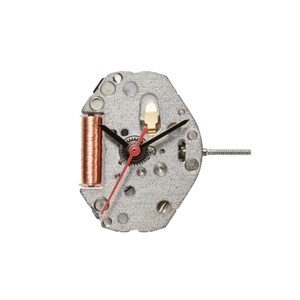
Precision quartz manufacturing is not merely an assembly process—it is a discipline of atomic tolerances. Synthetic quartz crystal resonators cut at precise AT-cut orientation angles oscillate at exactly 32,768 Hz when subjected to an electric current. This high-frequency oscillation is divided down via an integrated circuit (IC) counter chain to exactly one pulse per second, which drives a bi-directional micro-stepper motor. Our production facilities maintain cleanroom environments (ISO Class 7) for all movement assembly, ensuring zero micro-dust contamination on jewel bearings and gear teeth pivots.
2. Enterprise Manufacturing Advantages & Technological Lineage
To evaluate a primary B2B quartz movement supplier, procurement officers must look beyond unit price and analyze production lineage, quality control infrastructure, and metal alloy standards. Our enterprise advantages rest on four foundational pillars derived from our original watch house heritage:
Swiss Lathe Tolerances
Originating from Petermann Swiss lathe machining since 1966, our gear trains, stem balance pivots, and wheel arbor pinions are turned to sub-micron accuracy, significantly reducing friction coefficient and mechanical energy loss.
Dual-Stage Pressure Verification
Pioneered in 1996 for our guaranteed waterproof watch series, every movement intended for sealed casing undergoes dry vacuum leakage checks followed by wet hydrostatic immersion checks to guarantee gasket compression stability.
Ultra-Low Power Consumption ICs
Our proprietary CMOS integrated circuits feature dynamic pulse voltage regulation, extending standard silver oxide battery life (SR626SW / SR920SW) up to 36 to 48 months under nominal thermal conditions.
Modular OEM/ODM Customization
From custom calendar disc positioning (e.g., 3-o'clock, 4.5-o'clock, or dual day-week display) to hand stem height extensions for multi-layered ceramic and mother-of-pearl dials.
3. Technical Benchmark: Movement Caliber Specifications
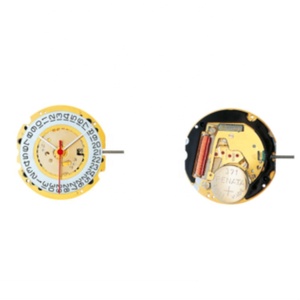
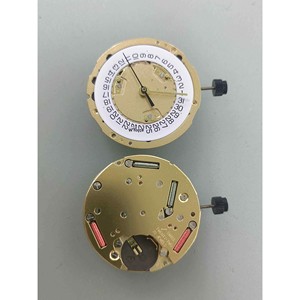
To assist watch brand engineering teams and B2B sourcing managers in selecting the optimal quartz movement architecture, the comparative analysis matrix below outlines key physical dimensions, operational parameters, and target application profiles:
| Caliber Family | Dimensions (Ligne / mm) | Stem / Hand Height | Frequency / Accuracy | Battery Life Specs | Recommended Application |
|---|---|---|---|---|---|
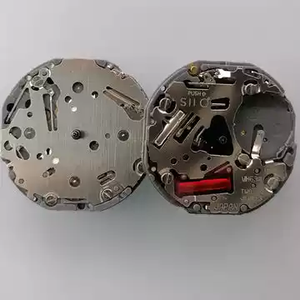
| Caliber 705 Standard | 10½ ‴ (Ø 23.30 mm) | Standard H1 / H2 (1.10mm) | 32,768 Hz (±15 sec/mo) | 36 Months (SR620SW) | Slim Men's & Women's Dress Watches |
| Miyota 2035 Architecture | 6¾ × 8 ‴ (15.30 × 17.80 mm) | Universal Brass Stem | 32,768 Hz (±20 sec/mo) | 36 Months (SR626SW) | Mass Market & High-Volume Fashion Analog |
| VH31 Sweep Second | 10½ ‴ (Ø 23.70 mm) | Smooth 4-Beat/Sec Sweep | 32,768 Hz (±15 sec/mo) | 24 Months (SR920SW) | Mechanical Look-alike Sweep Quartz Watches |
| ETA 251 Mod Complication | 13¼ ‴ (Ø 30.00 mm) | 4-Point Calendar / Chrono | 32,768 Hz (±10 sec/mo) | 48 Months (SR936SW) | Executive Sports Chronographs & Tool Watches |
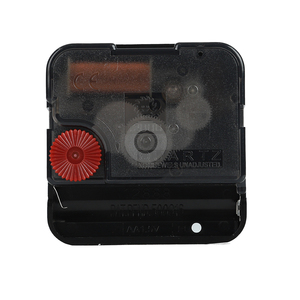
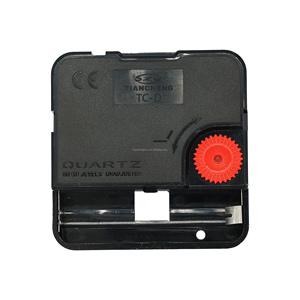
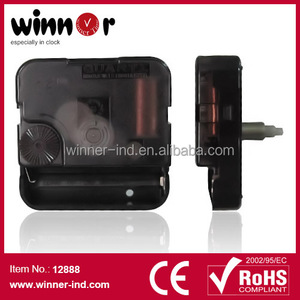
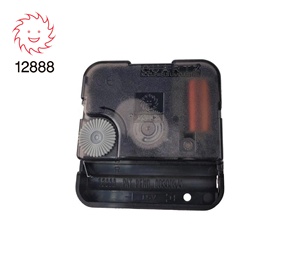
| Silent Sweep Clock (TC-D) | 56 × 56 × 16 mm | Shaft Lengths 13mm to 22mm | 32,768 Hz (Quiet Motor) | 12-18 Months (AA 1.5V) | Modern Architectural & Silent Wall Clocks |
4. Technology Development Trends in Quartz Movement Engineering
The global quartz movement market is experiencing a profound technological evolution driven by consumer demands for enhanced sweeping aesthetics, eco-friendly energy harvesting, ultra-quiet operation, and seamless hybrid smartwatch integration. Key horological design trends reshaping China's manufacturing landscape include:
A. Mechanical-Aesthetic Sweeping Quartz (Multi-Beat Stepper Motors)
Traditionally, analog quartz watch movements operate at 1 tick per second (1 Hz step pulse) to conserve battery energy. However, modern consumers increasingly desire the sweeping visual fluidity of mechanical automatic watches. Advances in low-power micro-coil winding and multi-pulse IC timing now enable 4-beat per second (2 Hz) and 16-beat per second sweeping quartz calibers (such as the VH31 series). These movements deliver the refined aesthetic of a high-frequency mechanical caliber while retaining quartz accuracy and shock resilience.
B. Solar and Light-Harvesting Quartz Technology
Sustainability and long service intervals have positioned solar quartz movements at the forefront of global procurement trends. By embedding ultra-thin silicon amorphous solar micro-cells beneath semi-transparent watch dials, ambient light (both daylight and artificial indoor fluorescent lighting) is converted into electrical energy stored in a titanium-lithium rechargeable micro-battery. This eliminates disposable button-cell waste and provides operational autonomy for up to 6 months in total darkness.
C. Ceramic and Antimagnetic Material Integration
Modern wristwatches are exposed to unprecedented magnetic fields from smartphones, laptops, magnetic clasps, and inductive chargers. Standard steel components in traditional watch gear trains can become magnetized, resulting in rate deviation or motor stoppage. Premier China manufacturers are replacing vulnerable steel components with synthetic ruby bearings, non-magnetic brass gear teeth, and carbon-fiber reinforced plates. Furthermore, high-tech ceramic watch cases require specialized shock-absorbing movement holders to buffer axial impacts.
D. Zero-Noise Silent Sweep Wall Clock Mechanisms
In the home decor and architectural timing sector, traditional stepping clock mechanisms produce audible clicking noises unacceptable in luxury residential, hospital, and corporate office environments. Modern sweep clock movements utilize continuous-rotation micro-gears paired with fluid damping oils, reducing operational noise below 15 decibels. This technology ensures smooth hand progression without mechanical resonance.
5. Global Procurement & Sourcing Trends (2025–2030 B2B Outlook)
As international watch brands, retail chains, and private label importers optimize their global supply chains, procuring quartz movements from China requires strategic alignment with emerging trade dynamics. Procurement executives should structure their sourcing strategies around three pivotal macroeconomic trends:
Leading global brands are shifting away from fragmented component purchasing (buying stems, coils, and plates from separate vendors) toward single-source vertical partners who deliver pre-tested, cased-ready movements. This reduces assembly line yield loss by up to 14%.
- Near-Zero Lead Time Assembly Lines: Standardized movement architectures with modular date rings enable suppliers to maintain buffer inventories of raw gear trains, reducing OEM lead times from 120 days down to 25–30 calendar days.
- Automated Vision Inspection (AVI): Human inspection is increasingly augmented by high-resolution optical cameras that analyze hand height alignment, date disc print crispness, and gear tooth mesh tolerances in under 800 milliseconds per unit.
- Strict Compliance with Environmental Directives: Full compliance with EU RoHS (Restriction of Hazardous Substances), REACH, and mercury-free silver oxide battery mandates has become a mandatory prerequisite for global market access.
6. Rigorous Quality Assurance: From Swiss Lathe Machining to Final Casing
Quality control is the core of horological reliability. A single microscopic burr on a rotor wheel or an improperly seated synthetic rubber O-ring can compromise the water resistance and rate stability of a timepiece. Our manufacturing quality management system follows a strict 6-stage testing protocol:
- Stage 1: Raw Material Metallurgy Audit: Spectrographic analysis of imported brass alloys, stainless steel arbors, and synthetic sapphire/ruby jewel bearings to ensure structural purity and corrosion resistance.
- Stage 2: Automatic Lathe Tolerance Check: Pinions turned on Swiss-style automatic lathes undergo dimensional verification using laser micrometer gauges with a tolerance threshold of ±0.002 mm.
- Stage 3: Quartz Crystal Aging Calibration: Synthetic quartz crystals are thermally cycled between -10°C and +60°C to eliminate initial frequency drift before circuit board mounting.
- Stage 4: Automated Rate & Current Consumption Testing: Assembled movements are evaluated on multi-channel quartz timing analyzers to measure daily rate deviation (seconds per day) and micro-ampere current draw.
- Stage 5: Dual Vacuum & Water Pressure Validation: Built upon our legacy since 1996, sealed case-movement assemblies are tested under both negative air vacuum and positive hydrostatic water pressure (3 ATM to 20 ATM depending on model specification).
- Stage 6: Final Drop & Impact Simulation: Sample batches are subjected to pendulum impact testers to verify micro-stepper gear resistance against wrist vibrations and accidental drops.