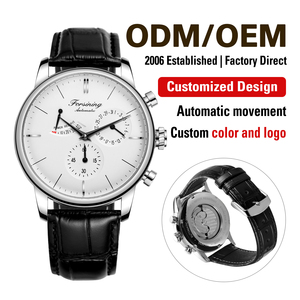
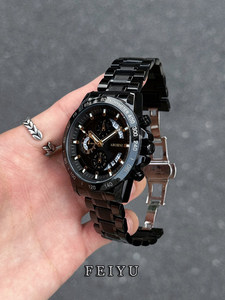
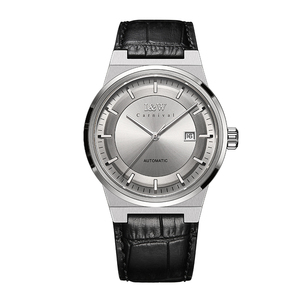
High-precision mechanical movements, solid stainless steel cases, and premium OEM custom watch bands crafted for international luxury brands.
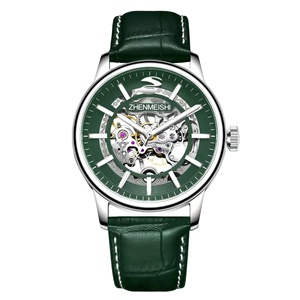
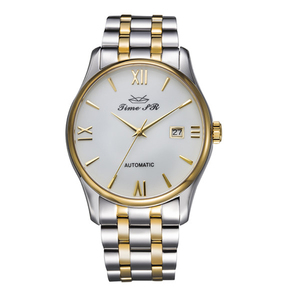
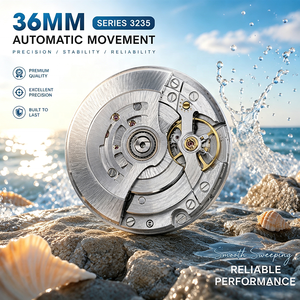
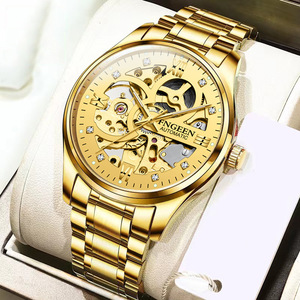
In the global luxury timepiece ecosystem, sourcing directly from a established China wholesale watch straps manufacturer requires evaluating true horological pedigree rather than simple assembly capability. Dating back to 1966, our parent group PA began machining complex mechanical watch components utilizing high-precision Swiss Petermann lathes. This foundational commitment to strict tolerances led to Swiss-collaborated mechanical movement production, in-house quartz movement manufacturing in the late 1980s, and the launching of pioneer guaranteed waterproof timepieces by 1996.
Today, our manufacturing complex operates as a vertically integrated entity. Unlike pure trading intermediaries or simple strap stitchers, our facility engineers the complete interface between the watch case lug, spring bar mechanism, and strap closure. By unifying tool-making, metallurgy, polymer chemistry, and tannery processes under one quality management system, we eliminate dimension variance, material fatigue, and aesthetic inconsistencies for global microbrands, OEM enterprises, and high-volume retail distributors.
Micro-machined spring-bar housing and solid end-links engineered within ±0.01mm tolerance to prevent watch-head play.
Every waterproof band and integrated gasket assembly undergoes initial vacuum dry testing followed by wet immersion condensation checking.
Cases and strap links compressed at 1,400°C for scratch resilience 400% greater than standard 316L stainless steel.
Choosing the correct substrate for custom watch straps impacts not only consumer comfort but also returns, warranty claims, and regulatory compliance across target markets such as the European Union (REACH Annex XVII) and North America (Proposition 65). Our Chinese manufacturing operations specialize in four core material domains:
Solid-link metal bracelets require exact cold-forging and CNC milling to achieve seamless link articulation. We utilize low-carbon 316L marine-grade stainless steel as standard, providing superior resistance to pitting corrosion caused by human sweat and saltwater. For premier luxury projects, our factories execute 904L stainless steel and Grade 5 Titanium fabrication with custom PVD (Physical Vapor Deposition) and IP (Ion Plating) rose gold, yellow gold, and diamond-like carbon (DLC) black coatings.
Our leather strap division works directly with audited tanneries in Italy and domestic premier facilities. We process top-grain calfskin, full-grain vegetable-tanned hides, and ethically sourced exotic skins (alligator, python, and ostrich with CITES certification). Critical technical parameters include edge-painting thickness, hydrophobic lining barriers, and non-allergenic, anti-microbial backing leathers designed for humid climates.
Utilizing high-purity Zirconium Oxide powder, our ceramic link bracelets undergo high-pressure injection molding followed by thermal sintering at temperatures exceeding 1,400°C. Diamond-wheel tooling grinds each link to final dimensions before diamond-slurry polishing. The resultant ceramic watch band is completely hypoallergenic, immune to UV discoloration, and practically scratch-proof during daily wear.
For dive watches, smartwatches, and sports chronograph lines, standard silicone often attracts dust and suffers from tear propagation. Our factory utilizes raw Fluorocarbon Rubber (FKM) which resists high thermal stress, oil penetration, and UV degradation. FKM rubber watch bands deliver a dense, supple feel on the wrist while offering a tensile strength rating exceeding 15 MPa.
| Material Category | Tensile / Hardness Rating | Corrosion & UV Resistance | Target Application | Regulatory Compliance |
|---|---|---|---|---|
| 316L Stainless Steel | 220–240 HV | High (Salt-spray 72h pass) | Executive, Diver & Business Watches | REACH Nickel Release Pass |
| ZrO2 Ceramic | 1,500–1,600 HV | Immune to UV & Oxidation | High-End Luxury & Fashion Dress | Hypoallergenic / Biocompatible |
| FKM Fluoroelastomer | 15–18 MPa Tensile | Exceptional (Ozone & Oil Proof) | Extreme Sports, Tactical, Smartwatches | RoHS / FDA Food-Grade Compatible |
| Top-Grain Leather | Flex Test 20,000+ cycles | Moisture-Sealed Edge Paint | Classic Dress & Heritage Collections | PCP & Azo Dye Free |
As global watch consumption shifts between traditional mechanical horology and connected wearable technology, brand buyers must align with manufacturers capable of rapid technological adaptation. B2B procurement trends highlight four major shifts currently shaping Chinese factory production lines:
Consumer demand for instant strap personalization has rendered traditional fixed spring bars obsolete. Modern OEM manufacturing mandates integrated quick-release push pins, micro-locking lug mechanisms, and proprietary tool-free interchangeable end-pieces optimized for high-volume assembly lines.
Environmental legislation and ESG commitments are accelerating the deployment of plant-based leather alternatives (such as apple skin waste, pineapple leaf fibers, and bio-based polyurethane). Leading Chinese factories are investing heavily in eco-tanning chemistry that reduces water consumption by up to 60%.
The convergence of analog watch aesthetics with biometric tracking requires watch straps designed with embedded NFC chips, continuous pulse-oximetry sensor cavities, and conductive silicone channels—all while maintaining slim, traditional profiles.
Understanding the geographic and technological clustering of China’s watch manufacturing ecosystem is vital for international supply chain managers. Guangdong Province—specifically the Shenzhen, Dongguan, and Guangzhou industrial corridors—accounts for over 80% of global watch case, dial, movement assembly, and strap production output. This geographic density enables unprecedented supply chain velocity.
In our manufacturing facility, raw material sourcing, mold fabrication, electroplating, stitching, pressure testing, and final custom retail packaging take place within a tightly synchronized radius. This proximity drastically reduces prototyping turnaround times from industry averages of 45 days down to 12 to 14 working days for initial 3D samples and CNC prototypes.
Furthermore, navigating international customs tariffs and import logistics requires absolute transparency in Harmonized System (HS) Code classification. Our export department provides full documentation support, including HS Code 9113.10 (Metal Watch Straps), HS Code 9113.20 (Base Metal Plated Straps), and HS Code 9113.90 (Leather, Synthetic, and Rubber Watch Bands), guaranteeing hassle-free clearing through European, American, and Asian ports of entry.
A fundamental risk when procuring watch bands from overseas factories is long-term structural failure—such as broken buckle pins, peeling edge paint, or premature discoloration. To mitigate these risks, our factory enforces a rigorous four-stage quality assurance protocol before any production lot leaves the facility:
1. Tensile Pull & Lug Connection Testing: Strap-to-case connection points are subjected to static pull force tests exceeding 150 Newtons for 60 seconds to ensure spring bars and end-links hold securely during intense physical activity.
2. Torture Torsion & Flex-Cycling: Leather and rubber straps undergo automated flex-testing machine cycles up to 20,000 continuous bend iterations at variable humidity levels, detecting micro-fractures in the inner core before mass delivery.
3. Artificial Sweat & Salt-Spray Chamber: Metal bracelets and plated buckles are exposed to neutral salt spray (NSS) chambers for 72 consecutive hours according to ISO 9227 standards, verifying zero rust formation, pitting, or plating degradation.
4. UV & Color Fastness Exposure: All dyed leathers, vulcanized rubbers, and coated fabrics are tested under high-intensity ultraviolet lamp arrays to guarantee colorfastness scores of Grade 4 or higher on the ISO Gray Scale.
Essential insights for procurement managers, brand founders, and OEM buyers contracting watch strap production in China.
For standard stocked leather colors and existing stainless steel link molds, our baseline MOQ starts at 300 to 500 units per style. For fully custom OEM designs requiring custom injection molds (such as specialized FKM rubber curves or proprietary ceramic end-links), the standard MOQ is typically 1,000 units per colorway to offset initial tooling setup costs.
Yes. All raw materials—ranging from nickel-free 316L stainless steel alloys to azo-dye-free leather linings and phthalate-free silicone polymers—undergo third-party testing (SGS, TÜV, or Intertek). We provide certified test reports verifying compliance with REACH Annex XVII chemical restrictions and US California Proposition 65 lead/cadmium limits.
For standard technical drawing approvals, 3D CAD modeling and rapid resin prototyping require approximately 3 to 5 business days. Production of physical metal tooling, steel molds, or custom leather dies generally takes 15 to 20 days, followed by sample delivery via international express within 3 to 5 days.
Fitment precision is maintained by engineering tolerance limits to ±0.01mm on CNC lug channels and spring bar placement. Buyers can either provide official 3D CAD files of their watch case, or send physical sample watch heads to our factory engineering division for precision coordinate-measuring machine (CMM) scanning.
Transform your timepiece collection with Swiss-heritage manufacturing precision, certified material safety, and competitive direct-from-factory wholesale pricing.