Engineered for global watch brands, enterprise distributors, and private labels seeking turnkey mechanical-digital integration.
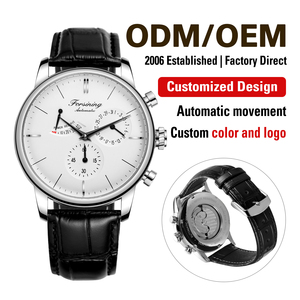
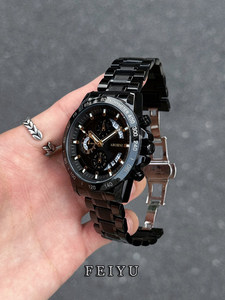
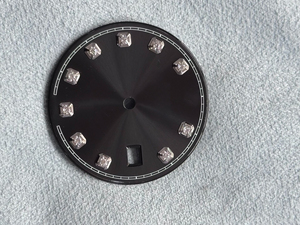
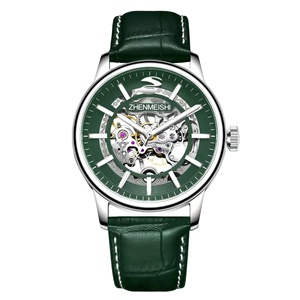
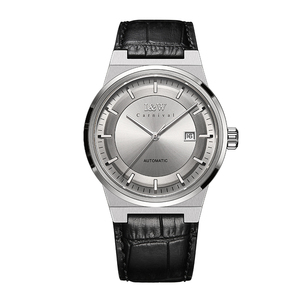
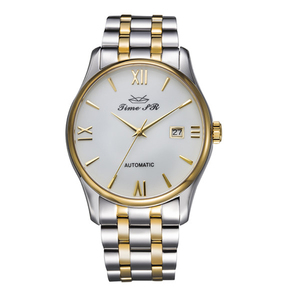
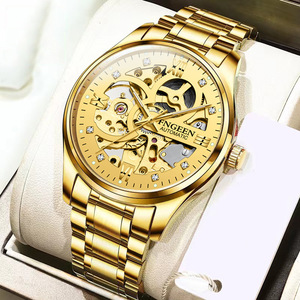
The global wearable device industry is undergoing a structural transition. Consumer demand has evolved past the purely digital LCD/OLED "black screen" wrist computers into timepieces that honor traditional horological craftsmanship while embedding invisible, high-precision biometric and connected technologies. This convergence has created the Hybrid Smartwatch category—a segment commanding the highest retail margin stability and customer retention across European, North American, and Asia-Pacific markets.
As a vertically integrated OEM/ODM Hybrid Smartwatches Manufacturer & Exporter, our group bridges six decades of mechanical watchmaking lineage with cutting-edge micro-electronics engineering. By combining physical mechanical gear trains, physical hands, real ceramic or 316L stainless steel cases with invisible micro-OLED sub-displays, low-power Bluetooth Low Energy (BLE 5.4) chipsets, and optical biosensor arrays, we enable global brands to deliver products with up to 30 days of battery life without sacrificing analog luxury appeal.
Designing an OEM/ODM hybrid timepiece requires solving complex physical and electromagnetic challenges that purely digital smartwatch manufacturers cannot address. Traditional quartz or automatic mechanical movements generate micro-magnetic fields and require physical clearance, while digital smart modules require optical clearance, antenna isolation, and thermal dissipation.
Independent power routing ensures the mechanical gear train runs on an isolated coin cell or mechanical mainspring (up to 3 years), while smart sensors operate on a lithium-polymer rechargeable battery.
Bi-directional micro-stepper motors control the mechanical hands. Upon receiving app notifications, the physical hands dynamically align to 9:15 or 10:10 to clear the hidden display screen.
Zirconium oxide (ZrO2) ceramic bezels sintered at 1,400°C offer diamond-grade scratch resistance (1,500+ Vickers) alongside complete RF transparency for Bluetooth signal stability.
Information Gain Metric: Standard consumer electronics factories suffer a 12-18% failure rate when dry-testing smartwatches with mechanical components due to mechanical interference. Our Swiss lathe-derived tolerance standards (within ±0.002mm) reduce casing vibration and gasket displacement failure rates to under 0.03% during 5ATM pressure testing.
Our industrial roots extend back to 1966, originating with a single Petermann Swiss automatic lathe dedicated to machining high-precision mechanical watch gear spares. Over the decades, our group progressed into full mechanical movement assembly in collaboration with Swiss horological engineers, subsequently establishing large-scale quartz movement manufacturing in the late 1980s.
In 1996, the group launched groundbreaking guaranteed waterproof watch series, setting new standards for gasket compression, crown sealing, and vacuum testing. Today, this six-decade manufacturing foundation powers our specialized OEM/ODM Hybrid Smartwatch export operations, serving major retail chains, luxury watch groups, and tech brands across North America, Europe, the Middle East, and Latin America.
Unlike third-party assembly agents who outsource key components, our vertical manufacturing matrix controls every stage of hybrid smartwatch creation:
Strategic buyers, procurement directors, and brand managers must align product roadmaps with upcoming market shifts. Based on global consumer analytics and hardware breakthroughs, we identify five essential procurement trends driving the hybrid smartwatch market over the next five years:
Procurement is shifting away from visible OLED cutouts. Future hybrid models utilize hidden Micro-LED layers beneath semi-transparent sapphire crystals, revealing digital data only upon wrist gesture activation.
To solve smartwatch battery anxiety, next-generation hybrid cases integrate solar ring dials and micro-turbines. These harvest indoor lighting and kinetic wrist movement, eliminating wired charging requirements for basic biometric tracking.
B2B buyers are demanding PPG sensors capable of continuous SpO2 monitoring, atrial fibrillation detection, stress monitoring via Heart Rate Variability (HRV), and core body temperature tracking integrated into the watch back plate.
Hybrid smartwatches are rapidly becoming corporate access keys and contact-less payment vector devices. Embedded secure elements (eSE) allow hardware-encrypted access to office complexes, luxury vehicles, and digital payment networks.
European and American regulatory shifts (including REACH and eco-design mandates) require buyers to source watches constructed from 100% recycled 316L steel, ocean-bound plastic straps, and cobalt-free rechargeable batteries.
In addition to market trends, hardware development for hybrid smartwatches is experiencing rapid innovation across three main vectors:
Modern hybrid movements utilize a primary low-power ARM Cortex-M33 micro-controller for handling BLE telemetry and sensor algorithms, paired with an ultra-low-power co-processor dedicated solely to hand movement timing. This ensures that even if the rechargeable lithium battery depletes completely after weeks of smart feature usage, the physical mechanical hands continue to keep accurate time for several months.
Mechanical watch hands are subject to physical inertia, shock, and gravitational vibration. Our research team has implemented proprietary inertial measurement unit (IMU) software algorithms that compensate for wrist motion noise. When a user checks their wrist, the micro-stepper motors auto-correct gear alignment, ensuring physical hand precision within ±0.1 seconds of atomic clock synchronization.
To reduce prototype lead times for private label clients from 12 months down to 80 days, we have standardizing module housing dimensions. Clients can customize case shape, bezel materials, dial typography, and hand geometry while utilizing pre-certified internal hybrid engine blocks (including CE, FCC, RoHS, and UN38.3 battery certifications).
Essential answers for importers, brand owners, supply chain managers, and OEM partners.
Our standard Minimum Order Quantity (MOQ) for fully customized OEM hybrid smartwatches starts at 500 units per colorway for existing modular tooling. For complete custom ODM projects involving new case mold development, custom bezel dies, and bespoke software SDK development, the standard baseline MOQ is 1,000 to 2,000 units depending on material selection (e.g., 316L stainless steel vs. sintered zirconium ceramic).
Waterproofing a hybrid smartwatch is significantly more complex than a standard digital watch due to physical button stems, crown tubes, optical sensor windows on the backplate, and charging pin contacts. We employ proprietary double-gasket Fluororubber (FKM) O-rings around all mechanical stems. The optical heart-rate window is hermetically sealed to the backplate using ultrasonic welding and hydrophobic adhesive bonds. 100% of production units undergo dry vacuum testing followed by wet immersion testing per ISO 22810 standards.
Yes. We offer complete turnkey white-label application engineering services. Our software development team customizes mobile apps for both Apple App Store and Google Play Store under your corporate developer account. The app UI/UX, brand logo, color palettes, cloud server connectivity, and user telemetry dashboards are fully tailored to your enterprise branding guidelines, compliant with GDPR and CCPA privacy standards.
Initial design rendering and 3D sample prototyping require 15 to 20 days. Once working engineering samples are verified and approved, full mass production lead time is typically 45 to 60 days. This timeline accounts for movement assembly, SMT circuit board placement, ceramic sintering, vacuum plating, casing assembly, 72-hour burn-in testing, double water-pressure testing, and final quality control audit.
All timepieces manufactured in our facilities comply with major global regulatory standards. Standard export certifications include CE, FCC, RoHS, REACH, WEEE, UN38.3 (lithium battery transport safety), and MSDS. For medical or specialized health tracking SKUs, we provide component-level biological compatibility reports (ISO 10993) for all skin-contact materials.
Intellectual property protection is fundamental to our enterprise partnerships. Prior to receiving any technical drawings, CAD files, or brand assets, we sign legally binding Non-Disclosure Agreements (NDAs). All custom molds, case dies, and proprietary firmware source codes remain the exclusive property of the client. Molds are stored in segregated, climate-controlled vault facilities accessible only by authorized tooling engineers.
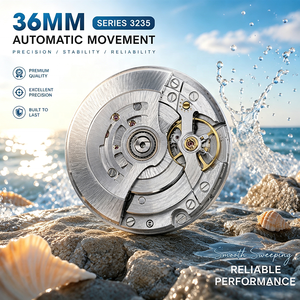
Depending on your price positioning and target demographic, we offer multiple mechanical movement platforms. Options include Swiss-engineered quartz movements, high-torque Japanese quartz gearboxes (Seiko/Epson/Miyota), custom automatic self-winding mechanical movements with skeleton rotors, and integrated micro-stepper motor assemblies engineered specifically for high-frequency hand movements.
Our quality control workflow includes a strict 6-stage auditing protocol: 1) Incoming Raw Material Inspection (IQC) for steel purity and ceramic density; 2) Movement Rate Accuracy & Power Consumption Audit; 3) Environmental Chamber Thermal Shock Testing (-20°C to +60°C); 4) 5ATM/10ATM Pressure Testing; 5) Electrostatic Discharge (ESD) Shielding Verification; 6) Cosmetic Inspection under 10x Optical Magnification.
In a competitive global marketplace, product quality alone is insufficient. B2B importers require supply chain predictability, strict compliance adherence, rapid prototype iteration, and robust after-sales warranty support. Our manufacturing facility combines legacy watchmaking wisdom with automated industrial manufacturing to provide unmatched client advantages.
Unrivaled heritage in machining mechanical spares, Swiss lathe tooling, movement assembly, and precision watchmaking safeguards your brand from common electronic-factory design flaws.
Every unit leaving our production floor passes rigorous vacuum pressure testing and double-condensation immersion verification, backed by certified IP68/5ATM/10ATM ratings.
From initial industrial design rendering, 3D rapid prototyping, PCB SMT placement, to retail box packaging and global door-to-door export logistics.
Connect directly with our engineering specialists, request full technical product catalogs, or order custom OEM engineering samples today.
Send an Inquiry