Explore our wholesale manufacturing range, engineered with high-grade stainless steel, high-tech ceramic, and precision quartz/mechanical calibers for global brand buyers.
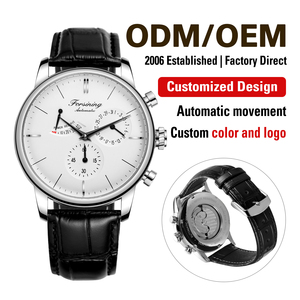
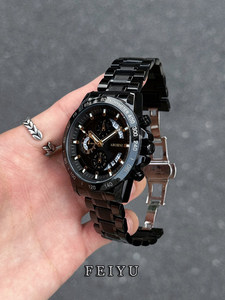
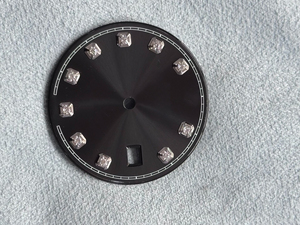
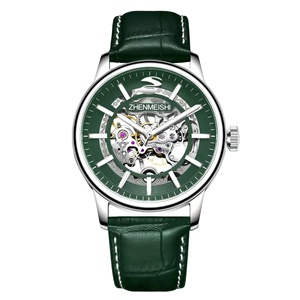
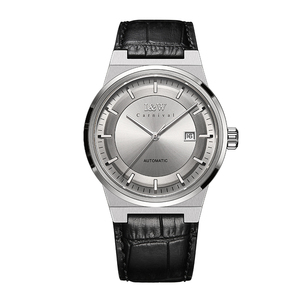
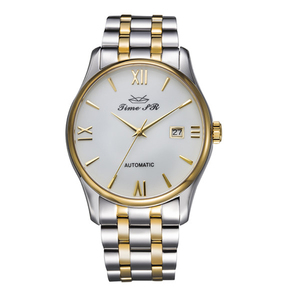
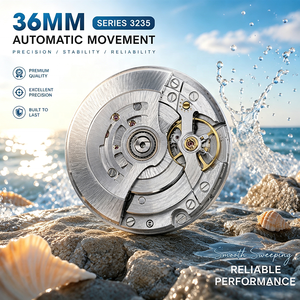
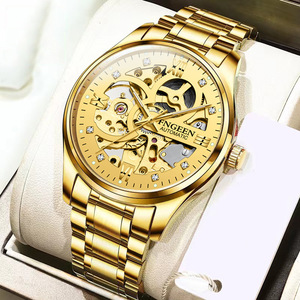
A comprehensive view of our manufacturing infrastructure, quality control systems, and horological lineage established over nearly six decades of engineering precision.
The foundation of our watch manufacturing house traces back to 1966, initiating industrial operation with a single Petermann Swiss automatic lathe dedicated to high-precision mechanical watch spare parts. This obsession with micrometer-level tolerance enabled a rapid transition into complete mechanical movement assembly through direct Swiss technical collaborations. By the late 1980s, recognizing the global paradigm shift toward electronic timekeeping, our facilities pioneered state-of-the-art quartz movement manufacturing, setting industry benchmarks for step-motor efficiency, quartz crystal tuning fork calibration, and IC circuit stability.
In 1996, our enterprise achieved a landmark milestone by releasing the market’s first fully guaranteed waterproof watch collection backed by automated dual-stage pressure testing. Today, our vertically integrated group manages every step of the production lifecycle—from raw material sintering of high-tech zirconium oxide ceramic and 316L stainless steel CNC machining to dust-free cleanroom movement installation, PVD physical vapor deposition coating, and ISO 22810 water-resistance certification.
We work directly with Japanese (Miyota, Seiko Epson) and Swiss (Ronda, ETA) quartz movement suppliers alongside custom mechanical calibers, guaranteeing micro-ampere battery efficiency and long-term timing stability.
Every single OEM/ODM waterproof unit undergoes dry vacuum sealing validation followed by wet hydrostatic immersion condensation checks to guarantee true 3ATM to 20ATM depth ratings.
Utilizing high-tech zirconium oxide (ZrO2) sintered at temperatures exceeding 1,400 °C alongside surgical 316L stainless steel for hypoallergenic, scratch-proof, and color-stable watch cases.
A rigorous comparative analysis designed for B2B procurement managers and private label brand strategists evaluating movement architecture, maintenance intervals, and cost-to-performance metrics.
| Evaluation Parameter | High-Precision Quartz Movement | Automatic Mechanical Caliber | Smart-Analog Hybrid Movement |
|---|---|---|---|
| Operating Principle | Battery-powered circuit causing 32,768 Hz quartz crystal oscillation driving a stepping motor. | Weighted rotor winding a mainspring, regulated by balance wheel escapement mechanism. | Dual-layer architecture combining quartz analog hands with integrated Bluetooth module. |
| Accuracy / Drift Rate | ±15 to ±20 seconds per month | -15 to +25 seconds per day | Auto-synchronized via phone RTC micro-chip |
| Power Reserve / Life | 24 to 36 Months (Standard Silver Oxide Cell) | 38 to 48 Hours (Full Kinetic Wind) | 7 to 15 Days (Rechargeable Li-Ion) |
| Maintenance Burden | Ultra-low (Simple battery replacement & gasket re-lubrication) | Moderate to High (Full disassembly and oiling every 3-5 years) | Firmware updates over-the-air (OTA) & battery charging |
| Ideal B2B Market Segment | Mass Market Luxury, Corporate Gifts, Daily Wear Fashion | Collector Series, Heritage Luxury Brands, Skeleton Dials | Executive Activewear, Health Tracking & Connected Fashion |
| Manufacturing Lead Time | 30 - 45 Days for OEM Custom Run | 60 - 90 Days for Fine-Tuned Calibers | 45 - 60 Days for PCB & Firmware Casing |
Strategic insights into shifting consumer demands, material innovations, and supply chain transformations shaping the global watch market over the next decade.
Private label brands are increasingly pivoting from traditional base-metal alloys to sintered zirconium ceramic and PVD (Physical Vapor Deposition) Titanium Nitride finishes. Ceramic offers a Mohs hardness rating of 8.5—four times harder than stainless steel—ensuring scratch resistance and color stability under continuous UV exposure.
Environmental regulations and ESG compliance initiatives are driving demand for battery-less quartz timekeeping. Solar quartz movements utilize micro-photovoltaic cells positioned beneath translucent dials, absorbing sunlight and artificial light to charge titanium-lithium rechargeable batteries capable of 6 months of dark operation.
Agile brands now require modular case design architectures where a single middle-case component can seamlessly house a quartz analog movement, a mechanical movement, or a smartwatch PCB module. This drastically lowers tooling costs and accelerates time-to-market for multi-category watch launches.
Addressing essential technical, logistical, and commercial inquiries for global watch importers, distributors, and brand managers.
OEM (Original Equipment Manufacturer) services involve manufacturing watches strictly according to your custom technical drawings, 3D CAD files, and material specifications. We handle tooling, case machining, dial fabrication, and assembly based on your exact proprietary design.
ODM (Original Design Manufacturer) services allow clients to select from our pre-engineered catalog of existing case molds, proven movement movements, and dial structures. You can customize the branding, logo positioning, colorways, strap materials, and packaging with significantly lower minimum order quantities (MOQs) and faster lead times.
Every watch case manufactured in our facility undergoes a standardized two-stage testing protocol adhering to ISO 22810 standards:
High-tech ceramic (Zirconium Oxide, ZrO2) offers distinct performance advantages over standard 316L stainless steel. Sintered at temperatures exceeding 1,400 °C, ceramic achieves a Vickers hardness rating of approximately 1,500 HV—roughly four times harder than steel. This renders the case virtually immune to daily surface scratching.
Additionally, ceramic is completely hypoallergenic (ideal for sensitive skin), lightweight, and thermally inert, meaning it quickly adapts to skin temperature. However, steel remains superior for extreme impact environments due to its ductility, whereas ceramic requires precise diamond-tooled CNC machining.
Our standard MOQ requirements are structured based on component customization complexity:
All production lots comply with major international trade regulations. Quartz movements and battery cells meet CE, RoHS (Restriction of Hazardous Substances), and REACH heavy-metal limits. Leather straps are certified free from harmful azo dyes and nickel release per EU standards. Factory audits are available under ISO 9001:2015 quality management and BSCI social compliance framework.
Partner with a vertically integrated watch house backed by 60 years of horological engineering. Request technical drawings, movement specs, and sample kits directly from our engineering team.