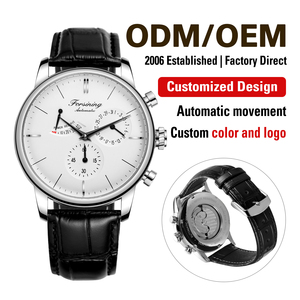
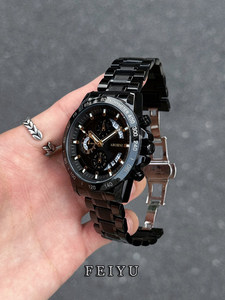
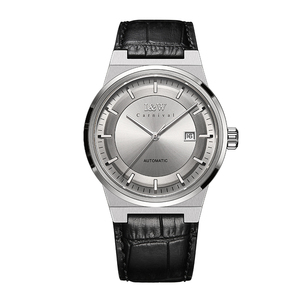
Engineered with high-accuracy biometric sensors, multi-ATM waterproof architecture, and custom firmware modules tailored for enterprise B2B procurement.
The global wearable device ecosystem is experiencing a profound architectural shift. No longer limited to basic step counting or superficial notifications, contemporary OEM/ODM smart bands have transformed into high-precision, medical-grade personal health hubs and enterprise-connected endpoints. For global brand owners, healthcare enterprises, telecommunication operators, and retail distributors, sourcing smart fitness bands requires an evaluation mechanism that transcends unit costs. It demands a holistic inspection of micro-electronic engineering integrity, sensor calibration accuracy, firmware adaptability, enclosure IP-ratings, and supply chain vertical integration.
Originating from our industrial foundation established in 1966 under the PA group—where micro-machining of mechanical watch spares on Petermann Swiss lathes established our tolerance discipline—our manufacturing setup has continuously evolved. We bridged mechanical craftsmanship with electronic innovations during the late 1980s quartz movement boom, introduced the market's first guaranteed waterproof watch range in 1996, and today lead the contract manufacturing space for advanced Bluetooth Low Energy (BLE) smart bands and hybrid timepieces.
"True OEM/ODM excellence in smart bands is defined by the marriage of horological structural discipline with ultra-low-power semiconductor optimization. A smart band must survive sweat, oceanic immersion, and kinetic shocks while providing continuous clinical-grade optical sensing."
This industry whitepaper addresses the core procurement vector: how global buyers can systematically mitigate sourcing risk, leverage technological information gain, evaluate hardware and firmware ODM capabilities, and capitalize on future wearable trends between 2026 and 2030.
Analysing shifts in biometric sensor integration, energy harvesting, material science, and cloud API ecosystems driving smart band sourcing.
Procurement demand has shifted from basic single-wavelength photoplethysmography (PPG) to multi-channel green, red, and infrared LED arrays. Modern OEM specifications require continuous SpO₂ tracking, continuous heart rate variability (HRV) analysis, cuffless blood pressure trend monitoring, and sleep architecture classification.
Strategic Insight: Enterprise buyers must select ODM partners providing raw PPG sensor API access to enable proprietary algorithm development for clinical and insurance applications.
Consumers demand 14-to-30-day battery life without sacrificing display clarity or sensor polling frequencies. The integration of dual-core ARM Cortex-M33 microcontrollers, low-power Bluetooth 5.4 SoCs, dynamic refresh micro-AMOLED displays, and high-energy density solid-state lithium-polymer batteries represents the baseline standard for 2026+ RFPs.
Strategic Insight: In-house power management IC (PMIC) tuning yields a 35% reduction in dormant battery drain during standby state.
The crossover between traditional luxury timepieces and smart wearables has accelerated. Procurement specifications increasingly call for sintered zirconium oxide ceramic bezels, 316L surgical-grade stainless steel casings, and physical vapor deposition (PVD) gold/titanium coatings that resist sweat corrosion and skin hypersensitivity.
Strategic Insight: Zirconium oxide ceramic offers 4× the scratch hardness of stainless steel while maintaining electromagnetic permeability for antenna arrays.
In an industrial landscape saturated with electronic trading intermediaries and superficial assemblers, our facility stands out by maintaining total vertical integration from initial CAD design to final box sealing. Grounded in six decades of horological precision, our manufacturing methodology solves the common failure modes of consumer smart bands.
Before entering smart wearables, our group mastered mechanical movement components machining on Swiss-lathe equipment. This microscopic tolerance mindset governs our micro-electronic SMT assembly lines, antenna placement, and mechanical button actuary mechanics. We treat a smart band's internal housing with the same geometric rigor as a high-complication mechanical movement.
Water ingress remains the single highest cause of warranty returns for wearable bands. Inheriting our pioneer 1996 waterproof validation standard, every smart band casing undergoes a two-stage testing sequence:
We provide full-stack customized engineering services for international brand owners:
Detailed answers to critical procurement, engineering, compliance, and logistical inquiries from global enterprise buyers.
Our standard Minimum Order Quantity (MOQ) for existing enclosure designs with custom logo printing, customized packaging, and tailored firmware boot screens starts at 1,000 units. For complete ODM projects involving bespoke ID/MD tooling, custom PCB layout design, and unique structural molding, the base MOQ is typically 3,000 to 5,000 units depending on plastic injection or metal CNC machining complexity. NRE (Non-Recurring Engineering) fees are fully credited back upon reaching agreed production volume thresholds.
Waterproof assurance is engineered directly into the enclosure architecture rather than relying solely on post-assembly adhesives. We utilize double-injection molded thermoplastic polyurethane (TPU) gaskets, laser-welded display lenses, and ultrasonic-sealed sensor windows. On the production line, 100% of cased units undergo automated dry-pressure vacuum testing prior to packing. Random batch samples undergo thermal-shock immersion cycling (-20°C to 50°C water bath transitions) to guarantee long-term gasket stability.
Yes. We provide enterprise B2B clients with comprehensive, well-documented native iOS (Swift/Objective-C) and Android (Kotlin/Java) Software Development Kits (SDKs). Our SDKs expose raw data payloads for step counts, heart rate intervals, SpO₂ values, ECG waveforms, skin temperature, and sleep metrics, enabling seamlessly integrated custom apps for corporate wellness, remote patient monitoring (RPM), or sports analytics platforms.
Our manufacturing facilities operate under ISO 9001 and ISO 13485 (Medical Devices Quality Management) certified systems. All smart band models exported to North American, European, and Asia-Pacific markets carry valid CE (EMC/LVD/RED), FCC, RoHS 2.0, REACH, and WEEE compliance certifications. Battery packs utilize UN38.3, MSDS, and IEC 62133 certified lithium-polymer cells to guarantee international air and sea freight clearance.
Biometric sensor accuracy is validated against medical-grade reference equipment (such as Fluke Biomedical simulators and clinical PPG reference monitors). Our internal firmware utilizes adaptive noise cancellation algorithms to filter out motion artifacts caused by running, wrist movement, and varying skin tones. We guarantee a mean absolute percentage error (MAPE) under 3% for static heart rate and under 5% during vigorous physical activity.
Traditional watchmaking requires strict mechanical tolerances, micro-screw torque control, dust-free cleanroom casing, and long-term material resilience. We apply these exact horological standards to smart bands. Unlike pure consumer electronics factories, our background in Swiss-lathe machining and ceramic sintering ensures superior case finishing, robust strap lug retention, flawless sapphire/glass alignment, and unmatched structural durability under daily wear.
Pre-production functional samples (with existing tooling and custom firmware flashed) are delivered within 7 to 10 working days. Full ODM projects requiring industrial design, 3D rapid prototyping, CNC mockups, and plastic injection tooling take approximately 35 to 45 days to final tooling validation. Once mass production samples are approved, standard mass production order fulfillment requires 25 to 30 days from component SMT loading to final packaging.
When selecting a smart band platform for OEM production, enterprise buyers must balance sensor sophistication, power consumption, and mechanical robustness. Below is a comparative engineering overview across our three primary hardware platforms:
| Engineering Parameter | Essential Fitness Tracker | Executive Hybrid Smart Band | Clinical Biometric Wearable |
|---|---|---|---|
| Main Microcontroller | Nordic nRF52832 / Dialog | Nordic nRF5340 Dual-Core | Ambiq Micro Apollo4 Blue |
| Display Technology | 0.96" TFT / OLED Screen | 1.47" AMOLED HD Curved Screen | 1.62" Always-On AMOLED |
| Optical Sensor Suite | Dual-LED PPG (HR Only) | Multi-LED PPG (HR + SpO₂ + Stress) | Clinical Multi-Channel PPG + ECG + Temp |
| Enclosure Material | ABS + PC Polycarbonate | 316L Stainless Steel / Ceramic | Titanium Alloy / Zirconia Ceramic |
| Water Resistance Level | IP67 / IP68 (1.5m Water) | 5 ATM (50-Meter Immersion) | 5 ATM + High-Speed Water Sport Grade |
| Target Application | Mass Market Retail & Promos | Executive Fashion & Retail Brands | Telehealth, RPM & Insurance Schemes |
Connect directly with our senior hardware engineers and procurement specialists to receive tailored product catalogs, 3D CAD models, factory compliance documentation, and instant NRE/unit quotes.