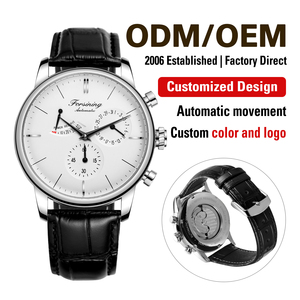
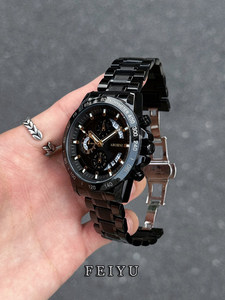
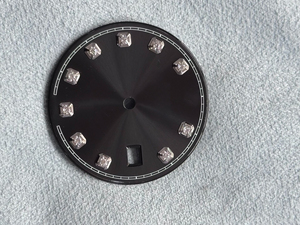
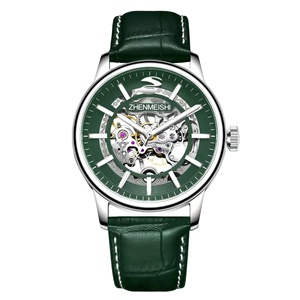
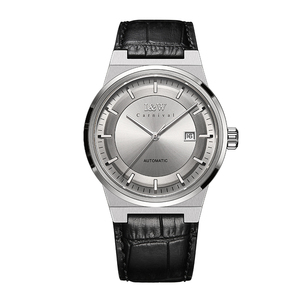
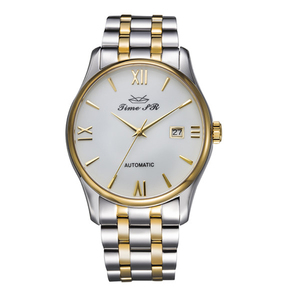
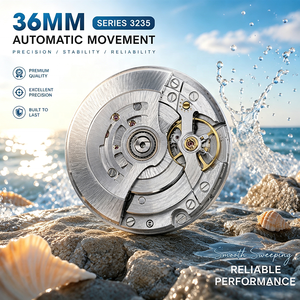
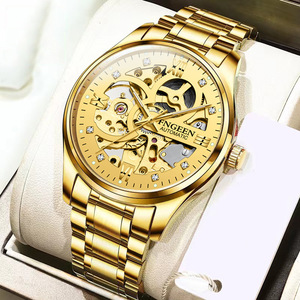
Explore our precision-machined mechanical and quartz watch assemblies. Engineered with Swiss-tier tolerance discipline, custom optical textures, and proprietary luminescent appliques, these master-grade components represent the industry benchmark for commercial OEM/ODM deployments.
The global watchmaking industry is experiencing a profound paradigm shift. As consumers migrate from generic mass-market accessories to horological timepieces characterized by narrative depth and manufacturing integrity, the watch dial has solidified its role as the critical battleground for brand differentiation. Often described as the "face of the watch," the dial is not merely an aesthetic surface; it is an ultra-precise micro-engineering plate that must accommodate complex hand-pinion clearances, microscopic date-window alignments, and multi-layered chemical galvanic treatments—all while maintaining structural stability under environmental stress and thermal fluctuations.
For procurement officers, brand directors, and private-label watch executives, selecting a premier watch dials manufacturer and exporter requires evaluating technical capabilities far beyond basic stamping. A true manufacturing partner operates at the intersection of metallurgy, chemistry, micro-mechanics, and optical physics. From the precision turned feet welded beneath the dial plate to the nanometer-accurate Physical Vapor Deposition (PVD) optical coatings applied above, every step determines the final perceived value and long-term durability of the complete timepiece assembly.
E-E-A-T Technical Insight: In modern mechanical calibers (such as the 3235, ETA 2824-2, or custom skeletonized IW movements), a dial feet positioning deviation of merely 0.015mm can cause hand-pinion binding, resulting in amplitude drop, friction drag, and catastrophic power-reserve loss. True manufacturing excellence demands total vertical integration—from raw brass blank slicing to automated 3D optical inspection.
Achieving flawless execution across volume export orders demands advanced manufacturing workflows. Below are the six fundamental engineering pillars that separate top-tier OEM manufacturers from intermediate assembly trading operations:
High-grade lead-free brass (CuZn37), 316L stainless steel, or sintered zirconium ceramic blanks are precision-stamped and planished to eliminate internal lattice stress, ensuring absolute flatness across operating temperatures.
Utilizing traditional rose-engine turning or high-precision 5-axis CNC diamond milling to create intricate sunray, Clous de Paris, wave, or custom geometric patterns with sub-micron light-diffraction accuracy.
Multi-stage electroplating of real 18K/24K gold, rhodium, gunmetal, or advanced PVD color-matching systems that yield UV-stable, non-fading dial finishes capable of enduring decades of sunlight exposure.
Individually diamond-cut hour markers, Roman numerals, or baguette stone settings feature micro-riveted posts fitted into laser-drilled dial cavities, preventing detachment under impact.
High-grade photoluminescent compounds (Grade X1 C3, BGW9, or custom pigment blends) are pad-printed or manually filled into indices, guaranteeing maximum nighttime legibility and decay longevity.
Final assembly occurs in ISO Class 7 dust-free cleanroom environments. Automated vision system camera arrays verify zero micro-dust contamination and exact print register alignment.
Understanding the material attributes, production complexity, and cost profiles of various dial architectures allows procurement managers to optimize their bill-of-materials (BOM) for target retail price points.
| Dial Construction Type | Primary Base Material | Surface Technique | Tol. (Thickness) | UV Resistance | Target Segment |
|---|---|---|---|---|---|
| Galvanic Sunray Brass | Lead-Free Brass (CuZn37) | Chemical Bath + Brushed Sunray | ±0.02 mm | Excellent (5+ Yrs) | Executive & Dress Watches |
| High-Tech Sintered Ceramic | Zirconium Oxide (ZrO2) | Sintering at 1,400°C + Diamond Polish | ±0.03 mm | Immortal (Non-Fading) | Luxury & Sports Tool Watches |
| Open-Heart / Skeletonized | Brass / Steel Dual Plate | Laser Cutout + Micro-Chamfering | ±0.015 mm | High (PVD Coated) | Avant-Garde Mechanicals |
| Enamel (Grand Feu / Champlevé) | Copper / Silver Disc | Vitreous Silica Powder Firing 800°C | ±0.05 mm | Immortal (Museum Grade) | Haute Horlogerie Limited Editions |
| Natural Mother of Pearl (MOP) | Pinctada Maxima Shell Overlay | 0.2mm Shell Lamination on Brass | ±0.025 mm | High (Organic) | Luxury Women's Dress Lines |
The story of our manufacturing group began in **1966**, operating a Swiss-built Petermann precision lathe to produce mechanical watch spare components. Over the subsequent decades, our engineering capacity evolved through direct Swiss technical collaborations to produce complete mechanical movements, followed by the mass manufacturing of high-accuracy quartz movements in the late 1980s. In **1996**, our brand **Maxima** was launched, pioneering the market's first guaranteed waterproof watch series backed by rigorous pressure testing.
Unlike modern virtual brands or assembly-only contractors who outsource dial plates, cases, hands, and movements to disjointed supply networks, our enterprise maintains full vertical integration under one roof. This manufacturing legacy directly benefits our global B2B clients and OEM partners:
Originating from high-precision Petermann lathe turning, our indexing accuracy guarantees flawless alignment between dial center holes, cannon pinions, and sub-second hands.
Every complete watch housing featuring our dial assemblies undergoes mandatory dry vacuum testing followed by wet immersion condensation checks before packing.
With deep institutional knowledge across quartz, automatic mechanicals (e.g. 3235, IW movements), and smart hybrid systems, we engineer dials tailored to exact movement torque profiles.
From 4x-harder sintered zirconium ceramic cases and dials to executive dual-finish steel bracelets, our material lab ensures zero corrosion and skin-friendly hypoallergenic performance.
As global watch brand managers prepare their product roadmaps for upcoming seasons, several macro industry trends are re-shaping how watch dials are specified, manufactured, and procured globally:
Consumer demand for sustainable luxury is driving brands away from heavy chemical copper-nickel alloys toward recycled 316L steel bases and bio-ceramic composites. Manufacturers with advanced clean sintering capabilities offer significant market advantages.
Traditional pad-printed luminous hour markers are rapidly giving way to 3D solid luminescent composite blocks. These solid lume indices are machine-cut and riveted directly to the dial, yielding up to 300% greater nocturnal glow intensity.
Contemporary buyers demand visual movement interaction. Double-sided hollow designs, semi-transparent sapphire crystal dials with metallized logos, and skeletonized bridges (as seen in our 6018 reference) are experiencing explosive growth across urban and sports lines.
From concept artwork to final shipment, our structured 7-stage manufacturing protocol ensures complete quality control and transparent lead-time tracking for international watch brands.
Detailed technical drawings specifying hand clearance, dial feet coordinates, aperture bevels, and logo print layers.
Precision cutting dies and embossing stamps are CNC-machined from hardened tungsten steel to ensure zero edge burrs.
Dial blanks receive sunray brushing, sandblasting, or enameling followed by multi-layered gold, silver, or PVD plating.
Silicone pads transfer crisp minute tracks, tachymeter scales, and custom brand typography using Swiss specialized inks.
Hour markers are set via micro-riveting under magnification; Swiss Super-LumiNova is injected into index cavities.
Automated camera rigs inspect for microscopic dust particles, dial feet tilt angles, and color consistency against master samples.
Dials are packed in anti-static, moisture-sealed blister trays to prevent oxidation during international transit.
Find detailed answers to common engineering, ordering, and customization queries regarding custom watch dial manufacturing and global export contracts.
Our standard MOQ for custom OEM/ODM watch dial manufacturing starts at 300 to 500 pieces per design for standard brass galvanic finishes. For specialized materials such as high-tech sintered ceramic, natural mother-of-pearl (MOP), or genuine Grand Feu enamel, MOQ can be adapted based on production batch parameters. Sample prototypes can be produced during the initial tooling phase prior to full mass production runs.
Dial feet placement is executed using high-precision CNC micro-welding or integrated stamping guided by official caliber technical sheets (e.g. ETA, Miyota, Seiko NH series, Sellita, or custom VSF 3235 / IW movements). Our tolerance threshold for dial feet positioning is maintained within ±0.01mm to ensure effortless drop-in casing without hand pinion binding.
High-tech ceramic dials are sintered from ultra-pure zirconium oxide (ZrO2) powder at temperatures exceeding 1,400°C. The resulting material exhibits a Vickers hardness roughly four times that of 316L stainless steel. Ceramic dials are completely impervious to UV radiation (preventing color fading), highly scratch-resistant, hypoallergenic, and offer a deep optical luster that cannot be replicated by traditional wet paints.
In accordance with our brand heritage established in 1996, every waterproof watch housing undergoes a mandatory dual-stage testing sequence. First, assembled cases undergo dry vacuum and over-pressure air testing to verify gasket seating. Second, complete cased timepieces undergo wet immersion condensation checks. Any unit demonstrating moisture ingress or pressure leakage is automatically rejected.
Yes. We utilize genuine Swiss Super-LumiNova (including Grade X1 C3, BGW9, C1, and custom daytime pigmented shades). Luminescent material can be applied via multi-pass pad printing, manual syringe filling into engraved cavities, or by mounting pre-molded 3D luminous appliques depending on your desired glow intensity and duration specs.
Custom dial tooling and initial sample prototyping typically require 20 to 25 calendar days, depending on pattern complexity (e.g., custom guilloché or skeletonized cutouts). Once sample approvals are confirmed by your quality team, mass production lead times generally range between 35 and 45 days. Rapid sampling expedited tracks are available for established OEM partners.
Partner with a vertically integrated watch house with six decades of horological manufacturing heritage. Contact our engineering team today to review your technical drawings, request material samples, or obtain custom wholesale pricing.