Directly source high-grade mechanical, automatic, and skeletonized watches engineered to Swiss-level manufacturing tolerances with full custom private label capabilities.
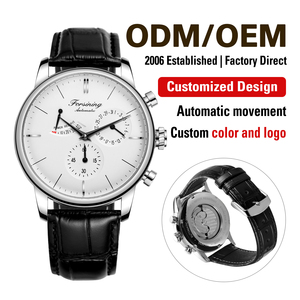
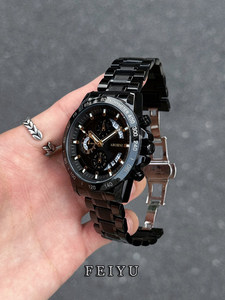
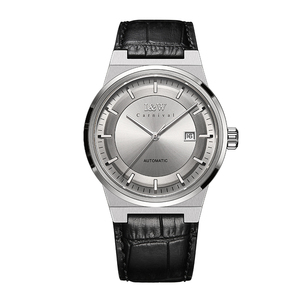
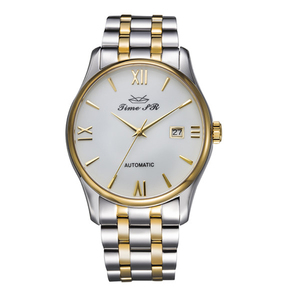
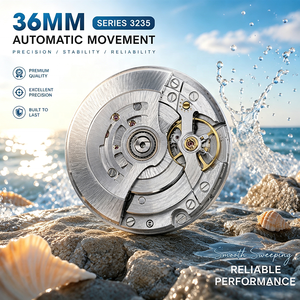
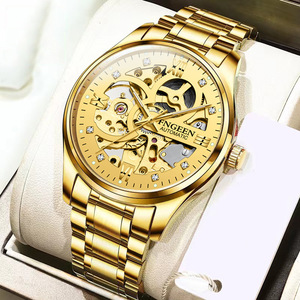
Why leading global watch brands, micro-labels, and enterprise distributors partner with our custom watch factory ecosystem.
Traced back to 1966, our legacy began by machining complex mechanical watch components on high-precision Petermann Swiss lathes. Today, our CNC machining hubs operate with tolerances under ±0.002mm for seamless case fitment and bezel rotation.
Pioneering guaranteed waterproof watches since 1996, every case undergoes a strict two-stage verification: dry vacuum testing for initial gasket seating followed by wet immersion condensation testing from 3ATM up to 30ATM (300 meters).
In-house watchmakers inspect, calibrate, and rate-check 100% of movements. Whether sourcing high-beat Seagull mechanicals, modified 3235 automatic calibers, Japanese Miyota/Seiko, or Swiss Ronda quartz, daily rate deviations are strictly audited.
The global luxury and mid-tier timepiece market is undergoing a structural transformation. Brand owners, private label retailers, and corporate buyers sourcing from China custom watch factories must adapt to shifting consumer demands, technological convergence, and strict ESG compliance standards. Below is an authoritative analysis of the key purchasing trends shaping watch manufacturing through 2030.
Traditional procurement mandated Minimum Order Quantities (MOQs) of 1,000 to 3,000 units per style, placing heavy capital requirements on boutique brands. China's top custom watch factories have restructured assembly lines to support modular manufacturing.
By keeping standardized 316L stainless steel cases, sapphire crystals, and inner movement rings pre-manufactured, factories can offer custom dials, specialized hands, custom case-backs, and engraved rotors at lower MOQs (100–300 units). This enables brands to test market traction rapidly without over-extending inventory capital.
Austenitic stainless steel remains a industry workhorse, but material innovation has shifted heavily toward high-tech zirconium oxide (ZrO2) ceramic, forged carbon fiber, Grade 5 titanium, and 904L super-alloy steel.
High-tech ceramic cases are sintered at extreme temperatures exceeding 1,400°C, resulting in a finish that is four times harder than steel, completely scratch-resistant, hypoallergenic, and impervious to UV discoloration. Custom watch factories capable of in-house ceramic sintering and diamond-tool polishing are capturing high-margin luxury OEM contracts.
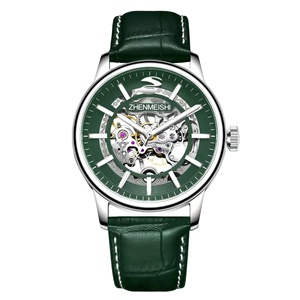
Despite smart wearables, consumer intent for mechanical and automatic wristwatches has hit record highs among Gen Z and millennial buyers. Sourcing intent has pivoted strongly toward double-sided hollow skeletonization, exhibition sapphire backs, and intricate movement decoration (Côtes de Genève, perlage finishing, blue steel screws).
Importers are seeking custom watch factories that offer modified high-performance calibers (such as modified 3235 architectures, Peacock, and Seagull high-beat movements) paired with 3D multi-layered dial structures.
Environmental compliance (REACH, RoHS) and social accountability (SA8000) are no longer optional for European and North American buyers. Sourcing trends favor watch factories utilizing 100% recycled 316L steel, eco-tanned vegetable leather straps, ocean-bound plastic straps, and non-toxic Super-LumiNova luminescence (C3, BGW9).
Factories providing full supply chain traceability and eco-friendly FSC-certified presentation packaging gain a major competitive edge in international tenders.
Modern watch manufacturing is a convergence of artistic industrial design, metallurgy, micro-mechanics, and chemical surface treating. Understanding these core development trends enables B2B buyers to write tighter technical specifications and negotiate superior quality standards.
Achieving consistent 5ATM, 10ATM, or 30ATM water resistance requires precision engineering of the case housing, crown stem tube, crystal seat, and back plate:
Surface finishing determines both aesthetic appeal and long-term durability. Leading factories deploy advanced Physical Vapor Deposition (PVD) and Ion Plating (IP) vacuum chambers:
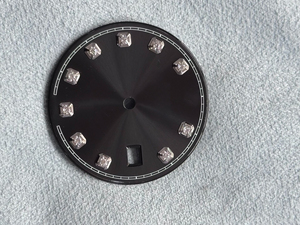
The dial serves as the primary visual touchpoint for consumers. Contemporary design favors depth and functional legibility:
How our custom watch factory transforms a concept sketch into mass-produced certified timepieces.
Our horological engineers convert client moodboards or 2D vector concepts into 3D CAD models. Dial thickness, hand clearance, stem heights, and water seal compressions are simulated digitally.
Sinker EDM and 5-axis CNC machines produce functional master samples within 25–30 days. Samples undergo movement fitting, surface plating, and initial pressure validation for client sign-off.
Upon sample approval, high-speed hydraulic presses stamp 316L steel blanks, followed by automated CNC multi-axis milling, bezel knurling, strap end-link fitting, and ceramic sintering.
To eliminate micro-dust particles on dials or under sapphire glass, dial casing, movement mounting, and hand pressing are conducted in positive-pressure dust-free cleanrooms.
100% of cased timepieces undergo digital timing machine calibration (rate, amplitude, beat error) followed by dry air pressure and wet immersion leak detection.
Timepieces are paired with serial-coded warranty cards, custom leatherette/wooden retail display boxes, and protective shipping materials for secure air or ocean dispatch.
Essential answers for sourcing directors, brand founders, and OEM supply chain managers.
Connect with our senior horological engineers today to request technical CAD consultations, custom physical samples, or complete B2B OEM/ODM manufacturing pricing catalogs.
Contact Us