Enterprise-grade watch manufacturing engineered with Swiss-precision lathe heritage, high-integrity case materials, and certified water-resistance testing.
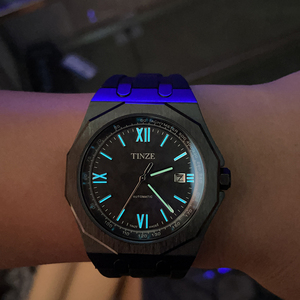
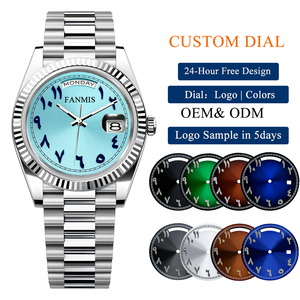
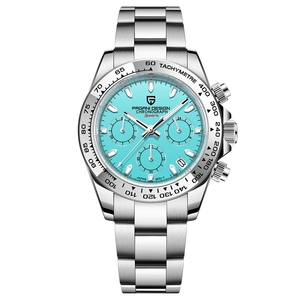
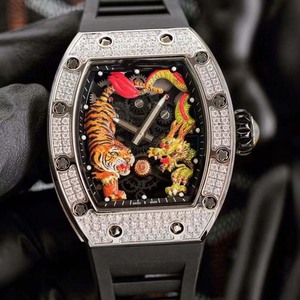
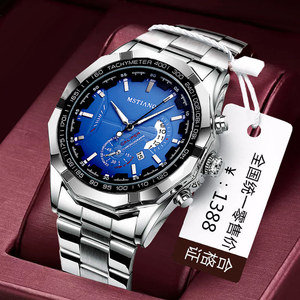
From Swiss Petermann Precision Lathes to High-Tech Zirconia Sintering: Six Decades of Engineering Excellence
Our industrial roots trace back to 1966 within the PA manufacturing group. Beginning with precision mechanical watch spares machined on Swiss Petermann lathes, our facility expanded into full mechanical caliber engineering in Swiss collaboration, transitioning to full quartz movement manufacturing by the late 1980s. This deep engineering background means we do not merely assemble components—we design tolerances, gear pitches, and casing geometry from the ground up.
Building on our 1996 landmark release of the industry’s first guaranteed waterproof watch line, every case manufactured in our facility undergoes a rigorous dual-phase test protocol. Cases are evaluated via dry vacuum/over-pressure testing to verify gasket seating, followed by wet immersion condensation tests. Zero water-ingress tolerance is strictly enforced before final packaging.
Our dedicated material lab specializes in sintering Zirconium Oxide (ZrO2) ceramic powders at temperatures exceeding 1,400°C. The resulting ceramic watch cases possess a Vickers hardness (~1,500 HV) roughly four times greater than standard 316L stainless steel. Hypoallergenic, impervious to UV discoloration, and scratch-proof for life, our ceramic and carbon-composite timepieces lead the luxury private-label sector.
Strategic Insights for Microbrands, Enterprise Importers, and Global Watch Distributors
The global watch manufacturing landscape is undergoing a structural evolution. Driven by shifts in consumer intent, material technology, and supply chain transparency, international brands must align their OEM procurement strategies with emerging technical standards. As a primary China OEM watch manufacturer, we observe five key trends shaping timepiece manufacturing through 2030:
Traditional stainless steel is increasingly supplemented by high-performance ceramics and forged carbon composites. Modern buyers prioritize scratch resistance and lightweight comfort. OEM production lines are adapting by implementing diamond-coated CNC tooling and precise sintering kilns to achieve ultra-tight tolerances on non-metallic cases.
The era of rigid 1,000-piece single-dial MOQs is ending. Leading OEM factories utilize modular casing platforms, allowing private-label brands to mix-and-match bezel inserts, dial indices, and hand sets across smaller production batches (e.g., 50–100 units per colorway). This drastically reduces initial inventory carrying costs for boutique brands.
Environmental regulations and consumer demand for low-maintenance sustainability are accelerating the adoption of solar-rechargeable quartz movements and hybrid mechanical-quartz calibers. OEM buyers are specifying solar cells integrated into semi-transparent dial assemblies to achieve indefinite power reserves without battery disposal concerns.
Consumer expectations for outdoor and active wear mean that baseline splash resistance (3 ATM) is being replaced by 5 ATM and 10 ATM minimum standards across casual and dress watches alike. Automated vacuum leakage testing at the casing stage ensures compliance without relying on statistical sampling.
Comparative Analysis of Case Metallurgy, Crystals, and Quality Control Parameters
| Material / Parameter | Vickers Hardness (HV) | Corrosion Resistance | Typical OEM Application | Factory Testing Standard |
|---|---|---|---|---|
| High-Tech Zirconia Ceramic (ZrO2) | 1,400 – 1,600 HV | Extreme / Hypoallergenic | Luxury Executive & Scratch-Proof Collections | Thermal Shock & Drop Impact Audit |
| 316L Surgical Stainless Steel | 200 – 240 HV | High (Marine Grade) | Professional Diver & Sports Chronographs | Salt Spray Fog Test (96 Hours) |
| Grade 5 Titanium (Ti-6Al-4V) | 320 – 350 HV | Exceptional / Ultra-Light | Tactical, Field & Aerospace Timepieces | Tensile Strength & Torque Strain Test |
| Synthetic Sapphire Crystal | 2,200 – 2,300 HV | Immune to Scratching | High-End Mechanical & Dress Dials | Optical Clarity & Anti-Reflective (AR) Audit |
| Forged Carbon Fiber Composite | 800 – 1,100 HV (Composite) | Chemical Inert | Motorsport & Avant-Garde Skeleton Watches | Structural Density & Porosity Inspection |
A Structured, Transparent Engineering Process From CAD Concept to Mass Shipment
Clients submit design concepts or select from our white-label catalog. Our horological engineers generate 3D CAD schematics within 48 hours, detailing case tolerances, crystal fitment, dial thickness, and movement holder geometry.
Physical prototypes are machined using 5-axis CNC centers. Stamping dies, dial printing plates, and custom hands are crafted. Prototype samples undergo initial physical checks and hand-assembly verification within 15 to 25 days.
Mass production takes place in Class 100,000 cleanroom assembly environments. Automatic and quartz calibers are tested for timing deviation (Rate accuracy check via Witschi timing instruments) prior to casing.
Every assembled watch undergoes dry vacuum testing to detect gasket deformation, followed by hydrostatic water pressure testing to confirm certified depth ratings (3 ATM to 100 ATM).
100% optical inspection under magnification checks dial printing, lume application, hand alignment, PVD plating uniformity, and crystal cleanliness to eliminate dust or surface blemishes.
Finished timepieces receive unique serial number laser engraving, protective film application, and boxed placement into custom brand packaging ready for global export and air/sea freight dispatch.
Expert Guidance on MOQs, Customization Capabilities, Lead Times, and Manufacturing Standards
Our minimum order quantities depend on the casing material and caliber specification. For standard stainless steel quartz watches using existing stock tooling, MOQs start as low as 10 to 100 pieces per design. For completely custom CNC-machined cases, custom color PVD plating, or specialized automatic movements (e.g., GMT, Tourbillon, Carbon Fiber), standard MOQs range between 300 to 500 pieces per order batch. Contact our engineering team for agile batch options.
Yes. As a vertically integrated watch house, we maintain direct supply agreements with premier movement manufacturers including Seiko Instruments Inc. (SII/TMI NH35, NH36, VK63 meca-quartz), Miyota (Citizen Group 8215, 9015, 2035), Ronda, ETA, and Sellita. Alternatively, clients may supply their own movements for casing and assembly in our cleanroom facility.
Water resistance integrity is achieved through precision-engineered synthetic rubber (EPDM/NBR) gaskets at the crystal, caseback, and winding crown. Every single casing unit passes dry vacuum pressure checking and wet condensation testing under ISO 22810 (or ISO 6425 for professional diver models) before approval. We guarantee zero water-ingress rates on certified shipments.
We provide full white-label and bespoke ODM customization including: dial printing (silk-screen, 3D raised metal indices, mother-of-pearl, skeletonized), laser-engraved or stamped casebacks, custom engraved winding crowns, custom-molded silicone or top-grain leather straps, rotor engraving for automatic movements, and branded buckle hardware.
PVD (Physical Vapor Deposition) vacuum plating deposits thin layers of Titanium Nitride or Gold ions inside a vacuum chamber. This results in a surface coating up to 10 times more scratch-resistant and durable than conventional water electroplating, preventing discoloration or tarnishing even after years of daily wear. We utilize high-grade PVD coating for all gold, rose gold, black, and gunmetal finishes.
For existing tooling models with custom dial/hand branding, sample lead times are typically 15 to 20 business days. For fully custom 3D CAD/CNC prototype development, sample production requires 30 to 45 days. Mass production lead times generally range from 35 to 50 days following sample approval and deposit confirmation, depending on movement availability.
Yes. All components (stainless steel alloys, genuine leather straps, silicones, and movement batteries) comply with international environmental and safety standards including EU RoHS 2.0, REACH chemical compliance, CE mark requirements, and US California Proposition 65 regarding nickel release and heavy metals.
We execute legally binding Non-Disclosure Agreements (NDAs) prior to accepting technical drawings or CAD designs. Proprietary molds and CNC tooling crafted for your brand remain your exclusive property and are never reused for third-party production without explicit written authorization.
Elevate your watch brand with precision movement calibration, premium materials, and certified quality assurance. Talk with our chief horological engineers today.
Inquire Now