Direct factory supply, customizable photovoltaic dials, high-precision automatic/quartz movements, and guaranteed pressure-tested waterproof cases.
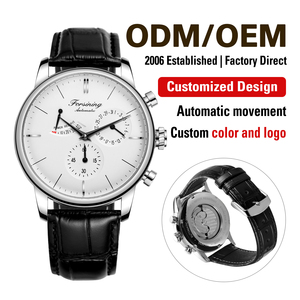
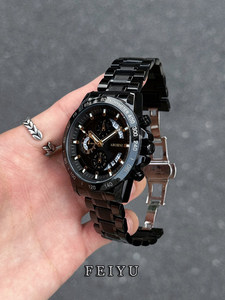
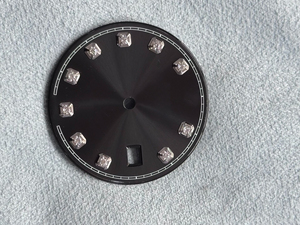
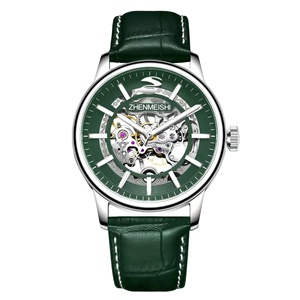
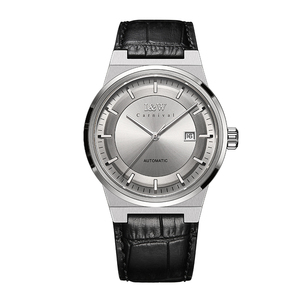
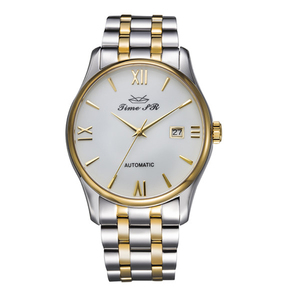
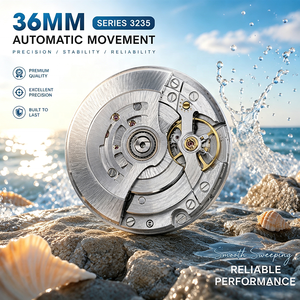
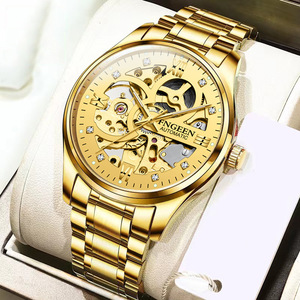
The global timekeeping supply chain is undergoing a structural transition towards sustainable micro-energy harvesting. As international buyers, brand owners, and OEM procurement managers evaluate Top China Solar Watches Manufacturers & Factory capabilities, the evaluation metrics have evolved far beyond basic quartz assembly. Modern photovoltaic (PV) timepieces combine high-efficiency solar cells, advanced secondary storage (Manganese Titanium Lithium batteries), micro-optical sub-dials, and strict ISO-compliant waterproofing.
China's watchmaking industrial cluster—centered primarily in Guangdong and Shenzhen—now represents over 80% of global OEM/ODM timepiece manufacturing capacity. However, true differentiation lies in vertical integration. Sourcing solar-powered watches requires an intimate technical understanding of solar panel light transmittance (typically requiring 18% to 22% dial dial-translucency), micro-current circuit management (IC consumption under 0.35 µA), and long-term dark storage algorithms.
Key Sourcing Insight (Information Gain): Unlike traditional quartz watches reliant on disposable silver-oxide SR626SW batteries, high-grade solar watches engineered by top OEM factories utilize rechargeable Manganese Titanium Lithium (MT621 / CTL920) secondary cells. These cells offer an operational lifespan exceeding 15 to 20 years, provided the factory integrates overcharge protection circuitry and sub-micron gasket compression to prevent ambient moisture degradation.
A solar watch operates by capturing ambient sunlight or indoor artificial light (fluorescent/LED) through a semi-transparent dial face or perimeter optical ring, converting light quanta into electrical energy through silicon photovoltaic cells, and routing the charge to a secondary micro-accumulator.
Utilizes ultra-thin film amorphous silicon solar arrays configured directly under the dial. Engineered to capture light across low lux spectrums (as low as 300 Lux indoor office ambient light).
Employs Panasonic or Seiko-equivalent TS/CTL series rechargeable cells with zero-leakage electrolyte formula, supporting over 3,000 charge-discharge cycles without voltage memory decay.
Integrated micro-circuitry automatically cuts charging currents when full capacity is reached and initiates a low-power "Sleep Mode" after extended darkness, preserving total power reserve for up to 6 to 12 months.
Traced from Swiss precision lathe origins to full-scale vertical time-piece execution.
The manufacturing capabilities supporting our solar timepiece engineering are rooted in six decades of continuous industrial evolution. Founded in 1966 under the PA industrial group, our production heritage began by machining high-precision mechanical watch spare parts on Swiss-made Petermann lathes. This commitment to micro-meter mechanical tolerances expanded into producing complete mechanical movements through Swiss engineering collaborations, subsequently transitioning into advanced quartz and solar movement manufacturing in the late 1980s.
In 1996, our group established a benchmark in watch reliability by introducing the industry’s first guaranteed waterproof watch series backed by 100% dual-stage pressure testing. Today, this historical engineering discipline ensures that every solar watch case, solar cell mounting, gasket seal, and crystal assembly undergoes in-house quality verification rather than third-party outsourcing.
Initiated micro-machining of mechanical watch components with Swiss lathe tooling.
Produced full mechanical movement calibers and pioneered quartz movement manufacturing.
Launched pioneer 100% pressure-tested waterproof watch series with double-gasket systems.
Full integration of solar dials, ceramic cases, smart wearables, and eco-friendly timepieces.
To satisfy global market standards (including ISO 22810 for water resistance and ISO 1413 for shock resistance), top OEM solar watch factories adhere to strict process engineering. Every timepiece produced passes through six mandatory quality checkpoints before receiving a serial code:
Photovoltaic panels are calibrated under solar simulators to guarantee minimum output currents under both 50,000 Lux sunlight and 1,500 Lux indoor fluorescent lighting.
Integrated solar movements are regulated for daily rate accuracy (±0.15 sec/day) with hands clearance verified under high-magnification optical comparators.
Cases undergo dry vacuum over-pressure checks to test gasket seating, followed by immersion condensation checks (heating case to 40°C and dropping 20°C water on crystal) to guarantee zero moisture ingress.
Polycarbonate, sapphire, and brass sub-dials are checked for light transmission uniformity to prevent visual hotspotting or uneven solar cell degradation under UV exposure.
Spring bars, end-links, metal bracelets, and leather straps undergo dynamic pull tests (up to 70N force) to verify pin endurance during active wear.
Every completed timepiece is laser-etched with a factory batch reference, establishing full component traceability for international warranty management.
As global retail brands shift away from single-use quartz batteries to comply with EU WEEE environmental directives and eco-design standards, solar watches have transformed from niche novelty products into core inventory lines. Procurement officers must align their product development roadmaps with these key technical trends:
Traditional solar watches required dark, tinted sub-dials. Next-generation factories utilize semi-reflective nano-layer printing, permitting vibrant white, sunray green, and mother-of-pearl dials while passing 20%+ ambient light to the PV array underneath.
Combining the emotional appeal of skeleton mechanical rotors with auxiliary solar capacitors. These hybrid calibers power luminous LED accents or continuous GMT/perpetual calendar micro-motors without stopping.
Integrating zero-carbon sintered zirconium ceramic bezels (4x harder than steel) and recycled 316L stainless steel cases. Sustainable housing materials enhance brand value in North American and European retail markets.
Technical clarity for wholesalers, importers, and brand procurement leads.
Under direct outdoor sunlight (100,000 Lux), a full charge is reached within 5 to 8 hours. Under indoor office lighting (1,500 Lux), approximately 60 to 90 minutes of daily exposure maintains continuous operation. Once fully charged, the secondary battery maintains timekeeping in total darkness for 6 to 12 months, depending on IC sleep-mode features.
Solar watches eliminate regular case-back openings for battery replacements, which preserves the integrity of internal rubber O-ring gaskets and crown seals. This extends waterproof protection significantly compared to standard quartz watches. They offer higher shock resilience than mechanical automatics while matching their battery-free sustainability benefit.
Standard OEM production runs start at 300 to 500 units per style for existing watch case molds with custom dial printing, customized case-back engraving, and custom rotor branding. Fully customized ODM projects (custom case tooling, custom ceramic bezels, specialized PV sub-dials) typically require 1,000 units.
Every single cased watch undergoes automated 100% dry pressure testing (3 ATM to 10 ATM depending on specification). Sample batches undergo destructive wet pressure testing, thermal condensation testing, and salt-spray corrosion audits according to ISO 22810 standards before export packing authorization.
Request detailed technical specifications, movement catalogs, custom OEM/ODM sample quotes, or schedule a virtual factory inspection with our horological engineering team.
Send an Inquiry