
Strategic Guide to Sourcing High-Tech Ceramic & Mechanical Timepieces
In the contemporary horological market, global procurement directors and luxury brand buyers face a dynamic shift toward materials that combine high wear resistance, biological compatibility, and everlasting aesthetic brilliance. High-tech zirconia ceramic (ZrO₂) has emerged as the pinnacle material for modern luxury bezels, integrated cases, and luxury bracelet links. As a vertically integrated watch house with an engineering heritage stretching back to 1966 under the PA Group, our production lines bridge traditional Swiss machining precision with modern ceramic sintering technology.
This technical whitepaper breaks down the material physics of high-tech ceramic watches, evaluates B2B procurement trends for 2026–2030, outlines strict quality control protocols, and answers key technical questions required by commercial buyers looking for dependable ceramic watch suppliers and B2B OEM manufacturing partners.
Superior Scratch Immunity
Sintered at temperatures exceeding 1,400°C, high-density Zirconia ceramic achieves a hardness rating of up to 1,500 Vickers—roughly four times harder than standard 316L stainless steel.
Bio-Inert & Hypoallergenic
Unlike metallic alloys containing nickel or copper traces, technical ceramic is 100% hypoallergenic, completely preventing skin irritation and metallic degradation over decades of wear.
Thermal & Color Stability
Ceramic components are unaffected by ultraviolet radiation, salt spray, or extreme ambient thermal shifts, guaranteeing that deep blacks, emerald greens, and brilliant whites remain pristine forever.
Material Science Breakdown: Technical Ceramic vs. Metallic Alloys
To understand why ceramic timepiece sourcing has grown exponentially across global retail and luxury OEM portfolios, procurement specialists must evaluate key physical parameters. Below is a comparative engineering benchmark based on internal metallurgy and sintering data:
| Material Metric | High-Tech Ceramic (ZrO₂) | 316L Stainless Steel | Grade 5 Titanium (Ti-6Al-4V) |
|---|---|---|---|
| Vickers Hardness (HV) | 1,400 – 1,750 HV | 200 – 240 HV | 320 – 360 HV |
| Density (g/cm³) | ~6.0 g/cm³ | 8.0 g/cm³ | 4.43 g/cm³ |
| UV & Corrosion Resistance | Absolute Immunity | Moderate (Pitting Risk) | High Immunity |
| Thermal Conductivity | Low (Skin-Warm Feel) | High (Cold Initial Contact) | Low |
| Machining Method | Diamond Sintering & Ultrasonic | CNC Milling & Lathing | High-Torque CNC Milling |
Future B2B Procurement Trends in Ceramic & Mechanical Timepieces (2026–2030)
As the horological market matures, commercial buyers are moving beyond basic stainless steel quartz models toward value-added, technologically sophisticated references. When selecting a trusted ceramic watch supplier, B2B procurement managers should align their inventory strategy with four key macro trends:
1. Hybrid Material Cases & Sintered Ceramic Bezels
While full-ceramic watch cases deliver unmatched scratch resistance, structural hybrid construction—combining a 316L stainless steel inner core or titanium movement holder with an outer sintered ceramic shroud—provides the optimal balance of impact tough resilience and external scratch immunity. This hybrid approach significantly reduces structural fracture risks during severe impacts while preserving high luxury finishing aesthetics.
2. Skeletonized Calibers & High-Power-Reserve Mechanical Movements
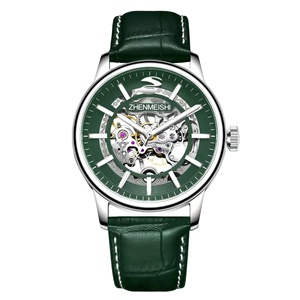
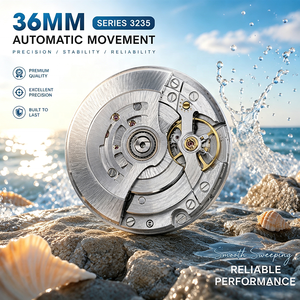
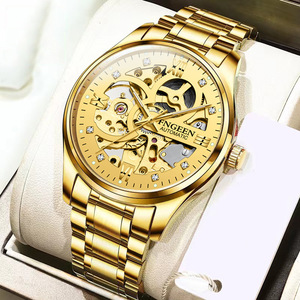
Consumer interest in transparent mechanical craftsmanship has driven high demand for double-sided hollow skeleton dials. Caliber developments, such as optimized 3235 automatic movements and customized open-worked bridges, allow end consumers to appreciate micro-mechanical oscillations. Suppliers capable of supplying pre-regulated mechanical movements with 40+ hours of power reserve hold a distinct competitive edge.
3. Micro-Injected Color Ceramics
Historically, manufacturing colored ceramics (such as royal blue, emerald green, or burgundy) without structural micro-cracks presented significant yield challenges. Advanced multi-stage sintering protocols now allow stable pigments to be blended directly into sub-micron zirconium oxide powders before pressing. Suppliers offering color-stable ceramic components enable brands to launch exclusive seasonal collections without sacrificing material density.
4. Integrated Supply Chain Transparency & ESG Standards
European and North American distributors increasingly require verified manufacturing origin, ethical material sourcing, and zero-defect quality control systems. Partnering with suppliers operating under ISO 9001 quality management frameworks and rigorous pressure-testing protocols ensures complete compliance with global import regulations.
Enterprise Heritage: The PA Group & Maxima Legacy (Since 1966)
Our industrial roots began in 1966 with precision machining of mechanical watch spare parts using a Swiss Petermann lathe. Over the decades, our manufacturing capability expanded into full Swiss-collaborated mechanical calibers, in-house quartz movement assembly, and the groundbreaking 1996 launch of our market's first guaranteed waterproof watch line. Today, every ceramic, mechanical, and activewear watch produced in our facilities benefits from nearly six decades of horological heritage, strict dimensional tolerances, and integrated casing expertise.
Comprehensive Manufacturing & Quality Assurance Protocol
A trusted supplier must guarantee that visual elegance is matched by internal mechanical reliability. Our six-stage manufacturing and quality assurance pipeline sets industry benchmarks for private-label OEM/ODM watch production:
- Powder Isostatic Pressing & High-Heat Sintering: Sub-micron Zirconium Oxide powder is compressed under extreme hydraulic pressures into near-net shape blanks, followed by high-temperature sintering above 1,400°C for over 48 hours to achieve maximum density.
- Diamond-Tooled CNC Polishing: Because sintered ceramic cannot be cut with standard steel tools, high-speed diamond-tipped CNC lathes and diamond paste polishing wheels shape the case profiles to sub-micron tolerances.
- Movement Calibration & Rate-Testing: Mechanical and quartz movements undergo optical timing checks. Mechanical calibers are evaluated in multiple positions to ensure daily rate deviation remains well within commercial luxury standards before casing up.
- Gasket Sealing & Dual-Pressure Testing: Casebacks, crown stems, and crystal gaskets are lubricated with synthetic silicone grease. Assembled cases undergo a strict dual-testing regimen: a dry vacuum pressure check to verify gasket seating, followed by a wet immersion condensation check to ensure 5ATM to 10ATM water resistance.
- Cosmetic Light-Box Audit: Finished timepieces pass through high-intensity inspection chambers to ensure dust-free dial environments, crisp hand alignment, and flawless sapphire anti-reflective coatings.
- Serial Traceability & Protective Packaging: Each OEM timepiece receives batch code tracing for warranty protection and genuine origin verification before final shipment.