Industrial-grade precision custom watch manufacturing engineered for high-end retail brands, executive corporate programs, and private label collections in Moscow.
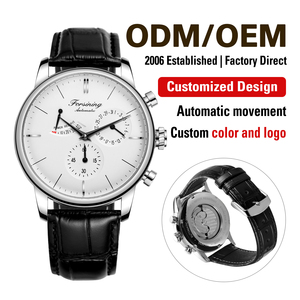
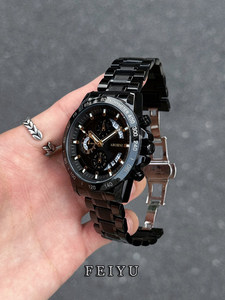
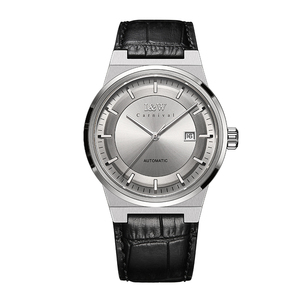
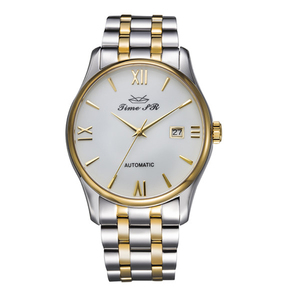
The Russian luxury and bridge-luxury timepiece sector—centered primarily in the Greater Moscow Metropolitan Area—is undergoing a structural evolution. Consumer preference among discerning buyers in key shopping districts such as Tverskoy, Presnensky (Moscow City), and Arbat has shifted decisively toward materials that offer both unyielding scratch resistance and superior tactile comfort. High-tech ceramic (Zirconium Oxide, $\text{ZrO}_2$) has emerged as the premier material for private-label luxury brands, corporate commemorative programs, and regional retail chains looking to differentiate themselves from mass-market stainless steel offerings.
As a vertically integrated OEM/ODM manufacturing group rooted in horological engineering since 1966 (originating with Petermann Swiss lathe precision machining under the PA Group legacy), Maxima Watches provides Russian brand owners, distributors, and corporate buyers with direct factory access to full-cycle custom ceramic watch production. By consolidating high-temperature ceramic sintering, CNC diamond-wheel milling, laser dial typography (including native Cyrillic engraving), caliber fitting, and atmospheric sealing under one single quality management framework, we guarantee precise compliance with Eurasian Economic Union (EAEU) standards and GOST quality benchmarks.
To manufacture watch cases, bezels, and bracelet links capable of enduring decades of wear without losing their luster, Maxima utilizes Yttria-stabilized Tetragonal Zirconia Polycrystals (Y-TZP). This advanced technical ceramic compound undergoes a rigorous multi-stage manufacturing process designed to achieve extreme hardness, zero porosity, and absolute color stability.
Sub-micron Zirconium Oxide powder is blended with specialized polymer binders and injected into precision molds under extreme hydraulic pressure (up to 2,000 bar). This forms the "green body" of the watch case, engineered at a precisely calculated 25% larger volume to account for shrinkage during thermal firing.
The molded cases undergo thermal debinding to remove binders, followed by high-temperature sintering at 1,400°C to 1,450°C for over 48 hours. The ceramic particles fuse at a molecular level, reducing the component volume by 25% and increasing density to over 6.0 g/cm³, achieving a non-porous structure.
Following sintering, the raw ceramic blocks achieve a hardness of approximately 1,500 HV on the Vickers scale—more than four times harder than 316L stainless steel (approx. 200 HV) and significantly harder than titanium (approx. 350 HV). Because standard steel tools cannot machine sintered ceramic, final shaping, lug drilling, and beveling require custom 5-axis diamond-tipped CNC grinding wheels operating under continuous liquid cooling.
| Material Metric | High-Tech Ceramic ($\text{ZrO}_2$) | 316L Stainless Steel | Grade 5 Titanium |
|---|---|---|---|
| Vickers Hardness (HV) | 1,400 – 1,550 HV | 200 – 240 HV | 320 – 360 HV |
| Density ($\text{g/cm}^3$) | 6.0 - 6.05 | 7.98 | 4.43 |
| Thermal Conductivity | ~ 2.5 W/(m·K) [Ultra Low] | ~ 16.3 W/(m·K) [High] | ~ 6.7 W/(m·K) [Medium] |
| Scratch Resistance | Exceptional (Diamond-Only Scratch) | Moderate (Prone to hairline micro-scratches) | Good (Prone to oxidation scratches) |
| Hypoallergenic Profile | 100% Inert & Nickel-Free | Contains Nickel Trace Elements | Hypoallergenic |
| UV & Color Resistance | Infinite (Zero fading or yellowing) | N/A (Unplated); PVD coatings can wear | Oxidizes over time |
Designing timepieces for Moscow requires deep understanding of regional climate demands, business culture etiquette, and logistics requirements.
Moscow experiences ambient outdoor temperatures dropping to -25°C in winter, paired with heated indoor spaces (+22°C). Ceramic's low thermal conductivity ensures that when the wearer steps outside, the case back does not draw heat away from the skin or cause cold skin-adhesion, providing unmatched winter comfort.
In the financial hubs of Moscow City (Federation Tower, OKO Tower), custom corporate wristwatches serve as prestigious tokens of partnership. OEM ceramic timepieces with custom-engraved Cyrillic case backs and custom packaging are favored for high-value executive gifts and anniversaries.
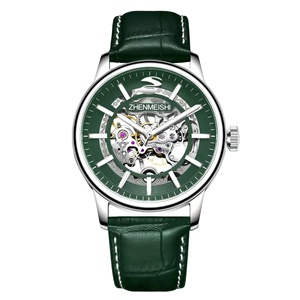
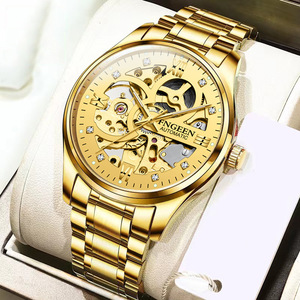
Boutique watch retailers across TSUM, GUM, and Crocus City Mall require distinct design language to compete against legacy Swiss imports. Custom OEM ceramic bezels, skeletonized automatic movements, and green/gold dials offer high retail margins and compelling visual shelf appeal.
From initial design concept to final customs release in Central Russia, Maxima operates a structured, transparent 6-stage engineering workflow tailored for international procurement directors.
Our horological engineers convert your brand concept sketches into 3D CAD models. Finite Element Analysis (FEA) simulates structural integrity under shock impact and water pressure, ensuring zero stress fractures before mold casting.
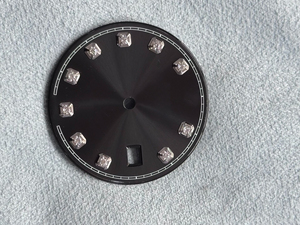
Choose between multi-layered sunray dials, genuine mother-of-pearl, or double-sided skeletonized open-worked dials. Custom logo application includes high-precision metal applique printing or laser engraving with native Russian branding.
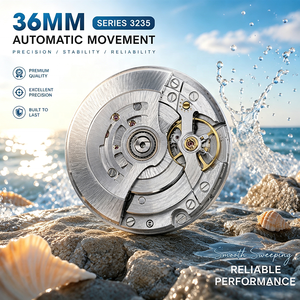
Select from premium Japanese Miyota/Seiko calibers or high-tier Swiss-type automatic movements (e.g., Caliber 3235 architecture). Every movement is rate-checked using electronic timing machines to guarantee optimal daily rate accuracy.
Continuing Maxima's 1996 waterproof engineering heritage, every cased ceramic watch undergoes dry vacuum testing followed by wet immersion pressure testing up to 5ATM / 10ATM to guarantee total water seal integrity.
We manufacture bespoke presentation boxes—from matte-lacquered wooden retail boxes to travel cases. Complete documentation, barcode labeling, and material safety data sheets (MSDS) are provided for seamless EAC customs clearing.
Consignments are securely packed in shock-dampened export cartons and dispatched via air or overland expedited freight directly to your warehouse hub in Moscow, Saint Petersburg, or regional distribution centers.
Why leading global brands and Russian enterprise importers partner directly with our vertically integrated manufacturing facilities.
Founded in 1966 with Petermann Swiss lathe machining for mechanical watch spare parts, our group evolved through Swiss collaboration movement production to become a recognized authority in vertical watch manufacturing.
Pioneering the market in 1996 with guaranteed waterproof quartz ranges, we maintain strict quality control where 100% of cased timepieces undergo atmospheric and hydrostatic pressure validation.
By owning our ceramic injection molds, sintering kilns, and diamond CNC milling units, we eliminate third-party markup, reduce production lead times, and preserve client intellectual property protection.
Partner with a vertically integrated watch house with six decades of horological heritage. Request CAD technical drawings, material samples, and factory-direct OEM quotations today.
Contact Us