Explore our engineered line of quartz, mechanical, and hybrid minimalist wristwatches. Designed with clean geometry, slim cases, and premium materials engineered specifically to excel under strict Japanese quality standards.
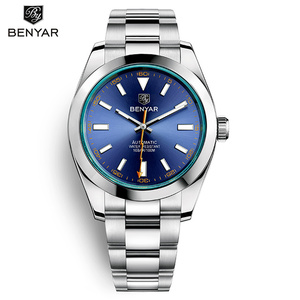
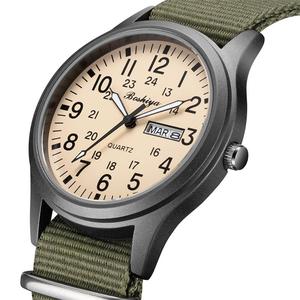
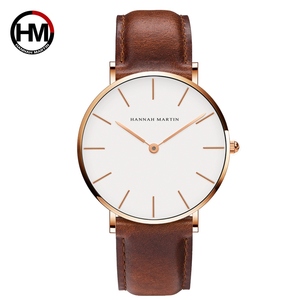
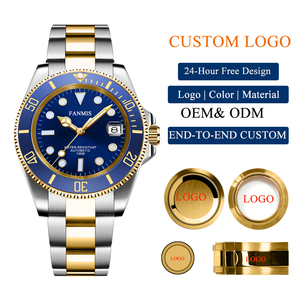
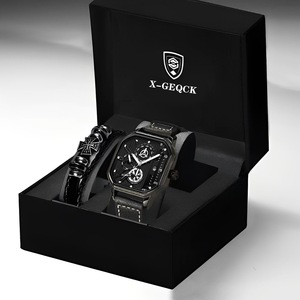
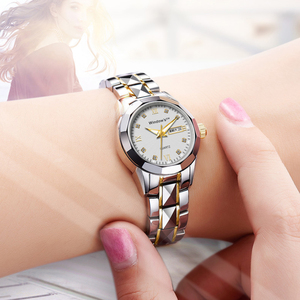
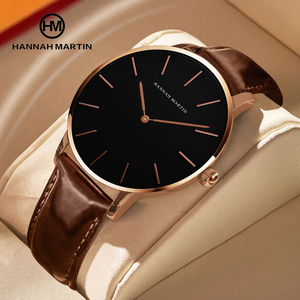
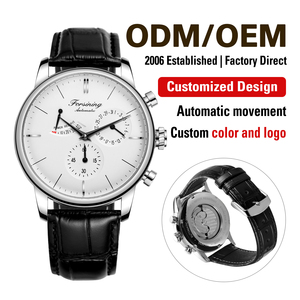
The Japanese timepiece market represents one of the world's most sophisticated and quality-sensitive retail ecosystems. Characterized by a discerning consumer base that values reductionist aesthetics, structural integrity, and understated elegance (Shibuui), supplying minimalist watches to Japanese brand owners, importers, and department stores requires far more than aesthetic simplification. It demands strict engineering tolerances, meticulous material selection, and absolute consistency across high-volume production runs.
As a vertically integrated horological manufacturer tracing our machining origins back to 1966, our manufacturing enterprise provides a turnkey ODM/OEM solution built specifically to fulfill the stringent requirements of Japanese distributors. From integrating original Japanese Miyota and Seiko (TMI/Epson) calibers to executing physical vapor deposition (PVD) surface coatings, our facility acts as a seamless manufacturing partner for enterprise clients across Tokyo, Osaka, Nagoya, and Fukuoka.
We source authentic calibers directly from Japan’s premier movement makers, including Miyota (2035, GL22, 9015 series) and Seiko TMI (NH35A, VJ series). Every movement undergoes electronic rate testing to guarantee daily variance well within accepted parameters.
Following our landmark 1996 innovation—introducing the industry’s first guaranteed waterproof watch series—every minimalist case undergoes a dual-phase testing protocol: dry pneumatic pressure testing followed by immersion condensation validation.
Minimalism in Japan thrives on slim profiles ranging between 6.0mm and 8.5mm. Our advanced casing engineers utilize recessed crown geometry and custom gasket seating to maintain extreme slimness without compromising 3ATM/5ATM water resistance.
Understanding how modern Japanese consumers interact with minimalist timepieces enables private-label brands to optimize their product positioning and channel distribution strategies.
In Tokyo's corporate districts like Otemachi and Marunouchi, modern business dress codes have evolved from rigid dark suits to "Cool Biz" and smart casual tailoring. Minimalism in this setting serves as a functional yet subtle professional accessory.
Design Requirements: Case thickness under 7.5mm to slide smoothly beneath shirt cuffs; clean white, silver, or matte black dials without overbearing sub-dials; polished 316L stainless steel mesh or dark full-grain leather straps. Silence is key—loud tick sounds are considered distracting in quiet Japanese office environments.
Younger demographics in fashion hubs like Shibuya, Harajuku, and Minami-Aoyama view watches through the lens of gender-neutral accessories, preferring oversized clean dials paired with muted color palettes.
Design Requirements: 38mm to 40mm unisex case diameters featuring quick-release NATO or vegan micro-fiber straps; monochromatic matte grey, olive, or beige dial faces; durable PVD ion-plated casing in matte sandblasted black or warm rose gold accents.
Japanese urban dwellers rely heavily on public transport and undergo significant temperature transitions during seasonal shifts, particularly during the humid summer monsoon (Tsuyu) season.
Design Requirements: Anti-reflective mineral crystal or sapphire glass to resist glare on train platforms; internal anti-condensation sealing; non-corrosive case backs made of surgical-grade steel to prevent skin irritation caused by sweat exposure during long commutes.
Gift-giving remains deeply ingrained in Japanese culture, particularly during Oseibo (year-end), Ochugen (mid-year), graduation, and company entry ceremonies (Nyushashiki).
Design Requirements: Private-label suitability with custom case-back engraving areas; elegant presentation packaging including textured rigid boxes, customized guarantee cards, and strict zero-blemish cosmetic standards across dial surfaces.
Success in the Japanese market requires staying aligned with shifting consumer values. Our R&D engineering team monitors consumer preferences across Rakuten, Amazon Japan, and boutique retail channels to ensure our wholesale designs reflect live market demand.
Japanese consumers show a strong preference for watch faces that utilize negative space effectively. Uncluttered dials featuring subtle stick markers or no numerals at all allow the material texture—such as sandblasted brass or subtle sunray brushing—to speak for itself.
Japan is witnessing a boom in direct-to-consumer lifestyle microbrands founded on social media channels. These brands demand low initial MOQs paired with deep customization options, allowing them to launch unique seasonal drops with fast time-to-market execution.
Environmental awareness among Japanese Gen Z and millennial buyers has elevated demand for sustainable materials. OEM orders increasingly specify apple-leather or recycled microfiber straps paired with recycled stainless steel alloys.
A comparative overview of our OEM manufacturing options designed to help product procurement managers select the ideal configuration for their target market positioning in Japan.
| Specification Parameter | Executive Minimalist (Tier A) | Urban Fashion (Tier B) | Mechanical Tool Minimalist |
|---|---|---|---|
| Target Movement | Miyota 1L22 / GL22 (Ultra-Slim Quartz) | Miyota 2035 / Seiko VJ21 Quartz | Seiko (TMI) NH35A Automatic Mechanical |
| Case Material | 316L Surgical Stainless Steel | High-Precision Machined Alloy / Steel Back | Solid 316L Stainless Steel |
| Case Thickness | 6.2mm - 7.0mm | 7.5mm - 8.8mm | 11.5mm - 12.5mm |
| Lens Material | Sapphire Crystal with Anti-Reflective Coating | Hardened Mineral Glass | Flat/Domed Sapphire Crystal |
| Water Resistance | 5 ATM (50 Meters) Vacuum Tested | 3 ATM (30 Meters) Pressure Tested | 10 ATM (100 Meters) Screw-Down Crown |
| Surface Plating | PVD Vacuum Ion Plating (0.4μm - 0.8μm) | Standard Electroplating | PVD Brushed / Sandblasted Matte Finish |
| Strap Integration | Quick-Release Italian Leather / Mesh | Synthetic Leather / Nylon Nato | Solid Steel Bracelet with Deployant Clasp |
| Quality Standard | JIS B 7021 Grade 1 / AQL 1.0 Inspection | AQL 1.5 Standard Inspection | JIS B 7021 Grade 2 / 100% Rate Verified |
Choosing a manufacturing supplier for the Japanese market means choosing an organization that understands that quality is defined by the absence of non-conformities. Rooted in our group's heritage established in 1966, our company combines decades of precision horology experience with modern manufacturing scale.
Our group began in 1966 machining precision mechanical watch spare parts on Petermann Swiss lathes, eventually graduating to complete mechanical movements in Swiss collaboration, followed by full quartz movement manufacturing in the 1980s. This deep engineering background means we treat watchmaking as a science of micron-level tolerances.
Unlike trading companies that outsource assembly, our unified manufacturing facility handles case milling, dial stamping, hands fitting, casing-up, and final inspection. Every lot bound for Japan is subjected to dust-free cleanroom casing, dial alignment under magnification, and strict AQL 1.0 visual checks.
We provide full customization for B2B partners: brand logo silk-screening or laser etching on dials, crowns, buckles, and case backs. We also design bespoke retail gift packaging compliant with Japanese transport and recycling guidelines.
We manage direct export clearance and door-to-door delivery with major carriers to Tokyo (Narita/Haneda), Yokohama, Osaka, and Kobe ports, ensuring smooth customs clearing and duty documentation under Japanese import regulations.
Essential operational and technical answers regarding MOQ, Japanese compliance, custom private labeling, and delivery timelines.
For custom private-label orders using our existing minimalist stainless steel or alloy case molds, our standard MOQ starts at 300 pieces per model, with flexible option splits (e.g., 100 units per colorway across 3 dial variations). For fully custom ODM projects requiring dedicated mold development, MOQ typically starts at 1,000 units depending on movement and material specifications.
Compliance with JIS B 7021 (Japanese Industrial Standard for General-Use Water Resistant Watches) is baked directly into our production workflow. Every watch case undergoes dry vacuum and wet immersion pressure testing. Furthermore, all materials comply with Japanese environmental regulations regarding heavy metals (RoHS & REACH certified nickel-free plating and lead-free leather processing) to prevent skin allergies among wearers.
We offer both options. Through our long-standing relationships with authorized movement distributors in Japan and Hong Kong, we can source 100% genuine Japanese Miyota, Seiko (TMI), or Epson movements directly at factory tier pricing. Alternatively, enterprise clients with existing procurement hubs in Japan may supply movements to our assembly facility under a consignment agreement.
We offer high-precision custom branding across multiple key contact points: 3D metallic applied or printed dial logos, precision laser etching or deep engraving on the crown, buckle, case back, and customized genuine leather strap lining embossing. We also manufacture custom-branded presentation boxes with Japanese barcode labeling and warranty booklet integration.
Once pre-production samples are approved and deposit is confirmed, production lead time for standard quartz private-label orders is 35 to 45 days. For automatic mechanical watches (such as NH35 models) or custom PVD color matching, production ranges between 50 and 60 days. Express air freight to major Japanese airports (NRT/HND/KIX) takes approximately 3 to 5 business days.
We require pre-production sample sign-off prior to volume manufacturing. We create physical prototype samples featuring your exact logo printing, case finish, crystal specification, and strap choice within 15 to 20 days. These samples are shipped directly to your Japanese office for tactile and visual evaluation.
Yes. All products carry a standard 12 to 24-month factory warranty against manufacturing defects. For B2B orders, we include extra spare parts—such as gaskets, spring bars, extra glass lenses, and stem crowns—at a rate of 1% to 2% of total order volume to facilitate local after-sales service in Japan without shipping delays.
Contact our B2B horological engineering team today to discuss your OEM/ODM custom specifications, request physical sample kits, or receive a complete catalog and wholesale price matrix.
Get a Quote