
Executive Overview: The Critical Role of Dial Manufacturing in the US Horological Market
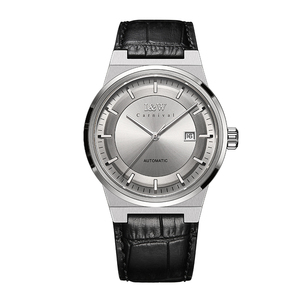
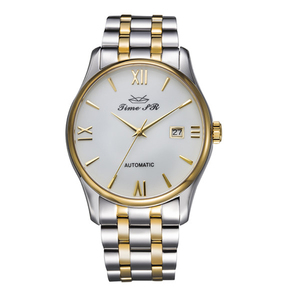
In the luxury, tactical, and microbrand timepiece ecosystems across the United States, the watch dial is universally recognized as the single most defining visual component. Known within the industry as the "face" of the watch, the dial serves not merely as a functional display for time-telling elements, but as the primary vehicle for brand identity, surface artistry, and technical craftsmanship. For US-based watch brands, private label enterprises, and crowdfunding innovators seeking reliable watch dials manufacturers and factories serving the United States, navigating the engineering nuances of dial fabrication, surface plating, index alignment, and movement clearance is essential for commercial viability and consumer trust.
Modern watch dial manufacturing demands a complex synthesis of metallurgy, high-precision machining, chemical surface treatment, pad printing (tampography), and hand assembly. As US consumers become increasingly sophisticated—evaluating micro-finishing, anti-reflective coatings, dial depth, and Swiss-standard luminescence—brand owners must partner with vertically integrated manufacturing facilities capable of delivering Swiss-level tolerances at scalable production economics. This whitepaper analyzes the technical architecture, materials science, localized market trends, and supply chain logistics involved in custom watch dial production for the US market.
Technical Information Gain: Feet Location & Movement Stems
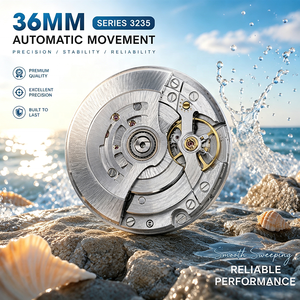
A major cause of assembly line rejection in US microbrand manufacturing is incorrect dial feet positioning. Our manufacturing facility utilizes multi-axis CNC blanking setups to hold dial feet location tolerances within ±0.008mm, ensuring seamless alignment with movement mainplates (such as ETA 2824-2, Sellita SW200, Miyota 9015, and Seiko NH35) without stress binding on the center wheel pinion.
Advanced Dial Substrates & Surface Metallurgy
Brass & Copper Substrates (CuZn37)
Precision stamped or CNC-machined brass blanks form the foundation of high-grade analog dials. Brass offers optimal ductility for deep embossing, sunburst brushing, guilloché machining, and electroplating with gold, rhodium, or gunmetal PVD finishes.
High-Tech Zirconium Oxide Ceramic
Sintered at temperatures exceeding 1,420 °C, ceramic dials yield a diamond-hard, scratch-resistant surface with zero UV discoloration. Ideal for US luxury dress watches and marine dive references demanding lifelong color stability.
Real Carbon Fiber & Composites
Engineered for automotive-inspired and aerospace tactical timepieces. Woven 3K carbon sheets are vacuum-resin sealed and diamond-cut to thickness, delivering exceptional strength-to-weight ratios and ultra-modern aesthetic depth.
Exotic Nacre (Mother-of-Pearl)
Ethically harvested natural sea shell slices trimmed to ultra-thin 0.20mm discs, backed by solid brass substrates. Each dial displays organic iridescence, catered directly to premium women's dress collections and bespoke lines.
Skeleton & Open-Heart Architecture
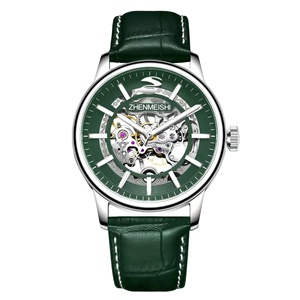
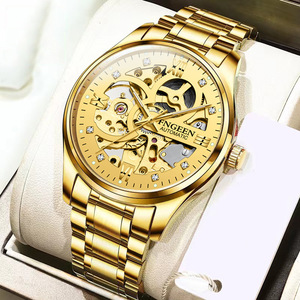
Complex multi-layer skeletonized dials created via high-precision laser aperture cutting. Designed to display the mechanical escapement and gear train dynamics while maintaining structural integrity for applied indices.
Grade X1 Luminous Pigmentation
Precision pad-printed or hand-filled indices using authentic Swiss Super-LumiNova® (BGW9, C3, Old Radium). Multi-pass printing achieves up to 0.15mm thick luminescent deposits for extreme low-light visibility.
Engineering Breakdown: The Dial Manufacturing Process
Manufacturing a commercial-grade watch dial involves up to 60 distinct operations depending on the complexity of the design. When working with US clients, our engineering teams adhere to strict quality gate protocols at each milestone:
- Substrate Blanking & Stamping: High-tonnage precision presses stamp dial blanks from brass or copper coil stock. Center holes for hand arbors, calendar apertures (date/day-date windows), and dial feet locations are punched simultaneously to preserve concentricity.
- Surface Patterning & Guilloché: Dials receive surface textures through hydraulic press embossing, diamond-tooled lathe turning (sunburst patterns), or CNC engraving. Matte, sandblasted, and graining textures (décapage) are achieved via calibrated chemical etching or micro-bead blasting.
- PVD Physical Vapor Deposition & Electroplating: Substrates undergo ultrasonic degreasing before entering PVD vacuum chambers or galvanization baths. Electro-plated gold, rose gold, silver, and rhodium layers provide corrosion resistance, while PVD coatings deliver matte black, navy blue, emerald green, and champagne hues with color consistency across batches.
- Multi-Pass Tampography (Pad Printing): Minute track divisions, logo typography, and brand insignia are applied using silicone pads transferring specialized ink from laser-etched clichés. Alignments between multiple ink layers are held under 10x optical magnification within ±0.01mm.
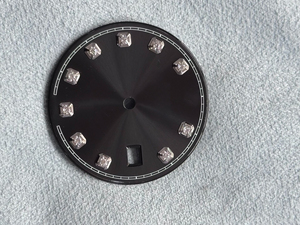
- Index Riveting & Diamond-Cut Marker Application: Individually faceted metal hour indices (applied markers) featuring rear mounting pins are inserted into laser-drilled dial apertures and mechanically riveted or UV-bonded from the reverse side.
Localized Application Scenarios in the US Market
The demand for custom watch dial manufacturing in the United States spans several distinct market verticals, each presenting unique engineering specifications:
1. US Microbrands & Crowdfunding Pioneers (Austin, Miami, NYC, Los Angeles)
The explosion of direct-to-consumer (D2C) watch brands on platforms like Kickstarter and Indiegogo has driven massive demand for distinctive, small-to-medium batch custom dials. US microbrands heavily emphasize unique textures—such as fumé gradient paint, meteorite slices, and textured linen surfaces. Our factory supports these agile brands with low MOQ rapid prototyping, rendering pre-production samples in 15 to 20 days.
2. US Tactical, Military & Divers' Timepieces (ISO 6425 Compliance)
For US brand owners serving law enforcement, military personnel, and deep-sea diving enthusiasts, dials must satisfy rigid legibility standards under extreme environmental stress. These dials utilize matte, anti-reflective black surfaces paired with heavy-layer Super-LumiNova BGW9 (emitting blue-green spectrum) or C3 green lume. Additionally, dials engineered for dive watches integrate soft iron dial cores to shield automatic movements against magnetic fields up to 4,800 A/m.
3. Corporate Executive, Commemorative & Private Label Luxury
US corporations frequently order private-label timepieces for milestone anniversaries, executive gifts, and athletic awards. These applications require sub-micron precision laser engraving of company logos, custom Pantone color matching, and hand-fitted diamond or Swarovski crystal indices on mother-of-pearl or sunray brushed dials.
Key Industry Development Trends in the United States Watch Market
To maintain a competitive edge, US watch brand executives and procurement directors must align their product development pipelines with overarching market shifts. Key trends shaping the 2026–2030 horological landscape include:
Eco-Brass & Recycled Alloys
Driven by US consumer focus on sustainability, leading watch brands are transitioning to lead-free eco-brass (CuZn42) and 100% recycled 316L stainless steel for dial plates and applied indices.
3D Multi-Layered Dial Construction
Flat single-piece dials are rapidly giving way to multi-layer "sandwich" constructions. Floating chapter rings, suspended logo plaques, and recessed subdials create dramatic shadow play and visual dimension.
Vibrant Fumé & Textured Enameling
Retro-inspired 1970s dial aesthetics—featuring rich gradient fumé edges, deep salmon tones, turquoise lacquer, and Grand Feu vitreous enamel—are experiencing a major resurgence among American watch collectors.
Corporate Legacy: Vertically Integrated Manufacturing Since 1966
When selecting a manufacturing partner for watch dials and complete timepieces, heritage, technical mastery, and operational transparency are non-negotiable. Our parent group’s horological manufacturing lineage traces back to 1966, when operations commenced by machining high-precision mechanical watch spare parts on Swiss Petermann lathes.
Over the decades, our manufacturing infrastructure evolved systematically:
- 1966: Industrial launch specializing in micro-precision watch gear cutting, pinions, and mechanical movement component fabrication via Swiss lathe machinery.
- 1980s: Expansion into full mechanical movement assembly in collaboration with Swiss horological engineers, followed by early investment in quartz movement manufacturing lines.
- 1996: Launch of our flagship brand house (Maxima) and turnkey OEM manufacturing unit, introducing one of the industry's first guaranteed waterproof watch ranges backed by 100% pressure-testing protocols.
- Present Day: A fully vertically integrated watch house operating dedicated tooling workshops, dial blanking CNC centers, cleanroom pad printing facilities, automated diamond index setting, and dual-stage air-and-water pressure testing labs serving global brands across the United States, Europe, and Asia.
Because case geometry, movement ring tolerances, dial foot positions, and hand clearances are engineered under one central technical authority, our US clients avoid the integration mismatches common when sourcing dials, cases, and hands from disparate subcontractors. Every dial manufactured in our factory is checked for flatness, concentricity, printing sharpness, and hand-post clearance before entering final cleanroom casing.