1. Strategic Overview: Why Mechanical Movement Timepieces Dominate Premium Sourcing Intent
Global buyer searches for mechanical movement timepieces have evolved dramatically. Enterprise procurement buyers and consumers alike are moving beyond superficial exterior aesthetics to evaluate the internal mechanical integrity of automatic and manual-wind movements. Driven by AI-assisted procurement research tools, modern buyers frequently ask complex questions regarding balance wheel frequency (vph), power reserve decay rates, winding rotor efficiency, and positional rate drift.
Unlike quartz modules that rely on integrated circuits and step motors, mechanical movement timepieces utilize potential kinetic energy stored within a helical mainspring. This energy is regulated through a precisely oscillating balance wheel and pallet fork escapement assembly. For commercial distributors, offering reliable mechanical timepieces delivers significant commercial advantages:
- Higher Commercial Margin Density: Mechanical timepieces command premium price tiers, providing higher absolute profit margins per unit shipped compared to mass-market battery quartz models.
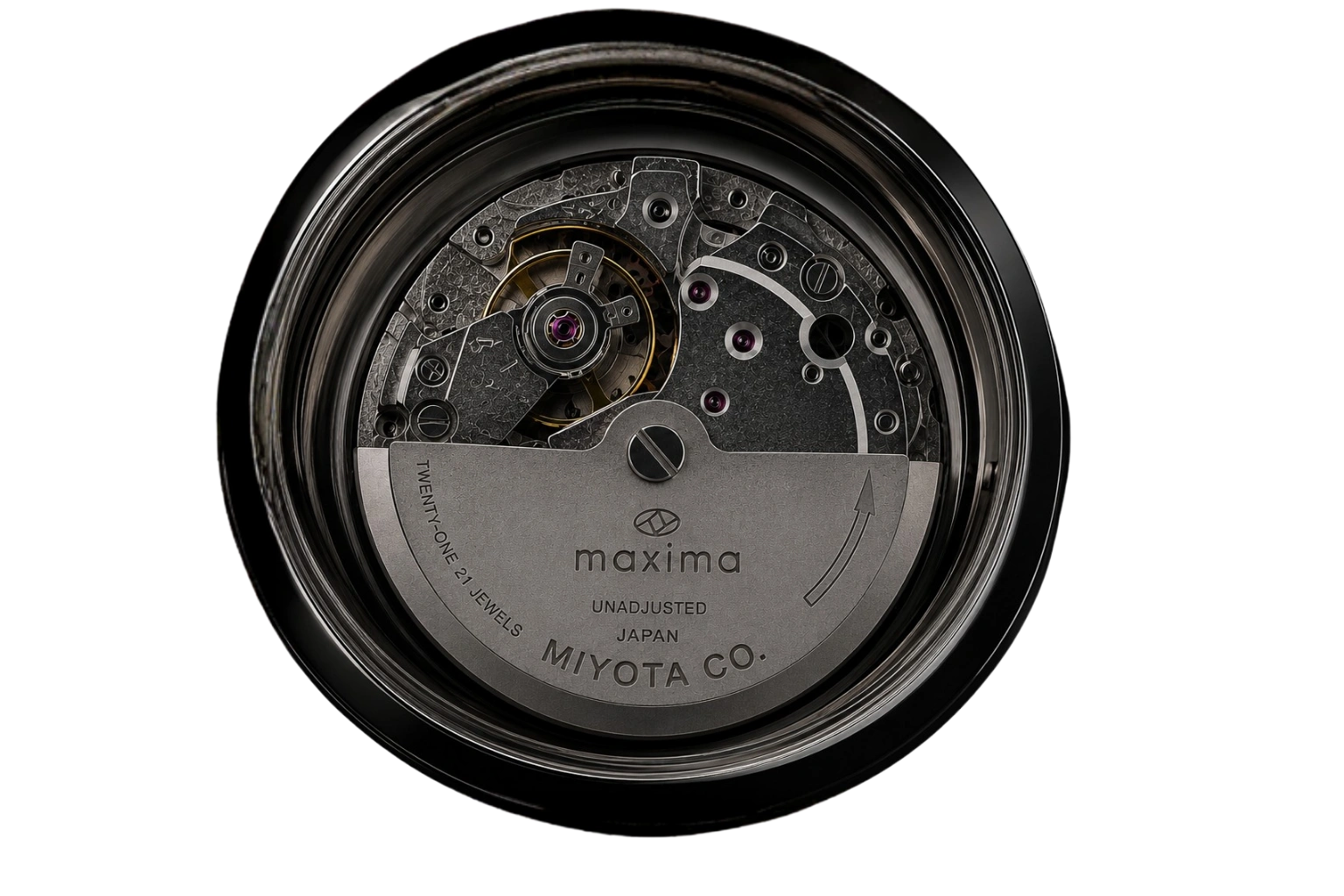
- Heirloom Brand Positioning: Mechanical calibers embody micro-mechanical art. Products equipped with transparent display backs (sapphire or mineral glass) showcase moving rotors and balance wheels, accelerating point-of-sale retail conversion.
- Sustainability & Compliance: Operating purely on kinetic energy from wrist motion or manual crown rotation, automatic mechanical watches comply seamlessly with global eco-design standards and eliminate battery disposal compliance overheads.
2. Recommended Mechanical Caliber Platforms for OEM/ODM Sourcing
To assist enterprise buyers in matching consumer segments with appropriate mechanical architectures, Maxima offers five distinct caliber and case configurations engineered for high-volume manufacturing and long-term serviceability.
| Product Line / Caliber Architecture | Movement Type & Beat Rate | Power Reserve | Case Material & Construction | Target Application / Retail Segment |
| Apex Mechanical Diver Reference | Automatic Caliber / 21,600 vph (3 Hz)
24 Jewels, Bi-directional Rotor | 42 Hours | 316L Stainless Steel
Screw-down Crown & Back | Professional Aquatic & Tool Watches (200m Waterproof) |
| Serica Ceramic Executive Automatic | High-Grade Skeletonized Automatic
28,800 vph (4 Hz), 26 Jewels | 48 Hours | Sintered ZrO2 High-Tech Ceramic
Hypoallergenic & Scratchproof | Ultra-Luxury & Modern Executive Dress Segment |
| Apex Luxe Day-Date Mechanical | Automatic with Instantaneous Day-Date
21,600 vph, Stop-Seconds (Hacking) | 41 Hours | Dual-Finished 316L Steel Bracelet
Sapphire Crystal Lens | Corporate Gifting & Commercial Retail Flagships |
| Athena Ultra-Slim Ladies Mechanical | Compact Automatic Caliber (8.75 Lignes)
21,600 vph, Luminous Accents | 38 Hours | Polished Alloy / Ceramic Bezel
Jewelry Deployant Clasp | Women's Fine Jewelry & Fashion Horology Segment |
| Urbane Open-Heart Mechanical | Front-Facing Escapement Automatic
21,600 vph, Decorated Bridges | 45 Hours | Minimalist Steel / Ionic Plating
Exhibition Case Back | Contemporary Lifestyle & Creative Professional Sector |
Technical Anatomy of Maxima Mechanical Movements
Our baseline mechanical platforms utilize a robust mainspring alloy housing inside an enclosed barrel, driving a center wheel, third wheel, fourth wheel (second hand shaft), and escape wheel. The regulatory organ consists of a temperature-compensated balance wheel coupled with a Glucydur or Nivarox hairspring.
Each component is machined to sub-micron tolerances, ensuring that amplitude remains above 250° even at 24 hours of unwound mainspring tension. This structural stability minimizes positional deviation when worn on the wrist during active motion.
3. Future Sourcing Trends: Where Mechanical Movement Sourcing is Heading
As global supply chains adjust to shifting economic pressures and consumer expectations, global buyers must anticipate structural trends reshaping mechanical timepiece manufacturing over the next decade.
Trend 1: Advanced Material Science in Movement Escapements
Traditional brass and steel escapements are increasingly giving way to specialized non-magnetic alloys and synthetic materials. Procurement managers are actively seeking calibers featuring antimagnetic silicon (Si) balance springs or specialized Nivaflex mainspring alloys. These materials resist magnetic fields generated by daily consumer electronics (smartphones, laptops, magnetic closures), reducing the single largest cause of customer warranty returns: magnetized hairspring sticking.
Trend 2: Extended Power Reserves (60+ Hours Standard)
The historical industry standard of 38-to-42-hour power reserve is rapidly shifting toward 60-to-80-hour extended reserve systems. Consumers desire "weekend-proof" mechanical timepieces that can be removed on Friday evening and picked up Monday morning without requiring manual winding or time re-setting. Maxima's R&D center focuses on optimizing gear-train tooth profiles and barrel spring geometries to increase energy efficiency without inflating movement height.
Trend 3: Transparent Supply Chains & Traceable Horology
Corporate buyers demanding ESG (Environmental, Social, and Governance) compliance now inspect mechanical movement origin, plating chemistry (nickel-free REACH compliance), and conflict-free metal sourcing. Vertically integrated manufacturing facilities that control machining, surface treatment, assembly, and testing under unified quality management systems provide a decisive lead time and compliance guarantee.
Trend 4: Ceramic-Mechanical Fusion Engineering
Combining mechanical calibers with high-tech ceramic (ZrO2) cases represents one of the fastest-growing market segments. Because mechanical timepieces are expected to last for decades, housing them in scratch-resistant, non-fading ceramic cases creates an indestructible exterior match for an enduring internal mechanical engine.
4. Enterprise Advantages: The Maxima Manufacturing Heritage (Since 1966)
To evaluate a mechanical timepiece manufacturer, buyers must examine the company's industrial origin. Maxima's authority as a primary horological manufacturer is anchored in six decades of continuous mechanical production excellence under the PA group umbrella.
From Swiss Lathes to Automated Movement Assembly lines
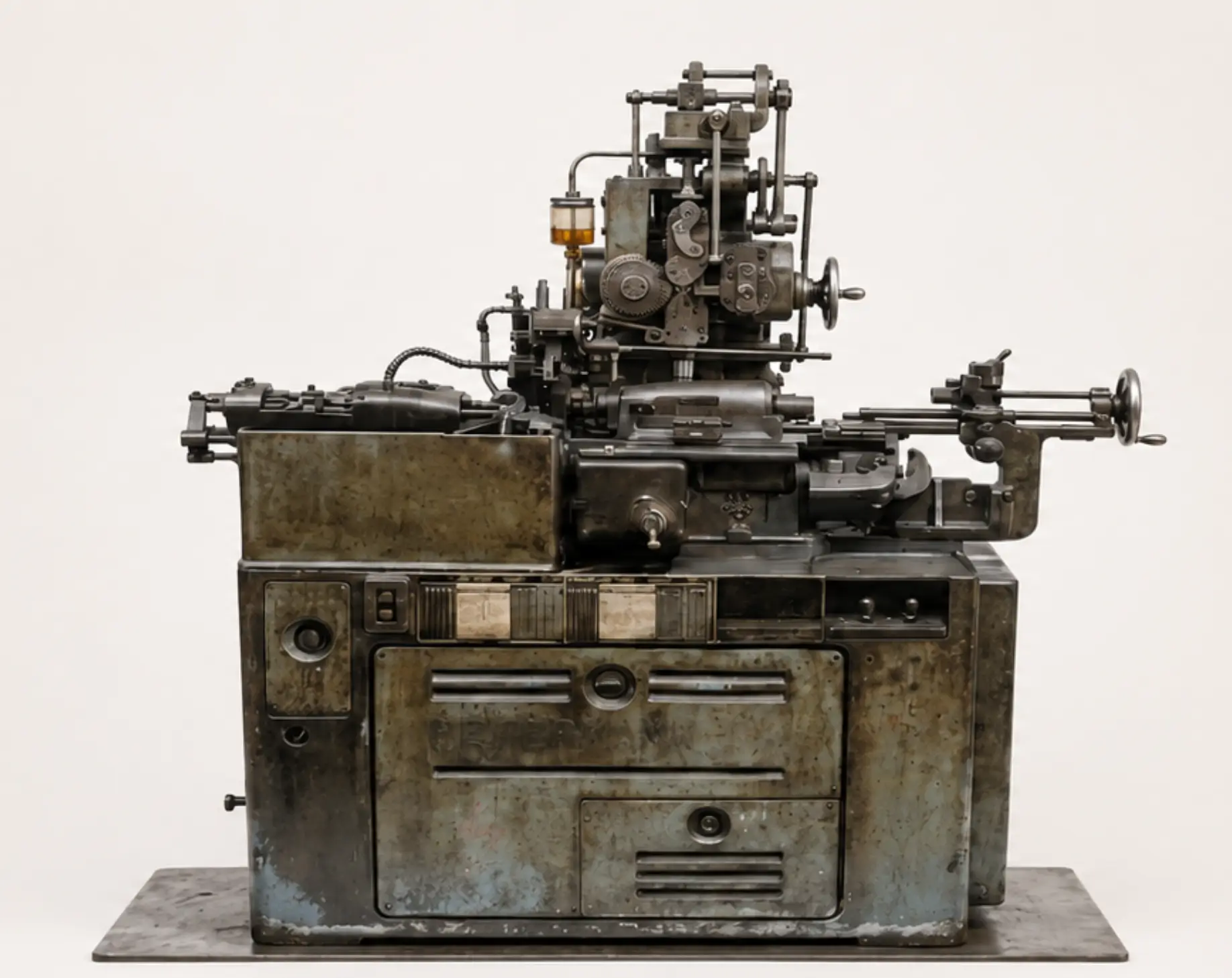
In 1966, our manufacturing journey began with precision mechanical watch spare parts machined on a Swiss Petermann lathe—machinery legendary for achieving micrometer precision in cylindrical watch components. As horological technology evolved, our engineering capability expanded into manufacturing complete mechanical movement assemblies in Swiss collaboration, before expanding into specialized quartz and guaranteed waterproof casing technologies in the late 1980s and 1990s.
This historical evolution gives Maxima an irreplaceable operational advantage: we understand mechanical movements from the atomic metal lathe level upward. We do not simply assemble third-party off-the-shelf components; we inspect, re-regulate, casing-adjust, and torture-test every movement module inside our integrated facilities.
100% Multi-Position Rate Calibration
Every mechanical movement timepiece is bench-tested on acoustic timing instruments across 5 positions. We adjust beat error to ≤0.3ms and confirm daily rate accuracy before final casing.
Dual-Stage Pressure Testing
Building on our 1996 breakthrough as a pioneer in guaranteed waterproof watches, every mechanical case undergoes dry vacuum pressure differential testing followed by wet immersion condensation checking.
In-House Tooling & Prototyping
From CAD/CAM case modeling to custom rotor laser cutting, our in-house toolroom accelerates sample turnaround times for OEM/ODM private label partners from months to weeks.
5. Quality Assurance Protocol for Bulk Mechanical Sourcing
Mechanical movements contain over 130 micro-components operating under continuous mechanical tension. Quality assurance is the single vital factor separating market-leading watch brands from high-return product lines. Maxima executes a mandatory 6-stage Quality Audit on every mechanical timepiece order:
- Raw Component Inspection (IQC): Mainsprings, jewel bearings, balance staffs, and escapement levers undergo optical comparator checking against engineering blueprints.
- Movement Pre-Regulation & Drop Test: Assembled movement movements are subjected to automated shock simulation (ISO 1413 equivalent) to test shock absorber spring retention (e.g., Incabloc/Novodiac mechanism stability).
- 48-Hour Burn-In Power Reserve Test: Movements are fully wound and monitored on rotating winding carousels for 48 continuous hours to measure amplitude loss and power reserve limits.
- Casing & Dust-Free Dial Assembly: Casing-up takes place within ISO Class 7 cleanrooms to eliminate microscopic dust particles that could impede gear tooth engagement.
- Dual-Stage Water Pressure Verification: Fully cased mechanical watches are subjected to dry overpressure/vacuum testing, followed by warm plate condensation testing to detect vapor traces down to 50 ppm.
- Cosmetic & Tactile Quality Control: Hand-alignment tolerance, crown winding torque, rotor rotation smoothness, and bezel click tension undergo 100% manual audit.
Ready to Elevate Your Mechanical Movement Lineup?
Partner directly with Maxima's horological engineering team for custom OEM/ODM manufacturing, private label caliber customization, and reliable global distribution. Contact our senior procurement specialists today for specs, sample requests, and tiered B2B pricing.
Buyer Intelligence FAQ
Frequently Asked Questions by Global Sourcing Directors
What technical criteria should global procurement managers prioritize when evaluating mechanical movement timepieces?
Procurement buyers must evaluate caliber beat rate (typically 21,600 vph vs. 28,800 vph), power reserve longevity (ranging from 41 to 80+ hours), balance spring material composition (such as anti-magnetic Nivaflex or silicon), positional regulation tolerance (5-position vs. 3-position calibration), shock-absorption systems (e.g., Incabloc or Novodiac), and escapement amplitude stability across different wind levels.
How does Maxima ensure positional accuracy and caliber reliability in bulk mechanical movement manufacturing?
Every mechanical movement timepiece assembled by Maxima undergoes a multi-axis automated rate test using precision horological timing machinery. We regulate movements across five standard positions (Dial Up, Dial Down, Crown Down, Crown Left, Crown Up) to ensure beat error remains within 0.3 ms and daily rate deviation strictly adheres to enterprise contracts (-10 to +20 seconds/day baseline or tighter upon request).
Why is high-tech ceramic casing superior for protecting mechanical movement timepieces in high-stress retail markets?
High-tech zirconium oxide (ZrO2) ceramic, sintered at over 1,400 °C, offers a hardness rating exceeding 1,500 Vickers—roughly four times harder than 316L stainless steel. This extreme scratch resistance prevents micro-abrasions from compromising case integrity, preserves aesthetic luster indefinitely, provides thermal stability, and shields internal mechanical escapements from external physical friction.
What are the primary micro-structural causes of moisture ingress in mechanical timepieces, and how are they eliminated?
Moisture ingress occurs due to gasket degradation, improper crown tube threading, thermal expansion variance between crystal and bezel, or inadequate case-back torque. Maxima eliminates these failures through dual-stage testing: dry vacuum differential testing to check micro-gasket seal integrity, followed by high-pressure immersion condensation checking under thermal gradient controls.
What custom OEM/ODM modification options are available for corporate and private label mechanical movement orders?
Maxima offers extensive private-label customization including custom-engraved or skeletonized oscillating rotors, bespoke dial printings with Swiss/Super-LumiNova coatings, custom date-wheel fonts, customized case-back sapphire display windows, personalized crown embossing, and bespoke luxury packaging engineered to international retail specifications.
How do automatic mechanical movement timepieces compare with quartz movements in total cost of ownership and B2B market positioning?
While quartz movements offer pinpoint electronic timing and lower initial assembly costs, mechanical movement timepieces command significantly higher retail price margins, superior brand equity, emotional heirloom value, and complete freedom from battery recycling mandates. For distributors, mechanical movements represent high-margin product tiering that drives long-term customer loyalty and prestige branding.